
Green Curry Mussels with Pickled Ginger and Cucumber
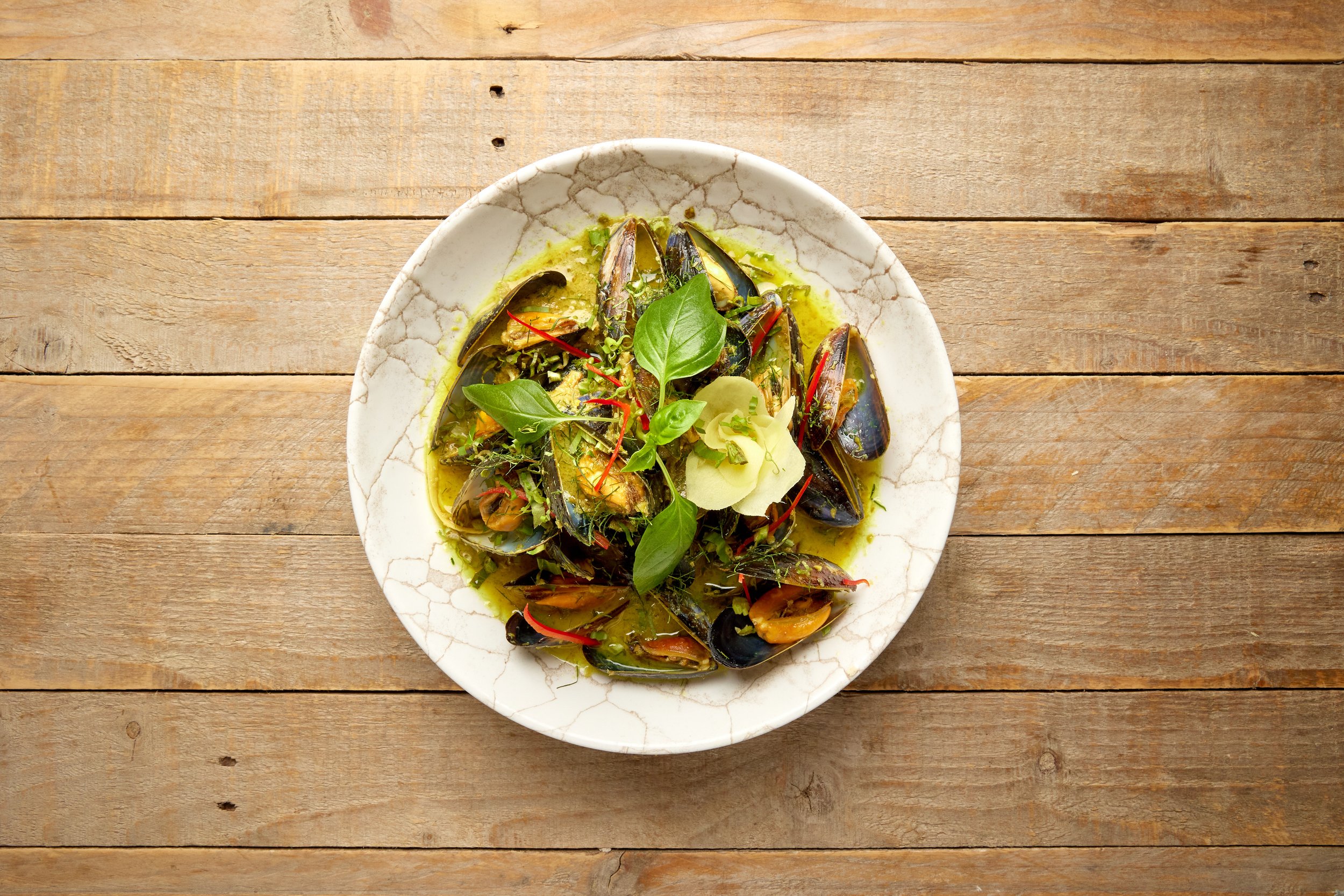
This recipe was published in The Express as part of a piece on the secret to authentic Thai green curry - their angle being that fresh paste is what makes the difference. They weren't wrong. My father-in-law Frank drives down from Enstone in the Cotswolds every time he visits the restaurant and requests a bowl of these to himself. I have never once forgotten to get the mussels in ahead of his arrival. I know better than that.
Mussels are one of those ingredients that make home cooks nervous and they really shouldn't. The rules are simple and if you follow them there is nothing to worry about.
Buy them alive. When you get them home, tip them into a sink under a cold running tap and go through them one at a time. Scrape any barnacles off with a small serrated knife, pull out the beard, and inspect each one. If a shell is cracked or already open, discard it. Keep the good ones in a tray with a damp cloth over the top, raised clear of any sitting water. That's it. After cooking, discard anything that hasn't opened. Follow those rules and mussels are one of the easiest things to cook.
One thing worth knowing about timing - mussels are best in the UK from September through to April. Outside of those months they're spawning, the meat goes thin and milky, and the quality drops. Stick to the R-month rule and you won't go wrong.
Krachai is in here alongside the green curry paste, which might seem like doubling up on wild ginger, and it is - deliberately. Krachai is one of the backbone flavours of a green curry paste, earthy and floral and less aggressive than regular ginger. Adding fresh krachai to the curry as well as using it in the paste amplifies that jungle ginger note. It goes well with shellfish. I love it.
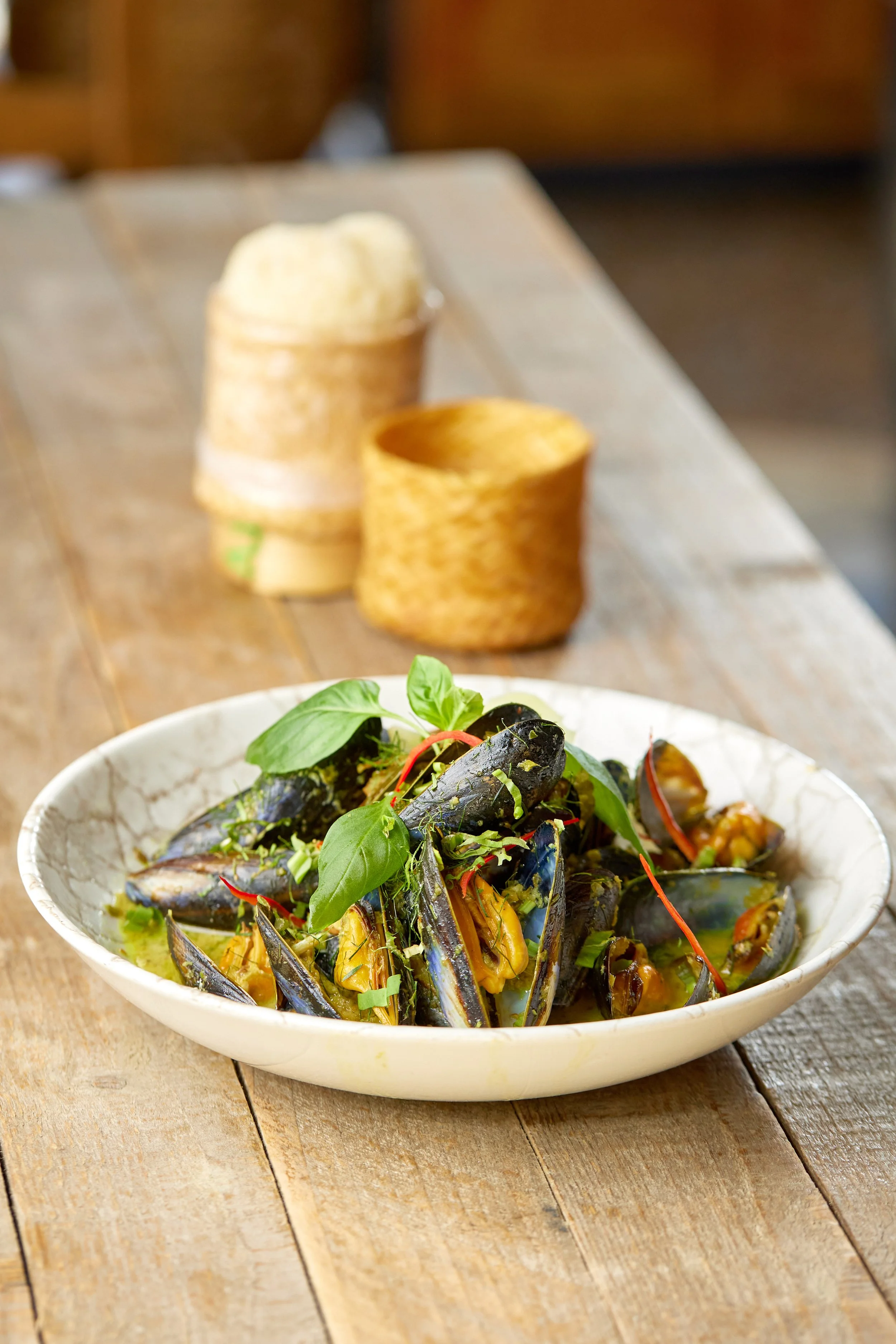
Green Curry Mussels with Pickled Ginger and Cucumber
Serves: 4 | Prep: 15 mins | Cook: 15 mins
Ingredients
1kg fresh mussels, cleaned and de-bearded (see notes above)
200g green curry paste (Payst green curry, available next-day delivery UK-wide - pre-seasoned. If using your own paste, add palm sugar and fish sauce)
50ml coconut oil or vegetable oil
200ml fish or chicken stock
250ml coconut cream
2 makrut lime leaves, torn
1-2 tbsp fish sauce
20g fresh krachai (wild ginger), cleaned and thinly sliced
20g fresh Thai basil
Steamed jasmine rice to serve
Optional garnish
Thai basil sprigs
10g pickled ginger
10g pickled cucumber
2 makrut lime leaves, finely julienned
10g chopped pak chi farang (sawtooth coriander) or regular coriander
1 lime, cut into cheeks
Method
Get your jasmine rice on first.
Heat the oil in a large wok over medium heat - one with a lid you can use later. Add the green curry paste and torn makrut lime leaves. Fry for 2-3 minutes, scraping the pan regularly to stop it catching. When the paste darkens, deglaze with 1 tbsp fish sauce, then add all the stock and half the coconut cream. Bring to a simmer.
Add all the mussels and the krachai. Give the wok a gentle shake to get everything submerged, then put the lid on. Simmer for 4-5 minutes until all the mussels have opened.
Turn off the heat. Discard any mussels that haven't opened. Stir in the remaining coconut cream and the Thai basil. Taste - add more fish sauce if it needs salt.
Serve in a large sharing bowl over jasmine rice. Garnish with Thai basil sprigs, pickled ginger and cucumber, julienned makrut lime leaves and pak chi farang. Lime cheeks alongside. Put empty bowls on the table for the shells and finger bowls for hands.
Chef's notes
Don't overcook the mussels. Once the shells are open they're done. Every extra minute toughens them.
The pickled ginger and cucumber from the coconut braised short ribs recipe on this site uses the same quick pickle liquor - make a batch and use it across both dishes.
Visit us at faranglondon.co.uk. Sauces and pastes for cooking Thai at home at payst.co.uk.
For more recipes, signed copies of my cookbooks are available at Payst: Cook Thai and Thai in 7.
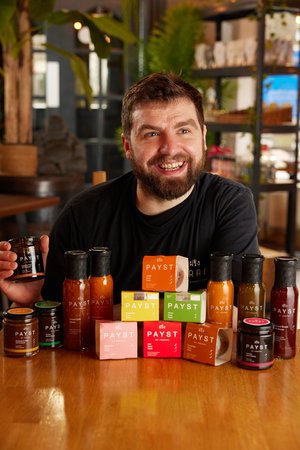
Head chef & founder of Farang London restaurant. Cookbook author of ‘Cook Thai’ & ‘Thai in 7’. Chief curry paste basher and co-founder of Payst London.
Eat it at Farang
Cook it at home, or let us cook it for you. Farang, Sebby's Michelin Bib Gourmand Thai restaurant in Highbury, N5.
Book a table