
Cornish Mussels Stir-Fried in Lemon Basil, Chilli, Green Peppercorns, Coconut & Turmeric
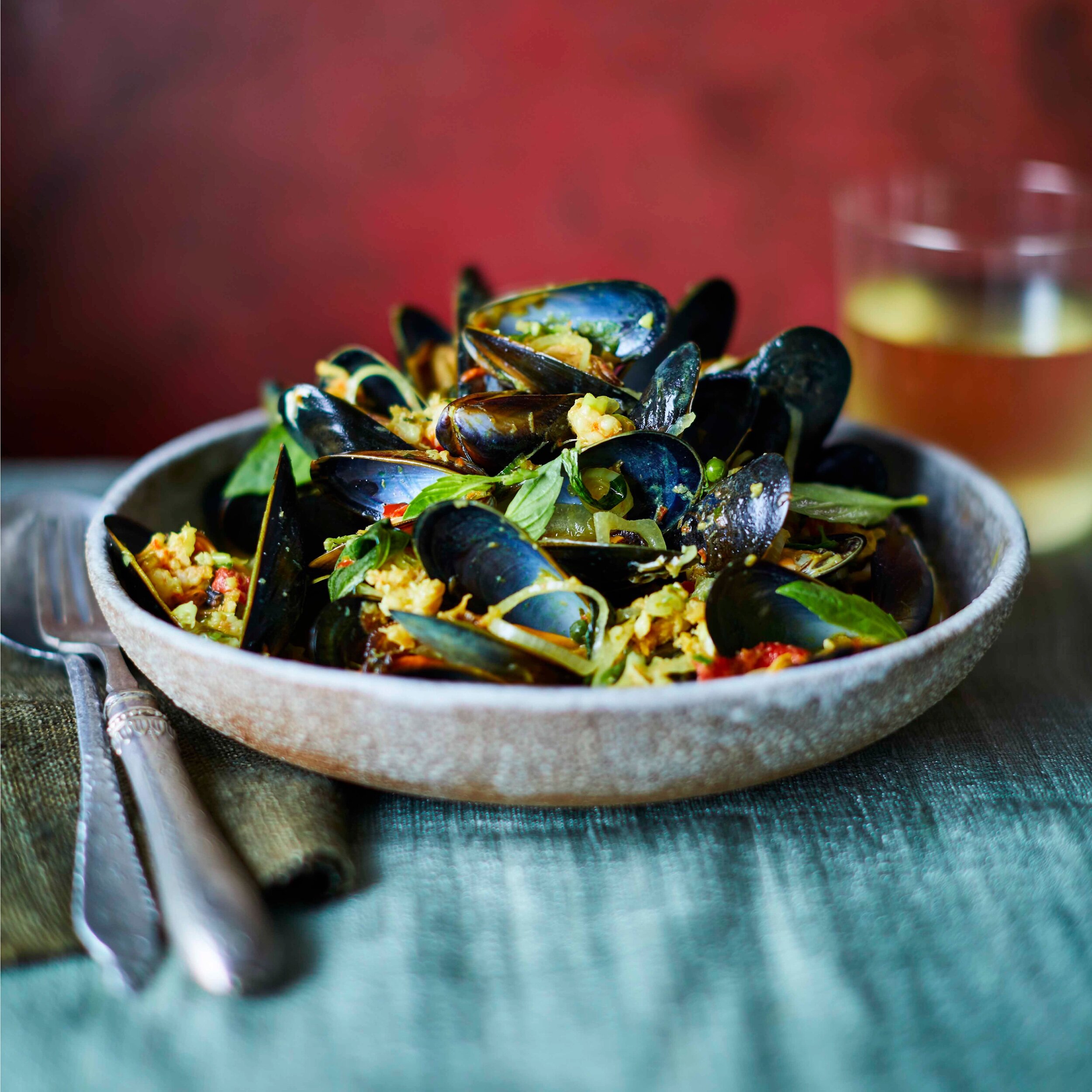
Mussels are one of the most underrated things at a fishmonger. They're cheap, they're farmed sustainably, and they cook in under five minutes. The thing that puts most people off is cleaning them, which is not actually complicated. Pull the beard (the fibrous strand between the shells) off with a firm tug downward toward the hinge. Scrub any barnacles off under cold running water with a stiff brush. Discard anything that's cracked, or anything that's open and doesn't close when you tap it firmly on the side of the sink. The open ones are dead. The ones that close are fine. Once they're cooked, discard anything that didn't open. That's the whole prep process.
On sourcing: "Cornish mussels" in the title just means buy them fresh. Not frozen, not pre-cooked in a foil bag from a supermarket shelf, not the vacuum-packed ones that have been sitting in brine for weeks. Go to a fishmonger, ask what came in that day, and cook them that evening. Mussels from any of the UK's cold coastal waters are excellent. The cold water gives them a clean, sweet flavour. Buy them as close to the coast as you can and as close to cooking time as possible.
The paste uses fresh turmeric, not ground. They're different ingredients. Fresh turmeric has an earthy, floral quality that's more aromatic and more alive than the dried powder. It'll stain your hands and your board orange when you peel it, so work quickly and don't wear anything you care about. Worth finding at a Thai or Asian supermarket, or a good greengrocer. If you genuinely can't find it, use a teaspoon of ground turmeric as a backup, but fresh is the better choice here.
The original recipe used lemon basil, which I grow in the garden and it's a beautiful match for mussels and coconut. The lemon note in it works particularly well with shellfish. Thai basil is the more practical choice for most people and it works equally well. Use whichever you can get hold of.
Cornish Mussels Stir-Fried in Lemon Basil, Chilli, Green Peppercorns, Coconut & Turmeric
Serves: 2 | Prep: 15 mins | Cook: 15 mins
Ingredients
For the paste
50g garlic, peeled
50g fresh turmeric, peeled (or 1 teaspoon ground turmeric)
1 banana shallot, peeled and roughly chopped
2 red bird's-eye chillies
2 coriander roots (optional but good)
1 pinch coarse sea salt
1 teaspoon mild curry powder
For the stir-fry
50ml rapeseed oil
10g fresh green peppercorns
4 makrut lime leaves
1 teaspoon caster sugar
50ml fish sauce
100ml fish or chicken stock
400ml coconut milk
½ teaspoon ground white pepper (or black)
3 long red chillies, cut into roll cuts, seeds mostly removed
500g fresh mussels, beards and barnacles removed
50g fresh ginger, peeled and cut into fine matchsticks
1 makrut lime, zested and juiced (or a regular lime)
A large handful of Thai basil leaves (or lemon basil if you have it)
Method
Make the paste. Pound the garlic, turmeric, shallot, bird's-eye chillies, coriander roots and sea salt in a pestle and mortar until you have a coarse paste. Add the curry powder and pound to combine. A food processor will do this in less time if you need it.
Get everything ready before you start cooking. Mussels move fast once they hit heat. Have all your ingredients measured, the mussels cleaned, the ginger cut, the basil picked. Heat a large wok over the highest heat you have.
Add the rapeseed oil. Once it's smoking, add the paste, green peppercorns and makrut lime leaves. Stir constantly for 1 to 2 minutes until the paste takes on colour and the smell shifts from raw to fragrant. Don't stop stirring.
Add the sugar and fish sauce. Keep stirring until the sugar caramelises into the paste, about a minute.
Add the stock, coconut milk, ground white pepper and long red chillies. Stir well and bring to a simmer.
Add the mussels and toss to coat them in the broth. Cover the wok if you have a lid. Cook for 3 to 5 minutes until all the mussels have opened. Give the wok a shake every minute or so. Discard any that haven't opened after 5 minutes.
Take the wok off the heat. Add the ginger matchsticks, makrut lime zest and juice, and the Thai basil. Toss everything together. The residual heat finishes the basil and ginger. Serve immediately, straight from the wok into bowls, with steamed jasmine rice on the side and a bowl for the shells.
Chef's notes
Mussels don't wait. Once they're open and you've added the basil and ginger, the dish needs to go to the table. Leftovers don't reheat well. Cook it, eat it.
Coriander roots are worth saving whenever you buy a bunch of coriander with the roots still attached. They have a more intense, earthy flavour than the leaves and they're used extensively in Thai cooking, particularly in pastes. Wash them well, dry them and keep them in the freezer if you're not using them immediately. The paste in this recipe works without them, but they add depth.
If you can find lemon basil at a Thai supermarket or grow it yourself, use it here. The citrus note in it sits particularly well with shellfish and coconut. Thai basil is the practical substitute and it's excellent. Don't use Italian basil.
Visit us at faranglondon.co.uk. Sauces and pastes for cooking Thai at home at payst.co.uk.
For more recipes, signed copies of my cookbooks are available at Payst: Cook Thai and Thai in 7.

Head chef & founder of Farang London restaurant. Cookbook author of ‘Cook Thai’ & ‘Thai in 7’. Chief curry paste basher and co-founder of Payst London.