
Spiced Mango Jam Cake

This is a Farang dessert adapted for home, and it's not an authentically Thai bake. The spices in it, cassia, cardamom, cloves, are spices I work with every day in Thai cooking, in massaman pastes, in braises, in the slow-cooked dishes that the restaurant is built on. At some point they ended up in a cake. Not because they belong to some Thai baking tradition, but because the flavours work, and that's the only obligation I think cooking has. The food at Farang has never held obligation to authenticity. It holds obligation to flavour. This cake is the same.
The mango jam is made from scratch and it's worth taking the time over. Overripe mangoes are the right choice here, the ones that have gone too soft and sweet for eating and are sitting on the counter going nowhere. The lemon goes in whole, peel and flesh together. The peel helps the jam to set, and lemon is less sharp than lime, which would pull the flavour somewhere too sour for a cake. Cook it down until it passes the cold plate test: a drop of jam on a cold plate held at an angle. If it runs, keep going. If a thin skin forms on the surface and it holds, it's ready.
Two-thirds of the jam goes into the batter. The rest goes on top once the cake comes out of the oven. The cake itself is straightforward: creamed butter, brown sugar, eggs, sour cream, spiced flour. The jam is what makes it interesting.
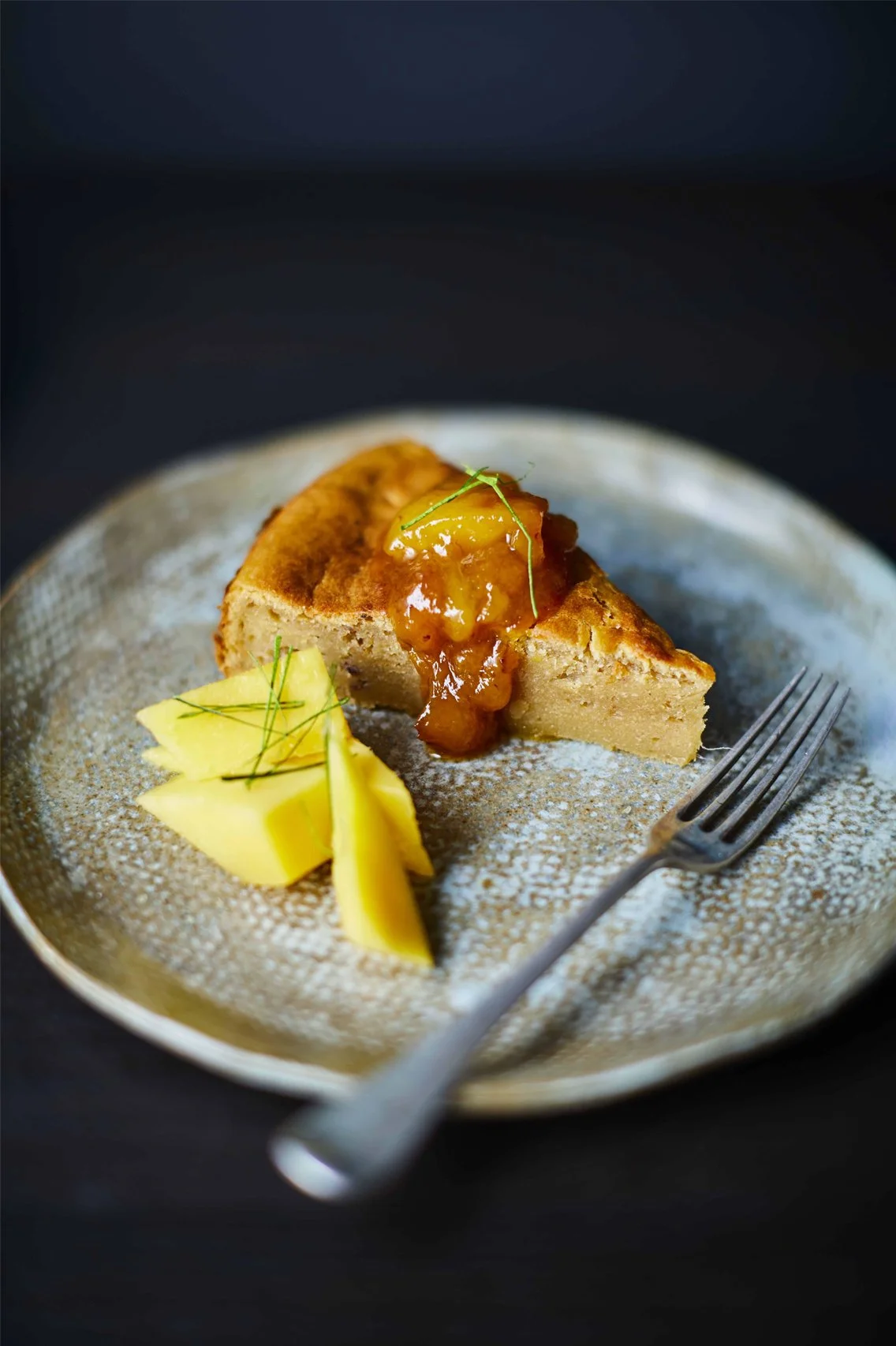
Spiced Mango Jam Cake
Serves: 6 to 8 | Prep: 15 mins | Cook: 1 hour (including the jam)
Ingredients
For the mango jam
5 medium mangoes, overripe is ideal
300g caster sugar
2 lemons, halved (keep both the peel and the flesh)
A pinch of salt
For the cake batter
210g plain flour
1 teaspoon baking powder
½ teaspoon bicarbonate of soda
½ teaspoon ground cassia bark (or ground cinnamon)
¼ teaspoon ground cardamom
¼ teaspoon ground cloves
¼ teaspoon fine salt
85g unsalted butter, softened (6 tablespoons)
170g soft brown sugar
2 medium eggs
60g sour cream
1 x 23cm (9") loose-bottomed cake tin, lightly buttered
Method
Make the jam first. Peel the mangoes, discard the skin and place the fruit into a large, heavy saucepan. Add the lemon halves, all the sugar and a pinch of salt. Bring to a medium heat, stirring regularly. Cook for around 30 minutes until it reaches a rolling boil and the fruit flesh starts to fall away from the cores. It will want to catch and stick, so keep stirring and reduce the heat if needed.
Test the jam by dropping a small amount onto a cold plate and tilting it. If it runs freely, keep cooking. If a thin skin forms on the surface and it holds its shape, it's ready. Remove and discard the lemon halves and any mango cores or fibrous strings. Leave the jam to cool.
Preheat the oven to 180°C (160°C fan). Sift the flour, baking powder and bicarbonate of soda into a large bowl. Add the cassia, cardamom, cloves and salt and mix together. Set aside.
In a separate bowl or stand mixer, cream the softened butter and brown sugar together until pale and smooth, around 3 to 4 minutes. Add the eggs one at a time, beating well after each one. Add the sour cream and mix until just combined.
Fold the dry ingredients into the butter mixture with a spatula, doing it gradually to avoid lumps. Once the batter is smooth, fold in two-thirds of the cooled mango jam.
Pour the batter into the prepared tin and tap it gently on the counter to knock out any air bubbles. Bake for 25 to 30 minutes. It's done when a skewer inserted into the centre comes out clean. If the top is colouring too quickly before the centre is set, cover loosely with foil.
Leave the cake to cool in the tin for 10 minutes before releasing it. While it's still slightly warm, spread the remaining mango jam across the top. Finish with fresh mango slices if you have them. Serve at room temperature.
Chef's notes
Cassia bark and cinnamon are close but not the same thing. Cassia is more intense, slightly more bitter and warmer in flavour. The ground "cinnamon" in most kitchen cupboards is actually cassia rather than Ceylon cinnamon, so check what you have. Either will work in this recipe but cassia is the better call.
The cold plate test is the most reliable way to check jam without a thermometer. Put a couple of small plates in the freezer before you start cooking. When you think the jam might be ready, drop a teaspoon onto the cold plate, wait 30 seconds and tilt. If it wrinkles and holds, it's set. If it runs, give it another 5 minutes and test again.
This cake keeps well, covered, for 2 to 3 days. The jam on top will firm up as it sits, which is fine. Serve it at room temperature rather than cold.
This recipe was also published in The Independent.
Visit us at faranglondon.co.uk. Sauces and pastes for cooking Thai at home at payst.co.uk.
For more recipes, signed copies of my cookbooks are available at Payst: Cook Thai and Thai in 7.
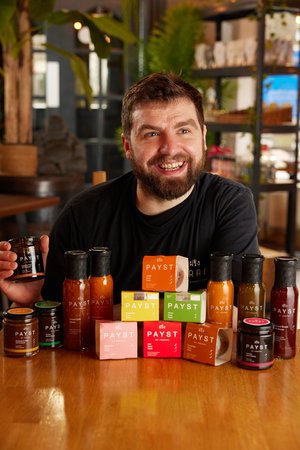
Head chef & founder of Farang London restaurant. Cookbook author of ‘Cook Thai’ & ‘Thai in 7’. Chief curry paste basher and co-founder of Payst London.