
Green Curry of Mussels with Wild Ginger, Asian Vegetables, Sweet Basil & Vermicelli Noodles
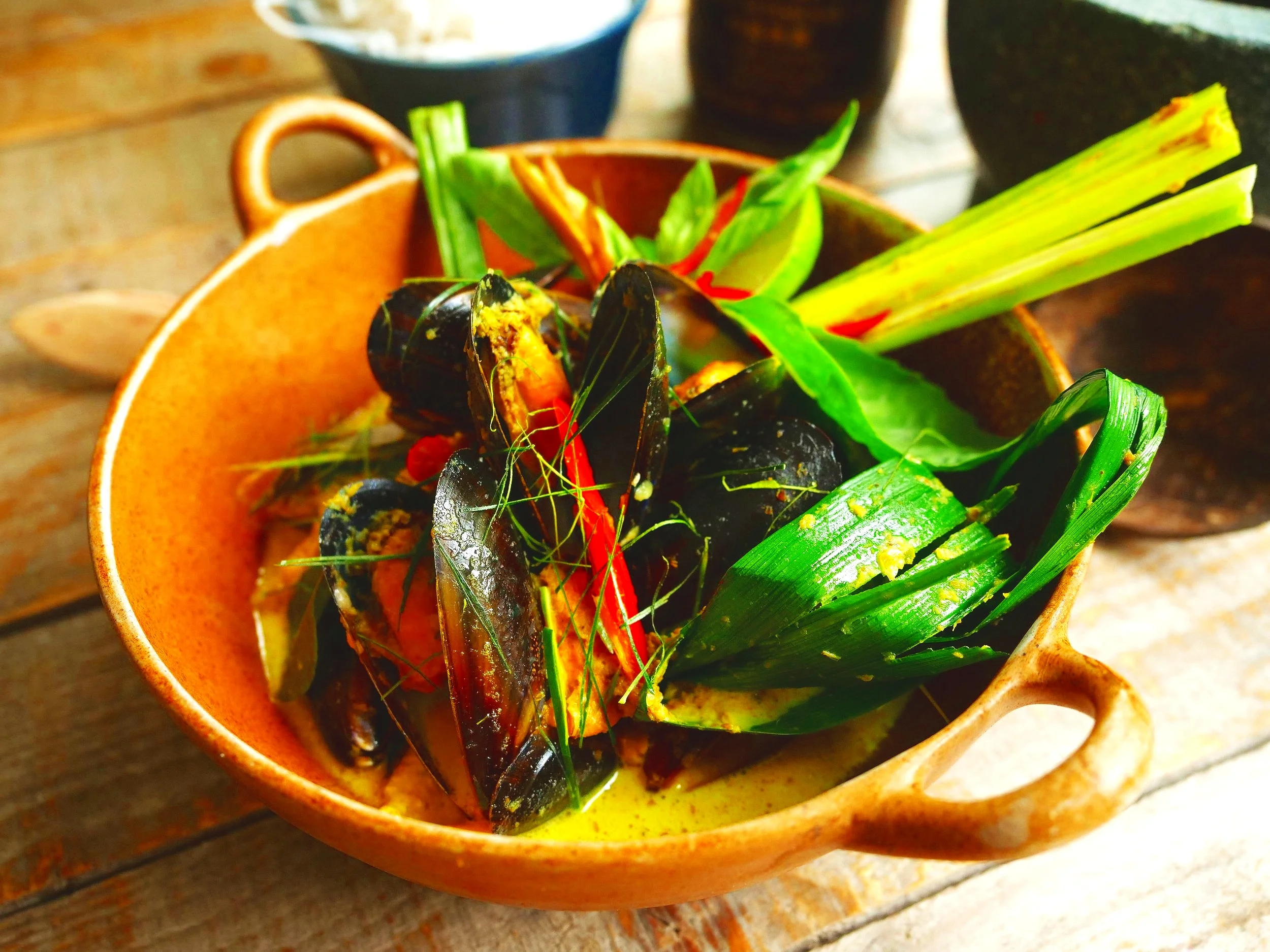
This is a dish I make at home. My wife loves it, and it's proper food: a full green curry with mussels, Asian vegetables and noodles, jasmine rice alongside, the kind of meal that takes most of a Sunday afternoon if you're making the paste from scratch. But you'll have enough paste left for three or four more meals, and that's the whole point of making it yourself. The effort is mostly in the paste, not the curry.
If you want to skip the paste-making, you can buy Farang's green curry paste from Payst and go straight to cooking the curry. If you're making it from scratch, the recipe below produces around 1kg. Use 150g for this dish, freeze the rest in 150g batches and you have the base for future curries ready when you need them. Freeze what you don't use the same day you make it: it keeps well for months and you can fry it from frozen directly into hot oil.
The thing most people get wrong with green curry is the coconut cream. More is not better. The paste needs to be the dominant flavour: spicy, salty, fragrant. The coconut cream softens it slightly, which is right, but it should never wash it out. If your curry tastes mild and sweet rather than properly hot and savoury, you've used too much and the only way back is more paste. Start with less than you think you need and taste as you go. A good green curry should make you feel the heat halfway through and keep eating anyway.
Wild ginger (grachai or krachai) is a different ingredient from regular ginger: more herbal, slightly medicinal, with a clean and bright quality that's specific to this style of curry. It goes in at the end, stirred through the finished dish rather than cooked in from the beginning. Fresh grachai is available in Thai supermarkets; frozen works nearly as well. Regular ginger substitutes but gives a different result.
A note on the pestle and mortar: without one, the paste will never be quite what it should be. Blending works as a shortcut but produces a puree rather than a paste, and the texture and flavour are different. A large granite pestle and mortar is one of the most useful things you can have in a kitchen if you cook Thai food regularly. One of my chefs once sent a pestle to the floor and broke it. They were not forgiven quickly.
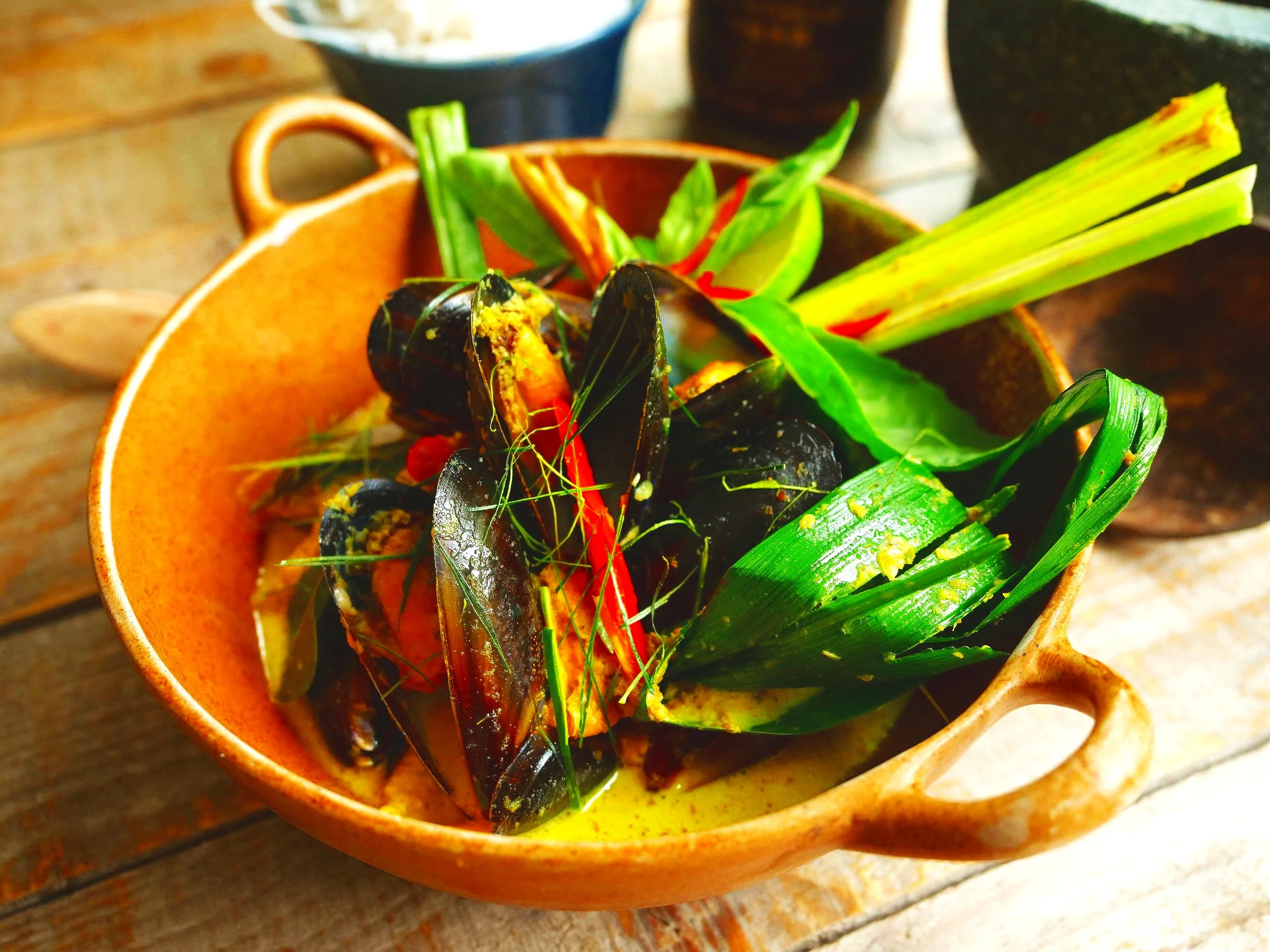
Green Curry of Mussels with Wild Ginger, Asian Vegetables, Sweet Basil & Vermicelli Noodles
Serves: 4 | Prep: 45 mins (plus 1 hr if making paste) | Cook: 25 mins
Ingredients
For the green curry paste (makes around 1kg, freeze in 150g batches)
150g fresh bird's eye chillies, stems removed, roasted over a barbecue or in a hot oven for 10 minutes until softened and smoky
150g fresh long green chillies, stems and seeds removed, roasted over a barbecue or in a hot oven for 10 minutes until softened and smoky
250g banana shallots, peeled and roughly chopped (Thai shallots if you can find them)
250g garlic, peeled
100g lemongrass, topped, tailed and outer shell removed, sliced into small chunks
30g galangal, peeled and cut into small chunks
20g coriander roots, cleaned and finely sliced
30g fresh red turmeric, peeled (gloves recommended, this stains everything)
20g wild ginger (krachai), peeled and roughly chopped
1 tablespoon gapi (fermented shrimp paste), wrapped in foil and roasted on low heat until aromatic (omit for pescatarian or vegetarian)
1 tablespoon whole white peppercorns, lightly toasted in a dry pan
3 teaspoons whole coriander seeds, lightly toasted in a dry pan
2 teaspoons cumin seeds, lightly toasted in a dry pan
2 pieces mace (roughly 2g), lightly toasted in a dry pan
1 to 2 teaspoons coarse sea salt
For the curry
2kg large mussels, washed, beards and barnacles removed
150g thin rice vermicelli noodles, blanched for 1 minute in boiling salted water and refreshed under cold running water
150g green curry paste (from above, or from Payst)
150ml coconut oil (or vegetable oil)
300ml coconut cream
200ml fish stock
20g baby corn, sliced into thin roll cuts
10g green beans, topped, tailed and cut into 2cm chunks
3 long red chillies, sliced into roll cuts
3 long green chillies, sliced into roll cuts
1 tablespoon wild ginger (grachai), peeled and thinly sliced (regular ginger works)
20g Thai basil, picked
10g coriander, washed and picked
2 tablespoons fish sauce
1 teaspoon palm sugar
½ teaspoon sea salt
1 lime, cut into cheeks to serve
Method
If making the green curry paste
Start with the hardest ingredients. Put the lemongrass and galangal into a large pestle and mortar with the sea salt and pound until broken down into a coarse paste. The salt helps grip and break the fibres. Add the coriander root and pound until incorporated. Add the turmeric, wild ginger and gapi and continue pounding. Then add the roasted chillies, working through the bird's eye first as they're tougher, then the long green chillies. Finally add the shallots and garlic and pound until the paste is cohesive and relatively smooth, with no large chunks remaining. This takes time and patience. Don't rush it.
In a dry pan over a medium heat, toast the coriander seeds until they begin to smell nutty and just start to colour. Add the mace and cumin, stir for another minute, then add the white peppercorns and remove from the heat. Let everything cool completely before grinding to a fine powder in a spice grinder. Incorporate the ground spices into the paste and pound again until fully combined. The finished paste should be cohesive, slightly moist and fragrant. Store what you're not using in an airtight container with a piece of cling film pressed directly onto the surface. Refrigerate for up to 2 weeks or freeze in 150g batches for months.
For the curry
Heat the coconut oil in a large wok over a high heat until it shimmers and just begins to smoke. Add 150g of the green curry paste and stir constantly, pressing the paste against the hot surface of the wok. After 2 to 3 minutes the paste will begin to split, the oil separating from the solids, and the colour will deepen from bright green to a darker, more muted shade. The smell will shift from raw and grassy to deeply fragrant. That split is what you're cooking for. Don't move on until it happens.
Add the palm sugar and stir until it caramelises into the paste, around 1 minute. Pour in the fish stock and 150ml of the coconut cream. Stir to combine and bring to a simmer.
Add the green beans and baby corn. Cover and simmer for 5 minutes until the vegetables are just tender but still have some bite.
Add the mussels. Cover and cook for 3 to 4 minutes, shaking the wok occasionally. The mussels are done when they have opened. Discard any that remain closed after 4 minutes. Don't overcook them: they tighten and lose their texture quickly.
Stir in the remaining 150ml coconut cream, the fish sauce, sliced chillies, wild ginger and most of the Thai basil. Fold carefully so the mussels stay in their shells. Taste now: the curry should be properly hot from the paste, salty from the fish sauce, with the coconut cream sitting behind everything as a softener rather than a flavour in its own right. If it tastes mild and sweet, more paste. If it tastes flat despite the heat, more fish sauce. If the coconut is dominating, there's no easy fix at this stage, so season aggressively with fish sauce and lime to bring it back.
Divide the blanched noodles between four bowls. Ladle the curry over, mussel shells and all. Scatter the remaining Thai basil and coriander over the top. Serve with lime cheeks alongside and jasmine rice if you want more substance.
Chef's notes
The paste recipe is the Farang green curry paste. Making it properly, in a pestle and mortar rather than a blender, produces a different texture: coarser, with more presence on the palate. A blender produces a puree, which works but is not the same thing. If you cook Thai food regularly, a large granite pestle and mortar is worth the investment.
If you're making the paste ahead, it keeps in the fridge for up to 2 weeks. The oil and salt act as preservatives. Press cling film directly onto the surface before sealing to prevent oxidation. For longer storage, freeze in 150g portions, labelled. Fry from frozen directly into hot oil: there's no need to defrost.
The mussels need to be cleaned properly before they go in. Scrub the shells under cold running water, pull off any beards and scrape off barnacles with a small knife. Tap any open mussels sharply on the counter: if they don't close within a minute, discard them. They're already dead.
Wild ginger (grachai or krachai) is available fresh in most Thai supermarkets and frozen from online suppliers. It's worth finding the real thing for this recipe. The frozen version comes in strips and can be added directly from frozen.
The wife loves it. That's good enough for me.
Visit us at faranglondon.co.uk. Sauces and pastes for cooking Thai at home at payst.co.uk.
For more recipes, signed copies of my cookbooks are available at Payst: Cook Thai and Thai in 7.
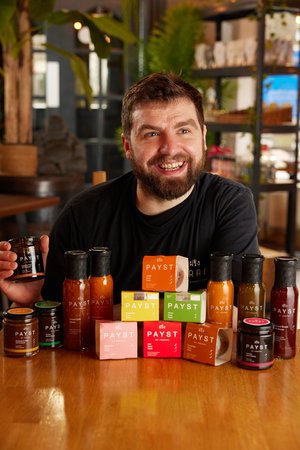
Head chef & founder of Farang London restaurant. Cookbook author of ‘Cook Thai’ & ‘Thai in 7’. Chief curry paste basher and co-founder of Payst London.