
Aged Beef Cheeks Braised in Coconut Cream, Lemongrass & Galangal with Sweet Basil
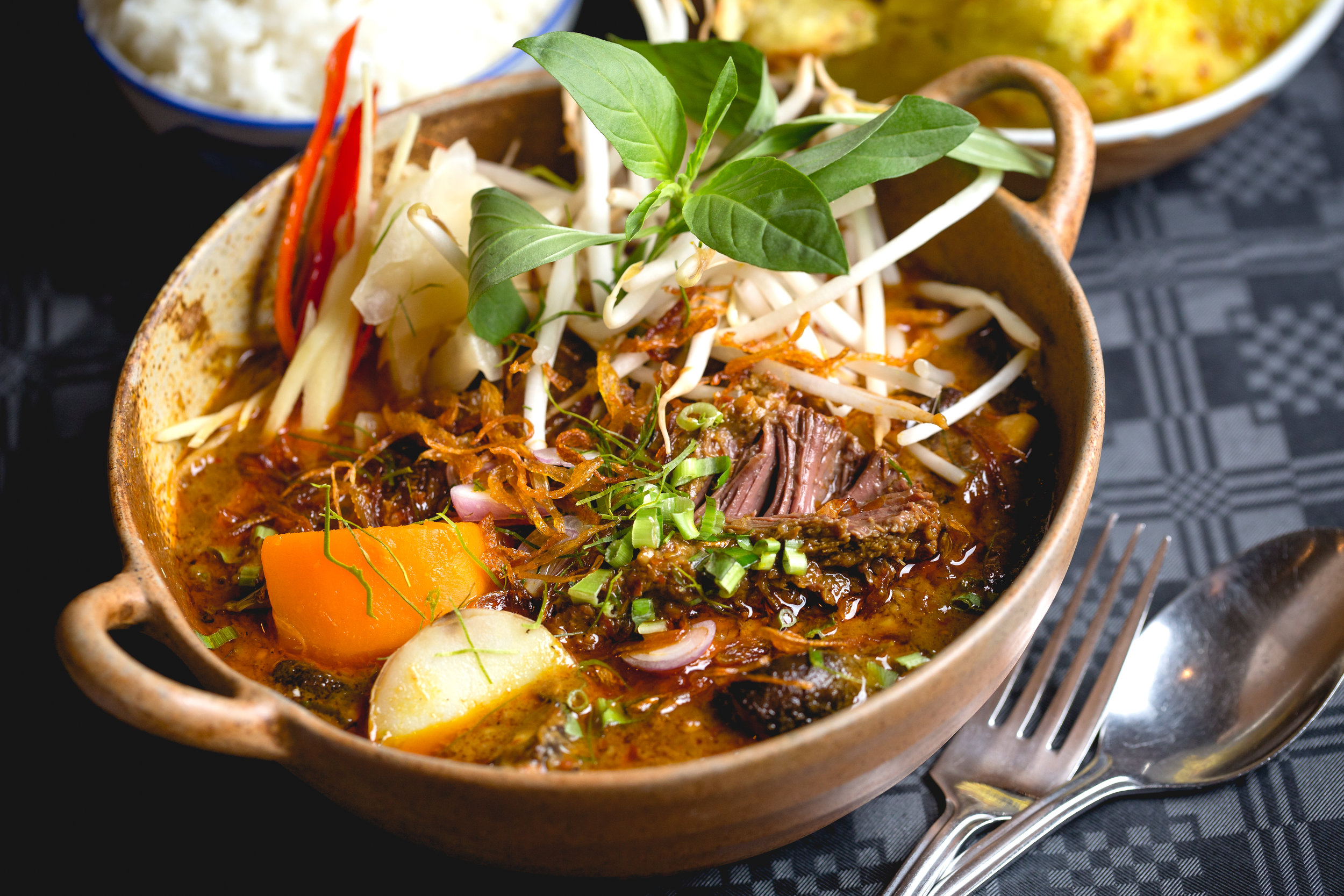
This is a Farang dish. It's been on the menu for years and it's still the thing people who've eaten at the restaurant come back and ask about most. The full name in Thai is gaeng gari, which translates roughly as 'curry curry', which isn't a very inspiring description for what is, in reality, one of the most satisfying braises I know how to cook.
The recipe is also in Cook Thai. The version here includes the gaeng gari paste, which is what we use at the restaurant and what makes the sauce properly dark and rich rather than a lighter coconut broth. Without the paste it's still good: aromatic, savoury, sweet from the cream. With it, the colour deepens to a dark amber and the flavour goes up a level. You can buy Farang's gaeng gari paste from Payst, which is what I'd recommend if you're not making it from scratch.
Beef cheeks are the right cut for this. They're incredibly tough, full of connective tissue, which is exactly why they respond so well to long braising: the collagen breaks down slowly and turns the braising liquid thick and glossy. Most braising joints will work at a pinch, beef shin being the closest substitute, but the texture you get from cheeks when they're properly cooked, spoon-soft and yielding, is difficult to replicate with anything else. Buy from a good butcher and ask for them trimmed: Swaledale in the Yorkshire Moors are my first choice, aged properly and handled well.
The key technique here is keeping the beef completely submerged in the coconut cream throughout the cook. If any part of the meat is sticking out of the liquid, it won't cook evenly: the exposed side will tighten while the rest is still collagenous and tough. Use a tray or casserole that fits the cheeks snugly, and top up with more cream or water if needed before the foil goes on. Once it's sealed and in the oven, leave it. The checking instinct is strong but resist it for the first two hours at least.
At Farang we serve this with pickled cucumber, pickled ginger, crispy shallots and pickled mustard greens. For a home version, jasmine rice, fresh coriander and a bowl of fish sauce with sliced bird's eye chillies at the table is exactly what it needs.
Aged Beef Cheeks Braised in Coconut Cream, Lemongrass & Galangal with Sweet Basil
Serves: 2 | Gluten-Free | Prep: 20 mins | Cook: 4 to 5 hrs
Ingredients
400g beef cheeks (or beef shin), trimmed of excess sinew and fat
2 sticks lemongrass, outer layers removed, bruised with the back of a knife
2 pieces galangal (40 to 50g), sliced and bruised
4 kaffir lime leaves, torn
4 long red chillies, bruised
20g Thai shallots, peeled (or any small sweet shallot)
20g fresh ginger, finely julienned (keep a third of this back for serving)
2 to 3 tablespoons gaeng gari paste (available from Payst — buy it, or make from scratch)
1.5 litres coconut cream, plus more to top up if needed
20 to 25ml fish sauce, adjusted to taste
60g palm sugar (or soft brown sugar)
1 heaped tablespoon tamarind paste
10g Thai sweet basil, picked
50ml good olive oil
1 tablespoon coarse sea salt
10g coriander, picked and washed, to serve
Method
Take the beef cheeks out of the fridge 30 minutes before you start. Preheat the oven to 160°C / 140°C fan. Rub the cheeks all over with the olive oil and coarse sea salt, working it in well.
Heat a large, heavy-bottomed ovenproof casserole or deep roasting tray over a high heat. When it's smoking, lay the beef cheeks in and sear without moving for 2 to 3 minutes, until deeply coloured and pulling cleanly away from the surface. Turn and repeat on every side. The goal here is a proper deep crust, not a light golden brown. If it's sticking it's not ready: give it another minute. Take the cheeks out and set aside.
In the same pan, add the lemongrass, galangal, kaffir lime leaves, chillies, shallots and two-thirds of the julienned ginger. Keep everything moving over the heat for 3 to 4 minutes until fragrant and beginning to soften. You want the aromatics to open up in the residual fat from the sear.
Add the gaeng gari paste to the aromatics and stir it into the pan. Cook for 2 to 3 minutes, pressing the paste against the hot surface until it's fragrant, the oil is beginning to separate out and the colour darkens.
Return the beef cheeks to the pan. Add the coconut cream, tamarind paste, fish sauce and palm sugar. Stir to dissolve the sugar. The beef needs to be fully submerged: top up with more coconut cream or water to cover if needed. Taste the braising liquid now before it goes in the oven: it should be sweet, salty, slightly sour from the tamarind, with the warmth of the paste underneath. Adjust fish sauce or palm sugar accordingly.
Cover tightly with two layers of foil (or a tight-fitting lid) and place in the oven. Cook for 4 hours before testing. To test: push a spoon into the thickest part of the cheek. It should slide in with no resistance and the meat should begin to fall apart. If there's any grip left, cover and return for another 30 to 45 minutes and test again. Some cheeks take up to 5 hours. Tougher older animals take longer, and that is not a problem, just patience.
Once the beef is properly tender, carefully remove it from the braising liquid. Pass the liquid through a fine sieve into a wide pan, pressing the aromatics to extract all the flavour. Discard the solids. Skim any fat from the surface of the sauce, then bring to a simmer over a medium heat and reduce by about a third until the sauce is rich, glossy and coats the back of a spoon. Taste now: it should be deeply savoury and sweet with the tamarind giving a gentle sourness underneath. If it needs more salt, fish sauce. If it's flat, a pinch more palm sugar lifts it.
Return the beef to the sauce and warm through gently. Serve in bowls over jasmine rice. Spoon the sauce generously over the top. Finish with the reserved julienned ginger, Thai sweet basil and picked coriander. A small bowl of fish sauce with sliced bird's eye chillies at the table is not optional.
Chef's notes
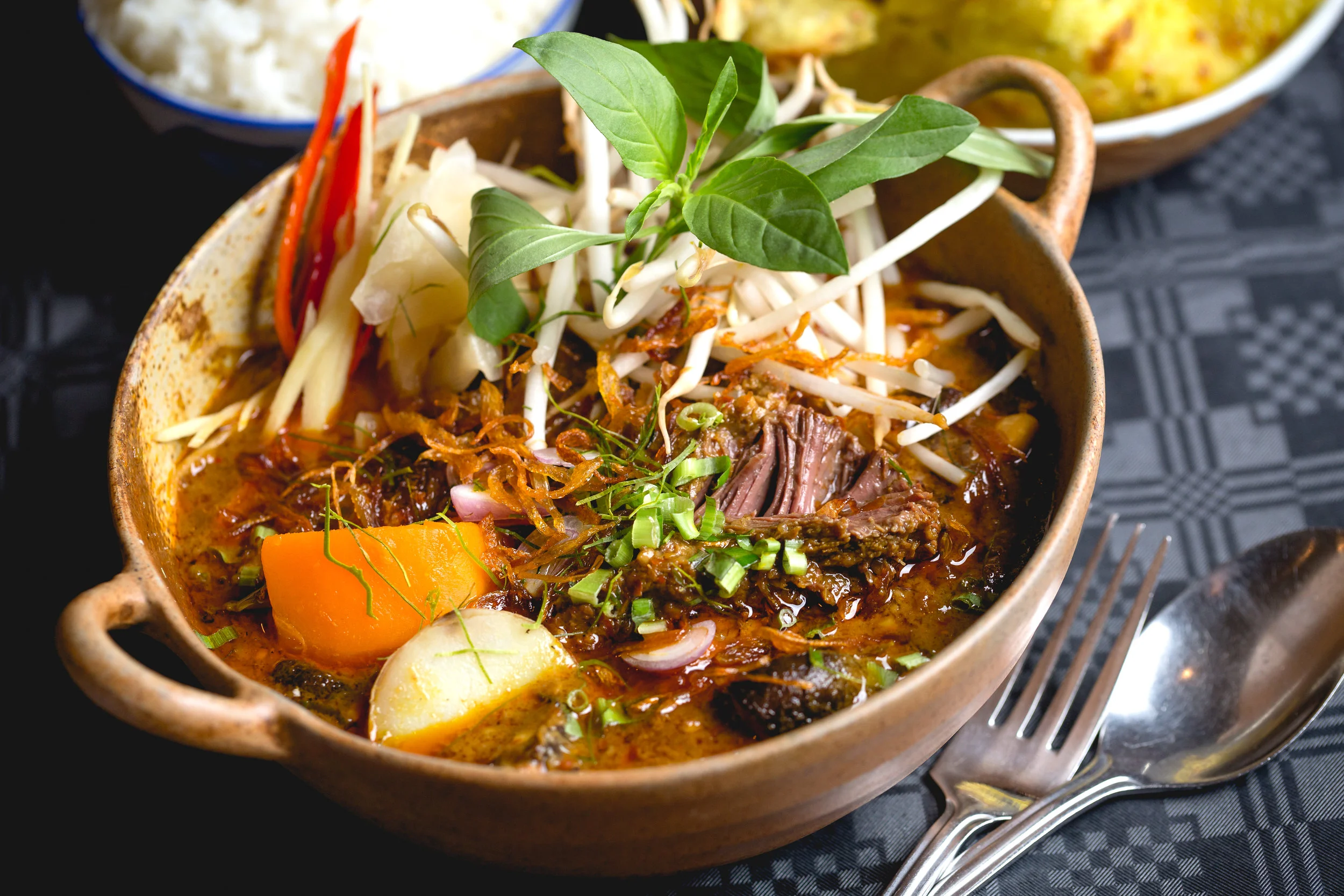
The colour of the sauce in the photograph is darker than the sauce will look if you make this without the gaeng gari paste. The paste is what darkens it to that deep amber. Without it, the braising liquid stays a lighter, more golden tan colour: still delicious, but a different dish. If you've made this before and wondered why your broth was lighter, that's the reason. Add 2 to 3 tablespoons of Farang's gaeng gari paste from Payst at stage 4 and it will match the photo.
For beef substitutes: shin works well and is easier to find than cheeks. Brisket is fine. Oxtail is excellent if you can get it, though the bones mean you'll need more liquid to cover. Whatever you use, the meat needs to be fully submerged throughout the cook. Check at the 2-hour mark and top up if needed.
To scale for more people: keep the same quantity of braising liquid and aromatics and add more beef cheeks, making sure everything stays submerged. Four beef cheeks (around 800g) feed four people comfortably without needing to double the liquid. For 8 people (around 1.5 to 1.6kg of beef), double the recipe in full, use a larger vessel and make sure the meat is covered. More liquid means the sauce will need more seasoning once reduced: taste and adjust fish sauce, palm sugar and tamarind as you go.
The dish keeps well. Refrigerate in the braising liquid and it actually improves overnight as the flavours settle. Reheat gently in a pan with a splash of water to loosen. It also freezes well in the sauce for up to 3 months.
This recipe appeared in Cook Thai, published by Kyle Books.
Visit us at faranglondon.co.uk. Sauces and pastes for cooking Thai at home at payst.co.uk.
For more recipes, signed copies of my cookbooks are available at Payst: Cook Thai and Thai in 7.
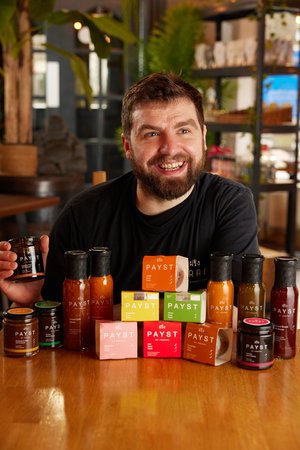
Head chef & founder of Farang London restaurant. Cookbook author of ‘Cook Thai’ & ‘Thai in 7’. Chief curry paste basher and co-founder of Payst London.