
Stir-Fried Chicken, Nahm Prik Pao (Chilli Jam), Morning Glory & Green Mango

Nahm prik pao is the condiment I use more than almost anything else at Farang. Deep-fried chilli jam: shallots, garlic, ginger, dried chillies and dried prawns fried individually until golden and fragrant, then blended back with the oil and cooked down with palm sugar, tamarind and fish sauce until thick, dark and deeply caramelised. The recipe is in Cook Thai and it will have its own page on this site soon. If I could put myself on a nahm prik pao IV drip, I would.
It's not the same as jaew, which is charred over fire rather than fried in oil. The two taste completely different and they're not interchangeable. Nahm prik pao is richer, darker and sweeter, with a depth that comes entirely from the frying. Let down with coconut milk it makes an excellent dressing or dip. A heaped spoonful into a hot wok changes the character of a stir-fry sauce entirely, which is exactly what's happening here.
The process takes time and it has to. Each ingredient gets fried separately because each has a different moisture content and will colour at a different rate: shallots first as they have the most moisture, then garlic, then ginger, dried prawns and dried chillies last. Nothing should go past deep golden. Once fried and cooled, everything goes into a food processor with half the oil, gets blended, and then cooks down again over a low heat with palm sugar, fish sauce and tamarind. It thickens slowly. You'll know it's ready when the oil starts to separate at the edges and the whole thing smells deeply smoky and caramel. That's the point where it becomes something else entirely.
The stir-fry itself is quick once the jam is made. Morning glory, ong choi, is a Thai vegetable that grows along riverbeds, mild and slightly sweet, close to spinach in flavour. Green mango at the end adds sharpness and crunch that the rich sauce needs. I use corn-fed chicken from Swaledale Foods in Yorkshire because I'm a posh bastard and it's delicious, but any good chicken breast works well here. The fragrant oil left from frying goes into the wok for the stir-fry: it's already deeply flavoured and nothing from the process gets wasted
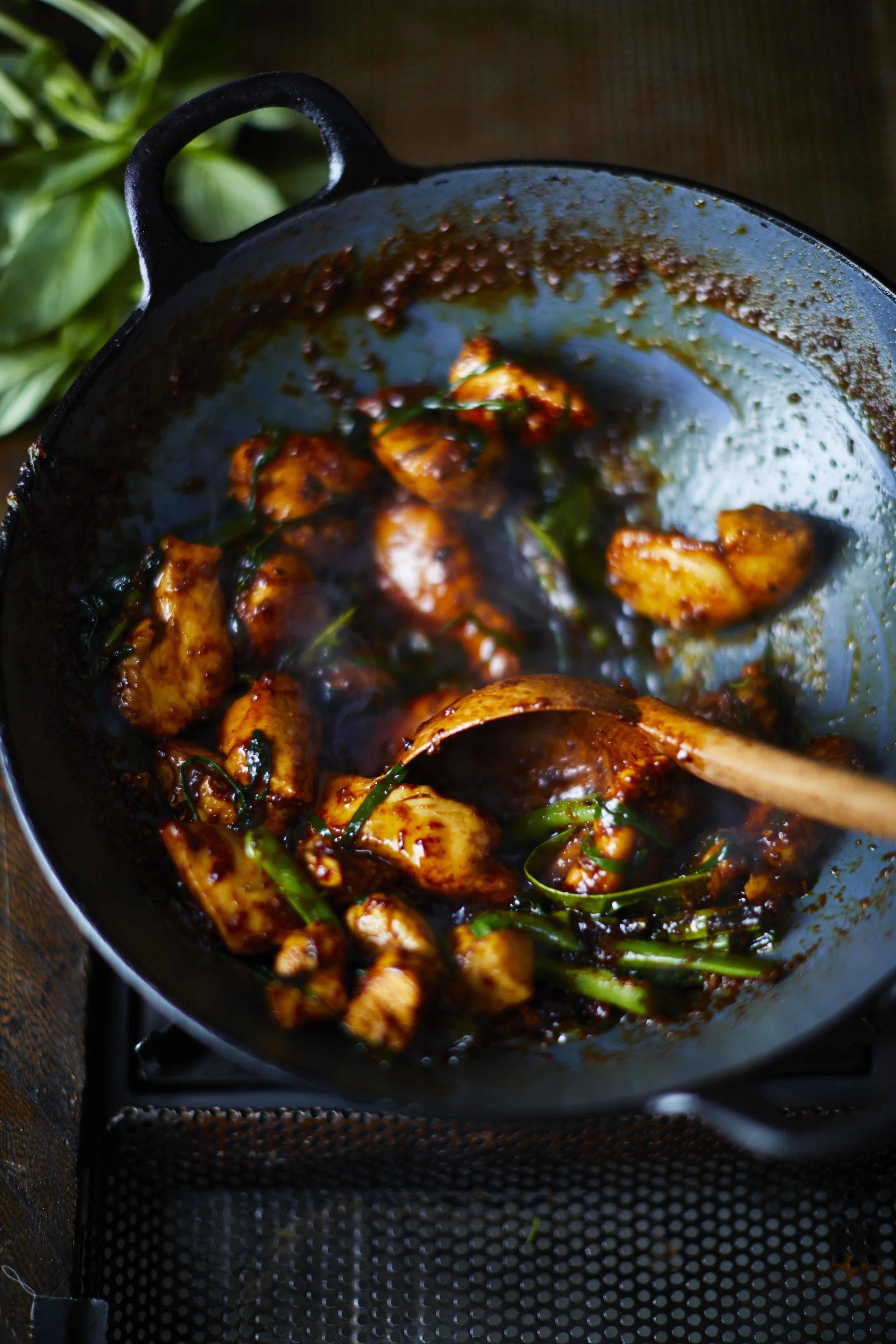
Stir-Fried Chicken, Nahm Prik Pao (Chilli Jam), Morning Glory & Green Mango
Serves: 2 | Prep: 20 mins | Cook: 45 mins
Ingredients
For the nahm prik pao (makes more than needed, keeps for weeks)
200g banana shallots, peeled and thinly sliced
200g garlic cloves, peeled and thinly sliced
1 knob of ginger, peeled and julienned
100g dried long red chillies
50g dried prawns
2 teaspoons gapi (fermented shrimp paste), wrapped in foil and roasted on a low heat until aromatic
60g palm sugar, roughly chopped
100ml fish sauce
100ml tamarind water (buy tamarind in blocks, soak in warm water and strain)
1 litre cooking oil
For the stir-fry
2 chicken breasts, cut into rough 2cm pieces
40g green beans, topped and tailed, halved
40g ong choi (morning glory), roughly chopped (pak choi or spinach works as a substitute)
200ml chicken stock
1 heaped tablespoon nahm prik pao (from above)
1 pinch caster sugar
1 pinch ground white pepper
To finish
40g green mango, peeled and julienned
40g Thai basil, washed and picked
20g coriander, washed and picked
1 fresh long red chilli, thinly sliced
2 pinches crispy deep-fried garlic (reserved from the jam)
2 pinches crispy deep-fried shallot (reserved from the jam)
Method
Start with the nahm prik pao. Heat the oil in a large wok or deep pan to around 160°C. Test it by dropping in a shallot slice: it should sink slightly, then rise and sizzle steadily. Add all the shallots and fry, stirring regularly with a fork or spider so they colour evenly. The edges of the pan cook faster, so keep them moving. Fry until deep golden, not brown. Remove with a slotted spoon and drain on kitchen paper, separating any clumps. Reserve 2 pinches for garnish.
In the same oil, fry the garlic slices until golden. They cook faster than the shallots, so watch them. Remove and drain. Reserve 2 pinches for garnish. Fry the julienned ginger until crisp and golden, then remove and drain. Fry the dried prawns until just beginning to colour and smell toasted, then remove. Finally, fry the dried chillies for 30 to 40 seconds only: they go from raw to done very quickly and burnt chillies will make the jam bitter. Drain everything separately.
Leave the oil to cool slightly, then transfer all the fried ingredients to a food processor or blender. Add half the cooled oil and blitz to a coarse, fragrant paste. Don't over-process: you want texture, not a smooth puree.
Transfer the paste to a clean saucepan over a low heat. Add the roasted gapi, palm sugar and fish sauce. Cook gently, stirring regularly, until the palm sugar melts and the paste thickens and darkens further, around 10 minutes. Add the tamarind water and stir to combine. Taste now: the jam should be intensely sweet from the palm sugar, salty and deep from the fish sauce, with the tamarind cutting through with a sharp sourness underneath. If it tastes flat, more fish sauce. If the sweetness is dominating, more tamarind. If the whole thing lacks depth despite both, it needs a few more minutes on the heat. When the oil begins to separate at the edges and the surface is deeply caramelised and fragrant, it's done. Cool and store in a clean sealed jar.
For the stir-fry, heat a wok until smoking. Add a tablespoon of the fragrant frying oil. Add the chicken pieces and leave them undisturbed for a minute so they colour properly. Toss and cook until browned all over and nearly cooked through.
Add the green beans and morning glory and toss everything together in the wok. Pour in the chicken stock, add the heaped tablespoon of nahm prik pao and stir to coat everything in the sauce. Cook for 2 minutes until the vegetables are just tender and the sauce has thickened and clings to the chicken. Season with the caster sugar and white pepper. Taste now: the sauce should be rich, slightly sweet and smoky from the jam, with heat building underneath. If it needs more salt, a splash of fish sauce. If it tastes flat, a pinch more sugar will open it up.
Remove from the heat. Toss through the Thai basil, coriander and fresh red chilli. Plate immediately. Scatter the julienned green mango, crispy fried garlic and crispy fried shallots over the top and serve.
Chef's notes
The nahm prik pao recipe makes considerably more than you need for one stir-fry, which is the point. It keeps in a sealed jar in the fridge for weeks, the oil acting as a preservative. Use it through salad dressings let down with coconut milk and lime, as a garnish for soups, stirred through noodles, or a spoonful over a bowl of jasmine rice with a fried egg. If you don't want to make it from scratch, it's available in jars in most Asian supermarkets, usually labelled as roasted chilli paste or Thai chilli jam. Maesri and Mae Pranom are reliable brands. This recipe gives you the from-scratch version, which is in a different league.
Morning glory (ong choi) is widely available in Chinese and Asian supermarkets. Pak choi or regular spinach work as substitutes: the flavour changes slightly but the dish still works.
The frying oil left from making the nahm prik pao is deeply flavoured and worth using for other things. It goes well through noodle dishes, for frying eggs or as a base for any stir-fry that needs depth. Keep it in a jar in the fridge.
You can buy nahm prik pao in a jar and skip the frying entirely. The dish is still very good. But if you make it from scratch once, you'll understand why the jar version is a compromise.
Visit us at faranglondon.co.uk. Sauces and pastes for cooking Thai at home at payst.co.uk.
For more recipes, signed copies of my cookbooks are available at Payst: Cook Thai and Thai in 7.
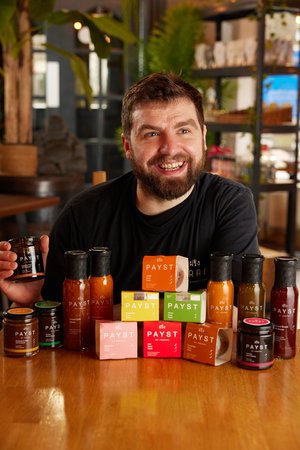
Head chef & founder of Farang London restaurant. Cookbook author of ‘Cook Thai’ & ‘Thai in 7’. Chief curry paste basher and co-founder of Payst London.