
Seabass with Sour Fruits & Dill

Nahm yum is one of the most useful dressings in Thai cooking. It's built on four things: sweet, salty, sour and spicy. Garlic and chilli pounded together, sugar, lime juice, fish sauce. It does an immediate and thorough job of seasoning everything it touches, and when it hits raw fish it starts to work on the proteins in the same way heat would. This is the same principle as ceviche. The fish doesn't go near a pan. The lime juice does the cooking. Leave it in the acid for three minutes and it changes from translucent to opaque, the texture firms slightly, and it's ready.
Dill has a longer history in Thai cooking than most people realise. It runs through soups, noodle dishes and salads in the north of the country, where the herb garden looks different to the central plains. I use it here because it works with fish in a way that's hard to replace, that clean aniseed freshness sitting against the acidity of the dressing and the sweet flesh of the seabass. It's also one of the more available fresh herbs in the UK, which counts for something.
The sour fruits are flexible. Physalis is what's in the recipe and it works well, but Granny Smith apple, green mango and seedless grapes all do a similar job. You want something with sharpness and a little texture, a counterpoint to the heat of the chilli and the richness of the fish. Whatever's sharp in your kitchen, use it.
This works as a starter, as a side to grilled meats or a curry, or as a main with jasmine rice alongside. It takes 15 minutes and has virtually no washing up.
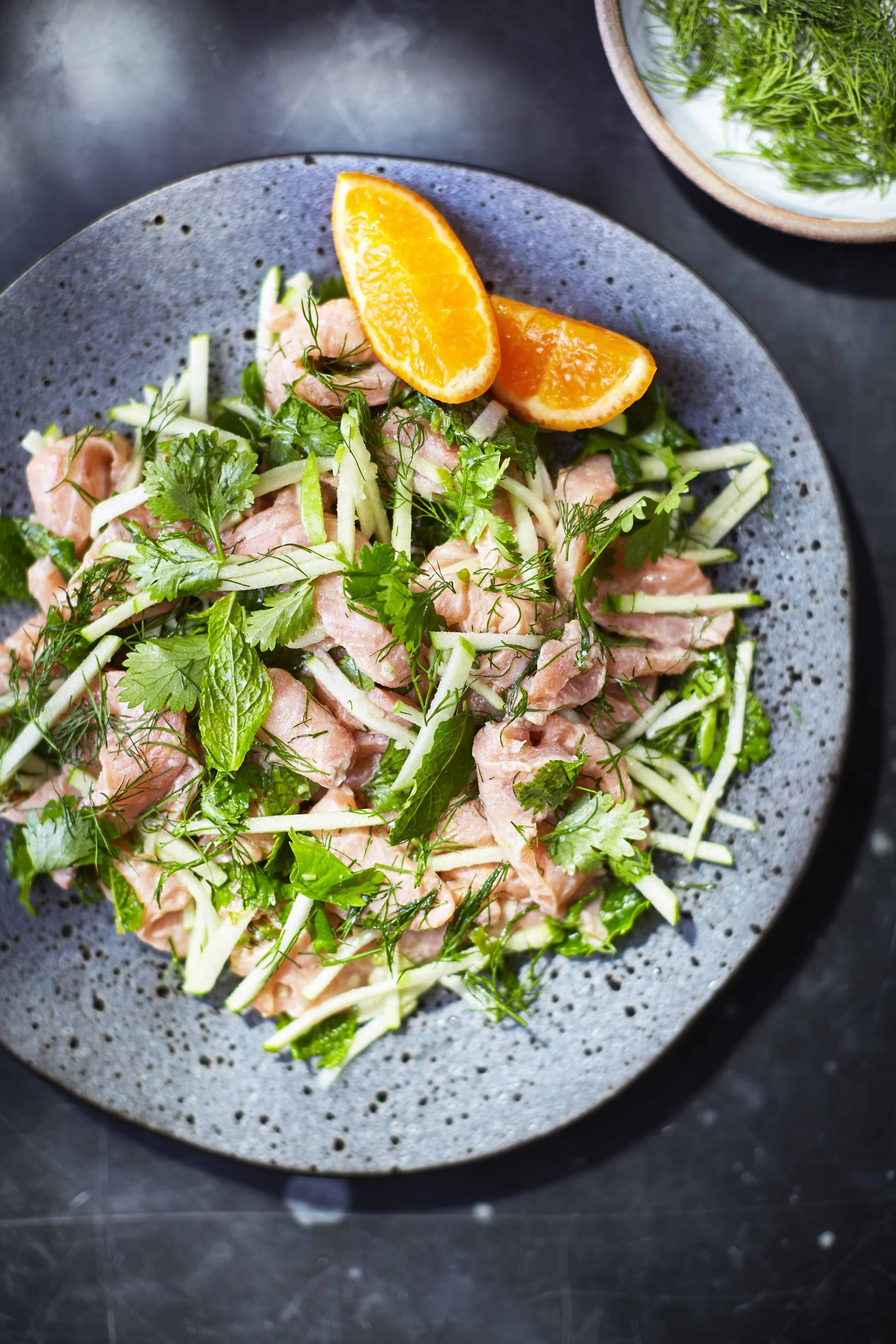
Seabass with Sour Fruits & Dill
Serves: 2 | Prep: 15 mins | No cooking required
Ingredients
For the nahm yum dressing
2 garlic cloves, peeled
3 long green chillies
3 teaspoons caster sugar
Small pinch of coarse salt
Juice of 3 limes
Juice of 2 clementines
3 tablespoons fish sauce
For the fish
2 seabass fillets, skin removed and pin-boned
Juice of 1 lime
To finish
8 physalis, husks removed and quartered (or Granny Smith apple, green mango or seedless grapes)
2 tablespoons fresh dill, roughly chopped
Method
Make the dressing first. Pound the garlic and green chillies in a pestle and mortar with the caster sugar and coarse salt until you have a rough paste. The sugar acts as an abrasive to help break the garlic down. Stir in the juice of 3 limes, the clementine juice and the fish sauce. Taste it. The dressing should balance sweet, salty, sour and spicy, with the lime as the sharpest note. Adjust any of those elements to your palate.
Using the sharpest knife you have, slice the seabass fillets at a 75-degree angle to the board. Each slice should be no more than 1cm thick. Place the slices in a glass or ceramic bowl and pour over the juice of the remaining lime. Toss gently to coat and leave to sit for exactly 3 minutes. Watch the fish. It will change from translucent to opaque and firm slightly at the edges. That's the acid doing the work.
Lay the seabass slices flat on a plate. Spoon over enough nahm yum dressing to coat each piece. Scatter over the physalis and the chopped dill. Serve immediately, with steamed jasmine rice, or alongside grilled meats or a curry.
Chef's notes
Ask your fishmonger to pin-bone the fillets when you buy them. It takes them seconds and saves you working through the fish with tweezers at home.
The 3-minute cure is calibrated for slices of around 1cm. Thicker slices need a little longer. Thinner slices go over quickly. You're looking for the colour change throughout, not just at the edges. Once it's opaque, it's ready. Beyond that and the texture firms up more than you want.
The nahm yum in this recipe is the same dressing I make at Farang and it's one of the most versatile things in Thai cooking. Make a larger batch and keep it in the fridge. It goes over grilled fish, through a salad, alongside a roast, or used as a dipping sauce. It lasts several days refrigerated.
Salmon works equally well in place of seabass, same process, same timing. Large raw king prawns work too, though they may need an extra minute in the acid depending on their size. Avoid pre-cooked prawns.
Visit us at faranglondon.co.uk. Sauces and pastes for cooking Thai at home at payst.co.uk.
For more recipes, signed copies of my cookbooks are available at Payst: Cook Thai and Thai in 7
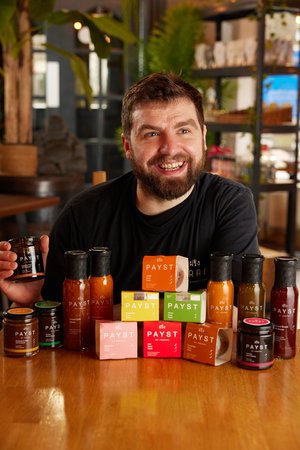
Head chef & founder of Farang London restaurant. Cookbook author of ‘Cook Thai’ & ‘Thai in 7’. Chief curry paste basher and co-founder of Payst London.