
Roasted Peach Massaman with Seasonal Vegetables, Peanuts & Coriander

Massaman is the curry that most closely resembles a braise. You fry the paste hard and long in oil, season it, then let everything simmer together until the dry spices mellow and the fat settles back into the sauce. The paste is loaded, cardamom and cinnamon and star anise all stacked on top of each other, and that weight of spice and fat is exactly why fruit works so well in it. The sweetness cuts through, the acidity balances it, and the juices from the fruit as it cooks become part of the seasoning.
I use peaches because I can get them locally when they're in season here in the UK, and a peach with good acidity and some structure is about as close to perfect for this dish as you can get. The key is caramelisation. Get colour on the cut surface over a proper flame and the natural sugars deepen into something with a little bitterness at the edges, which works against the richness of the sauce rather than amplifying it. Do not roast them in the oven if you can avoid it. The BBQ is where this dish lives.
The paste needs 15 minutes in the oil before anything else goes in. Massaman paste is denser and drier than most Thai pastes and those spices need time to bloom properly. Add the peanuts at this stage too, frying them into the base rather than scattering them on at the end. They absorb the spiced oil and become part of the sauce in a way that garnishing never gives you.
We had this on the vegan menu at Farang for a long time and it was one of the strongest dishes on the whole menu, vegan or not. Payst massaman paste if you're in the UK, the spice balance is already right, the seasoning is done, and you can focus entirely on the technique.
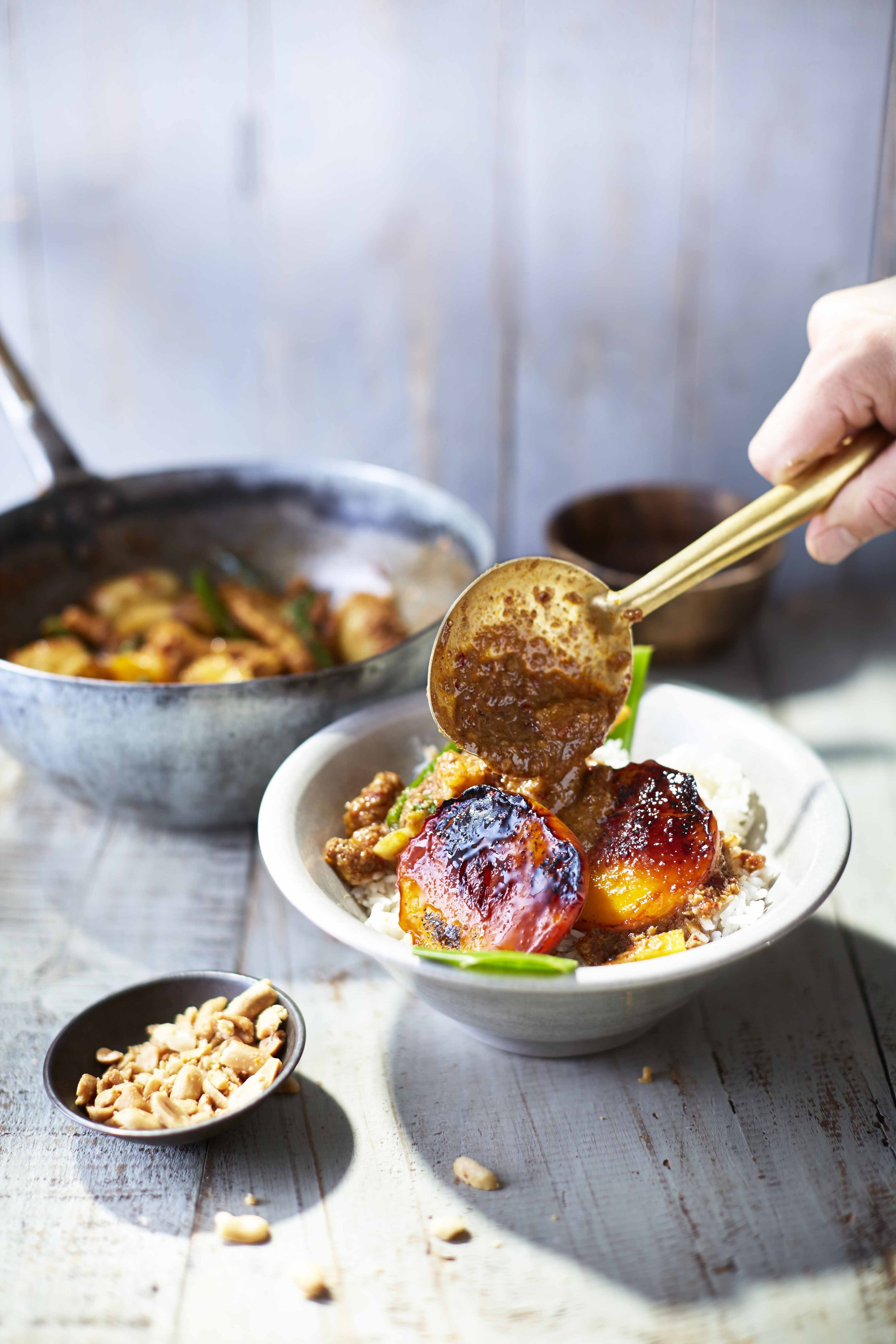
Roasted Peach Massaman with Seasonal Vegetables, Peanuts & Coriander
Serves: 2 | Prep: 15 mins | Cook: 40 mins
Ingredients
For the curry
100ml vegetable oil or coconut oil, plus a little extra to brush the peaches
20g unsalted roasted peanuts, plus 5g roughly chopped to garnish
2 tablespoons palm sugar (or soft dark brown sugar)
50ml soy sauce (use seaweed sauce to keep it gluten-free)
30ml tamarind paste
300ml vegetable stock
400ml coconut cream
150g new potatoes, halved
50g baby sweetcorn, halved lengthways
100g pineapple, peeled and roughly diced
10g dried raisins
50g green beans, topped, tailed and halved
10g Thai sweet basil
For the peaches
2 peaches, hard and unripe if possible, halved and stoned
A pinch of sea salt
A pinch of caster sugar
To serve
Steamed jasmine rice
10g coriander leaves
Method
Pour the oil into a large, heavy pan over a medium heat. Add the massaman paste and fry it, stirring constantly with a spatula to stop it catching. After a couple of minutes, add the peanuts. Keep frying and stirring for around 15 minutes in total. The paste should darken significantly and the smell shifts from raw spice to something richer and more cohesive. This is the most important part of the whole recipe. Don't rush it.
Add the palm sugar and fry for another minute until it starts to caramelise and just catches at the edges. Stir in the soy sauce, then pour in the vegetable stock and half the coconut cream. Reduce the heat and let the curry simmer gently for 10 to 15 minutes to mellow the spices.
Add the potatoes and simmer for around 10 minutes until they're just starting to soften. Add the sweetcorn, pineapple, raisins and green beans. Simmer for another 8 to 10 minutes until everything is cooked through but still has some shape to it.
While the curry is in its final simmer, get the BBQ hot. Brush the cut surfaces of the peaches with a little oil and season with the salt and caster sugar. Grill cut-side down over medium heat until properly charred and soft, about 8 to 10 minutes depending on ripeness. You want real colour, not just warmth. Rest them on a board while you finish the curry.
Add the tamarind and remaining coconut cream to the curry. Taste. It should be rich and deeply spiced, with sweetness from the fruit and proper sourness from the tamarind. Add more soy if it needs salt, a touch more tamarind if the sweetness is too heavy. Stir in the Thai sweet basil off the heat.
Spoon the curry generously over steamed jasmine rice. Place the charred peach halves on top. Scatter with the coriander and the chopped peanuts. Eat while the peach is still warm from the grill.
Chef's notes
If you don't have a BBQ, roast the peaches cut-side up at 200°C/gas mark 6 for 20 minutes on a lined baking tray. You won't get the char but you'll get the caramelisation. It's the cold-weather version of the dish and it works.
Hard, unripe peaches are better here than ripe ones. They hold their shape on the grill, and the sharpness of an unripe peach is actually more useful against the sweetness of the curry than a fully ripe one, which can go jammy. If peaches aren't in season, nectarines work equally well. Mango is good too, though it's a slightly different result.
The 15 minutes frying the paste is not optional. Massaman has more dry spice in it than most Thai pastes and it needs the full time in oil to open up. The peanuts go in at the same stage, not at the end. Start the paste before you prep anything else.
This recipe was also published in Cook Thai.
Visit us at faranglondon.co.uk. Sauces and pastes for cooking Thai at home at payst.co.uk.
For more recipes, signed copies of my cookbooks are available at Payst: Cook Thai and Thai in 7.
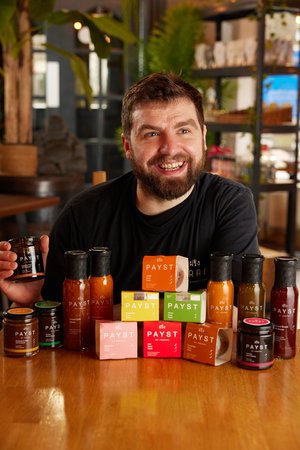
Head chef & founder of Farang London restaurant. Cookbook author of ‘Cook Thai’ & ‘Thai in 7’. Chief curry paste basher and co-founder of Payst London.