
Wood Smoked Barbecued Chicken & Vegetable Green Curry
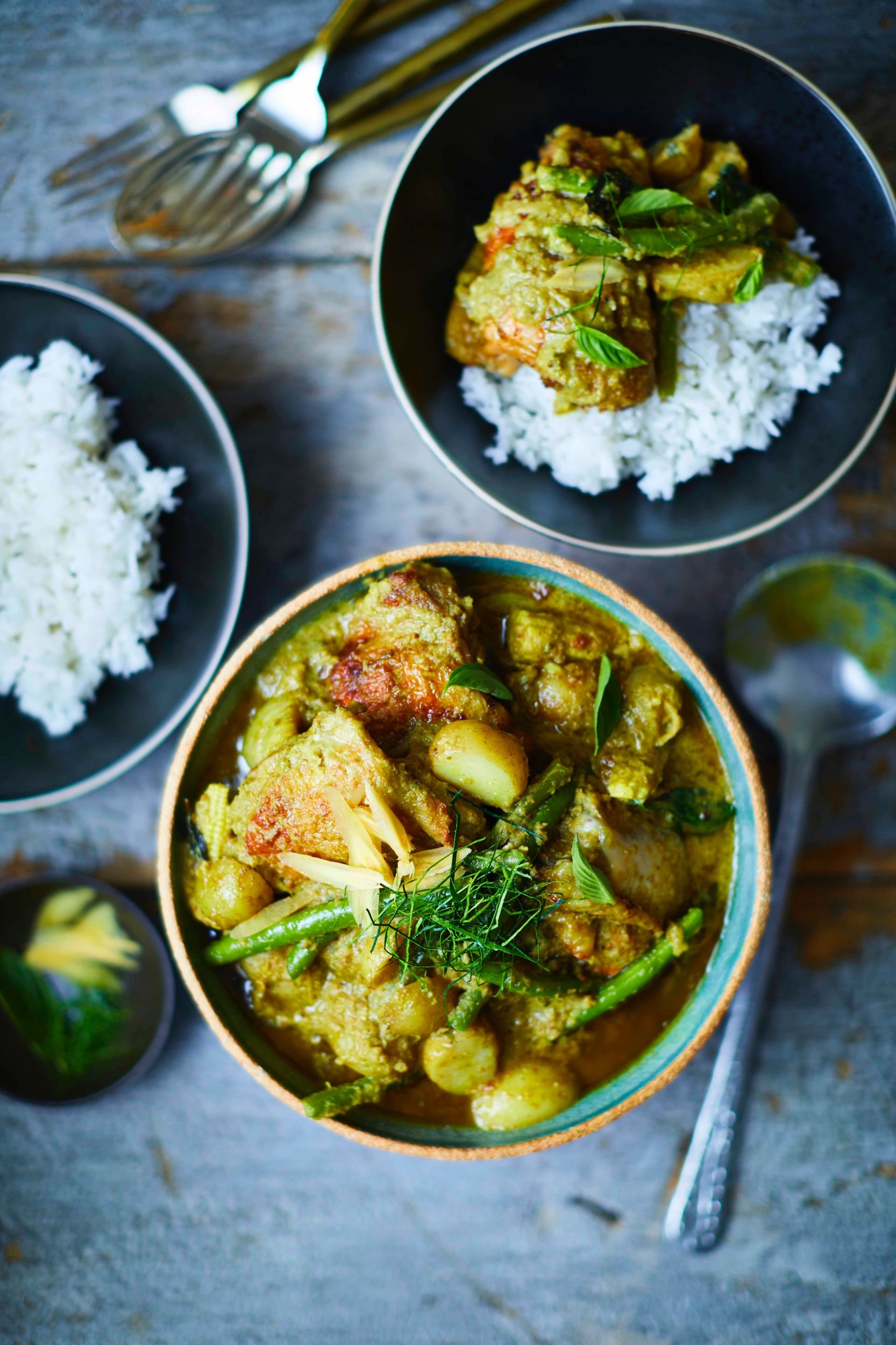
Green curry gets done wrong more than almost any other Thai dish. The version most people know, sweet and mild and thick with coconut cream, barely resembles what the dish actually is. A proper green curry is salty and spicy, with just enough palm sugar to balance the bitterness of the paste. The coconut cream is there for body, not to dampen everything down.
I love this version because it brings two things together that genuinely work. You marinate the chicken thighs in the paste overnight, get proper colour and smoke on them over the coals, then finish them in a fresh curry at the end. What you end up with is char and crunch and smokiness in a dish that would otherwise be good, but not remarkable.
The paste is everything here. At Payst we make ours fresh and if you're in the UK you can order the green curry paste online. It makes a real difference using something fresh. Fresh krachai (wild ginger, also called jungle ginger) is the other thing I won't compromise on. Plenty of it, added off the heat just before serving so it keeps its brightness. Thai sweet basil too, not Italian. They're different plants entirely.
Season this saltier than feels comfortable. It eats with plain jasmine rice and the rice balances it. If it tastes right before the rice, it'll taste flat with it.
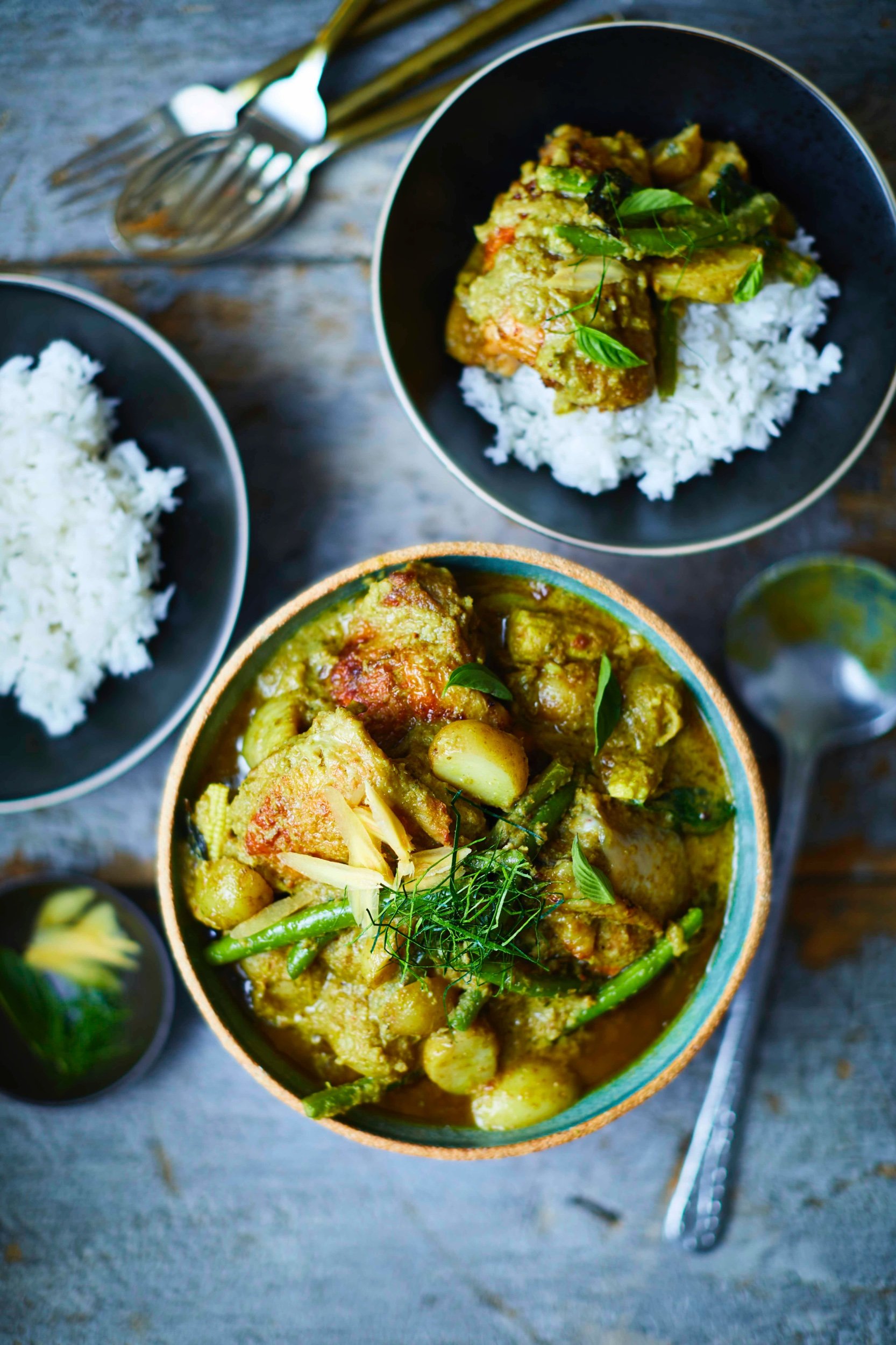
Wood Smoked Barbecued Chicken & Vegetable Green Curry
Serves: 2 | Prep: 20 mins | Cook: 25 mins (plus at least 2 hours marinating)
Ingredients
For the marinade and curry base
20g coconut oil (or a neutral vegetable oil)
3g makrut lime leaves (also sold as kaffir lime leaves), torn
10ml fish sauce (omit if using pre-seasoned Payst)
10-15g palm sugar (omit if using pre-seasoned Payst)
200ml good chicken stock
1 x 400ml tin coconut cream
4 free-range chicken thighs, on the bone (400-600g total weight)
One chunk of smoking wood (hickory is my favourite)
Vegetables
100g new potatoes, halved
80g baby sweetcorn, sliced on the angle
80g green beans, halved lengthways
10g fresh krachai (wild ginger), peeled and julienned
10g Thai sweet basil
To serve
Steamed jasmine rice
Pickled cucumber
Crispy shallots
Method
Start with the marinade. Take roughly a third of the green curry paste and rub it all over the chicken thighs, getting it under the skin where you can. Cover and refrigerate for at least 2 hours, overnight if possible. This is what gives the chicken its flavour before it goes anywhere near the grill.
When you're ready to cook, heat the coconut oil in a large, heavy pan over a high heat. Add the remaining green curry paste and the torn makrut lime leaves. Fry it hard. You want the paste to cook in the oil until it begins to split, which will look a bit like scrambled eggs. The smell shifts from raw and sharp to deeply fragrant. This is the foundation of the whole curry. Don't rush it.
Add the fish sauce and let it fry into the paste for about a minute, then add the palm sugar. Stir until it melts and just catches, darkening the paste slightly. Add half the chicken stock and 100ml of the coconut cream. Stir and set aside while you grill the chicken.
Light the barbecue and wait until the coals are glowing with white ash forming. Place your smoking wood directly onto the coals. Grill the chicken skin-side up with the lid closed to trap the smoke, 3 to 4 minutes per side until the skin is golden and properly charred in places. Rest while you finish the curry.
Return the curry base to the pan over a medium heat and bring it to a gentle simmer. Add the remaining stock. Add the potatoes and simmer for around 8 minutes until just tender.
Add the sweetcorn and green beans and cook for another 4 to 5 minutes. You want them cooked but still with some bite. Add the remaining coconut cream and the BBQ chicken thighs and bring everything back to temperature.
Taste now. It should be properly salty with real heat coming through and just a hint of sweetness underneath. Add fish sauce if it needs salt, a touch more sugar if the paste bitterness is too sharp, a little more coconut cream if the heat is too aggressive, but don't lose it entirely.
Stir through the fresh krachai and Thai sweet basil off the heat just before serving. At Farang we add pickled cucumber on top and a scattering of crispy shallots. It's not traditional but the freshness of the pickle cuts through the richness and the shallots add texture. Serve immediately with steamed jasmine rice.
Chef's notes
If you don't have a BBQ, you can get close by charring the chicken thighs hard in a cast iron pan, skin-side down, until properly coloured before building the curry around them. You won't get the smoke but you'll get the caramelisation. It still works.
The vegetables in this recipe are flexible. New potatoes, sweetcorn and green beans are what I've used here, but aubergine, courgette or whatever is good at your greengrocer will go in without any adjustment to the method. The krachai and basil are not flexible. Those go in off the heat every time.
The krachai (wild ginger) is worth looking for at a Thai or Asian grocery rather than substituting. It has a distinct flavour that common ginger doesn't replicate. If you genuinely can't find it, use young stem ginger and accept it will be a different dish.
This recipe was also published in The Independent, Hilton Magazine and Verge Magazine.
Visit us at faranglondon.co.uk. Sauces and pastes for cooking Thai at home at payst.co.uk.
For more recipes, signed copies of my cookbooks are available at Payst: Cook Thai and Thai in 7.
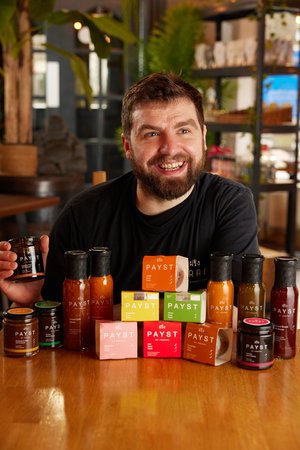
Head chef & founder of Farang London restaurant. Cookbook author of ‘Cook Thai’ & ‘Thai in 7’. Chief curry paste basher and co-founder of Payst London.