
Coriander Root: What It Is and How to Use It
Thai Ingredients
In Thai: raak pak chee
The best part of the coriander plant is the bit the supermarket cuts off. Thai cooks use the roots as much as the leaves: pounded into curry pastes, marinades and dipping sauces.
- Tastes like
- Deep, earthy coriander, peppery
- Find it
- Asian grocers, roots on
- Swap
- The bottom of the stalks
What it is
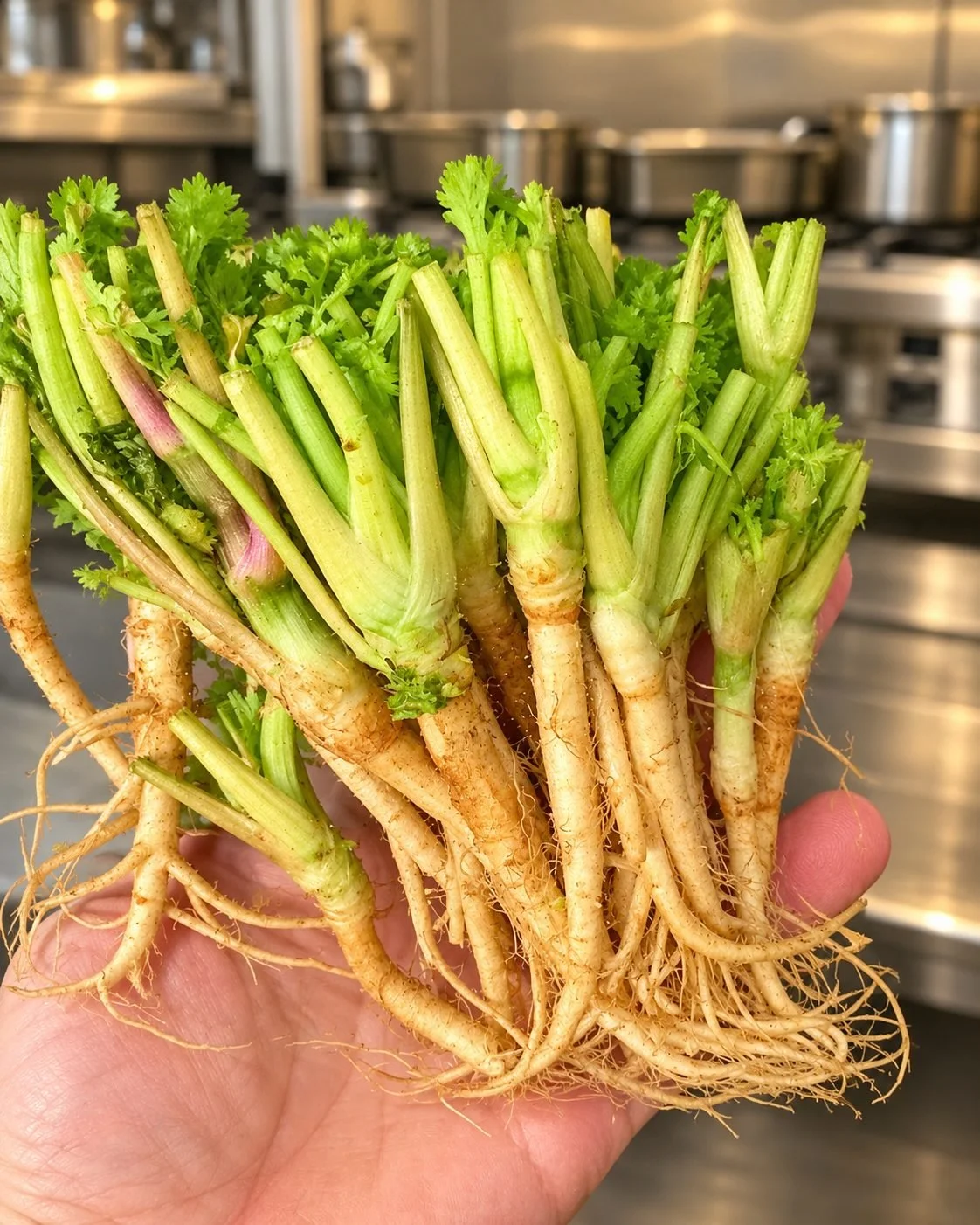
The white roots at the bottom of a coriander plant, raak pak chee in Thai. They taste like the leaves, only deeper and earthier, with a peppery edge, and they hold up to pounding and cooking where the leaves would turn to mush.
Thai cooks waste nothing, and the roots are a good example (I wrote more about that in zero-waste Thai cooking). They go into green curry paste, nahm jim, stocks and marinades. Pretty much every curry paste I make has coriander roots pounded in after the chillies and lemongrass.
The three buddies
Coriander root, garlic and white pepper, pounded together, is one of the foundations of Thai cooking. In Thailand it has a nickname, saam gler, the three buddies, and the Michelin Guide calls it a paste no Thai kitchen can do without.
Smear it on chicken and grill it, and you’ve got the base of gai yang. Fry a spoonful in oil before a stir-fry. Stir it into minced pork for dumplings or soup balls. Drop it into a pot of stock for an instant Thai flavour. If you only learn one Thai paste, learn this one.
Pound the white pepper first, then the coriander root with a pinch of salt, which acts like grit, then the garlic last. My grilling over fire skill shows it in action.
How to use it
Scrub the roots well under the tap, as soil hides in every crease. Trim off any stringy hairs. Then chop them roughly before pounding or blitzing, as they’re fibrous.
In curry pastes, they go in after the tough stuff, the lemongrass and galangal, and before the garlic and shallots. In soups like tom yum, you can bruise a few whole roots and drop them in, then fish them out before serving. In dipping sauces, they get pounded with chilli and garlic before the lime and fish sauce go in. My curry paste and dipping sauces skills cover both.
Where to buy it
Asian supermarkets sell big bunches of coriander with the roots still on, usually for less than a small supermarket pack. Some farmers’ markets do too. Look for firm white roots and perky leaves.
Online Thai grocers also sell the roots on their own, flown in from Thailand. And here’s a cheap trick: a living pot of coriander from the supermarket has roots. Pull the whole thing out, use the leaves, and you’ve got roots for your paste.
Don’t mix it up with
Coriander seeds, luk pak chee, are a spice from the same plant, toasted and ground into curry pastes. Different flavour, different job, and no swap for the roots.
Vietnamese coriander, pak paew, is a different plant altogether, with a peppery, lemony leaf. Lovely in salads and laap, but it tastes nothing like coriander root and won’t do its job.
Storing it
Cut the roots off when you get home, scrub them, dry them and freeze them in a bag. They keep for months and pound well from frozen. Stand the leafy stalks in a glass of water in the fridge with a bag over the top, like a bunch of flowers.
What to use instead
The bottom few centimetres of the coriander stalks, which have more flavour than the leaves. Use about twice as much as the roots the recipe asks for. It won’t be quite as deep, but nobody will complain.
And if you think coriander tastes of soap, the roots are much milder than the leaves, so give them a go. My piece on the coriander soap gene explains what’s going on.
Quick answers
What is coriander root used for in Thai cooking?
Curry pastes, marinades, dipping sauces and stocks. Pounded with garlic and white pepper, it makes one of the basic Thai seasoning pastes.
Where can I buy coriander with roots in the UK?
Asian supermarkets sell big bunches with the roots on. Online Thai grocers sell the roots on their own, and a living pot of coriander has roots too.
What can I use instead of coriander root?
The bottom few centimetres of the coriander stalks. Use about twice as much.
Can you freeze coriander root?
Yes. Scrub, dry and freeze the roots in a bag. They keep for months and pound well from frozen.
Is coriander root the same as coriander seed?
No. Seeds are a dried spice from the same plant with a different flavour. They can’t replace the roots.
What is the Thai three buddies paste?
Saam gler: coriander root, garlic and white pepper pounded together. It’s used as a marinade, a stir-fry base and to flavour stocks.
Further reading: Real Thai Recipes on coriander root, National Geographic on coriander in Thai cooking.
More from the Thai larder
Every ingredient I cook with, explained: what it is, where to find it and what to use instead.
All Thai ingredients, A to ZGet my free Thai Pantry guideSubscribe and new recipes, articles and guides land in your inbox as soon as they go up.
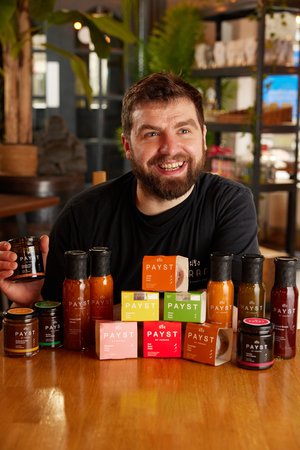
Head chef & founder of Farang London restaurant. Cookbook author of ‘Cook Thai’ & ‘Thai in 7’. Chief curry paste basher and co-founder of Payst London.