
Zero-Waste Thai Cooking: How I Transform Kitchen Scraps Into Restaurant-Quality Dishes
The first kitchen I worked in, everything you couldn't use went straight in the bin. Prawn shells, herb stems, vegetable trimmings, the offcuts of offcuts. Nobody thought twice about it. You were moving at pace, production mattered, and the idea that a coriander stalk had value hadn't arrived yet.
Thai cuisine changed that for me, and it changed it fast.
The philosophy isn't something you learn in a sentence. It's something you absorb over time, cooking in kitchens where nothing gets thrown away because the people cooking know exactly what each part of an ingredient is capable of. Stems, shells, bones, offcuts. Not scraps. Ingredients at a different stage of their usefulness.
At Farang we use prawn shells for stock. That might sound obvious, but I want to be specific about what that actually means. The shells go in a dry pan first, roasted hard until they're deeply caramelised, almost catching at the edges. Then into water with lemongrass and galangal, and they become something extraordinary: a stock more intensely prawn-flavoured than any amount of prawn flesh would give you. The shells that used to fill our bins are now the backbone of one of our most popular curries.
Coriander roots are the one that surprises people most. In British kitchens the roots get cut off and binned without a thought. In Thai cooking the roots are the point. More aromatic than the leaves, more earthy than the stems, pounded into curry pastes where they add a depth that nothing else provides. We buy coriander specifically for the roots. The leaves are almost secondary.
Lemongrass works the same way. The lower, tender section gets sliced into curries and salads. The tough upper section that most people throw away gets split and simmered into stocks, giving a long galangal-forward aromatic depth that you can't rush or fake. Makrut lime leaves stripped from the stem for service, the stems going straight into the next batch of stock. Woody Thai basil stems too fibrous to eat, infusing oils. There is always somewhere for something to go.
The part I find most interesting is what happens when you apply this to British ingredients. Hispi cabbage cores, the dense tight centre that gets trimmed and binned in most kitchens, pickle brilliantly with Thai flavours. Fish sauce, palm sugar, lime, bird's eye chilli. The core has more crunch than the leaves and takes the pickling liquid differently, giving you a textural garnish that does something to a rich curry that the outer leaves never could. Chicken bones become tom kha-style broths with galangal and lime leaves. Slightly overripe tomatoes become nam prik relishes, the surplus sweetness pulled into line by fish sauce and dried chilli.
We plan the menu at Farang by working backwards from what needs using up, not forwards from what we feel like cooking. Some of the dishes I'm most proud of started as a conversation about a tray of something that needed dealing with. That constraint pays off.
None of this is new. Thai cooks have cooked this way for centuries, not as a sustainability statement, but because the ingredients were too good and too hard-won to waste any part of them. The philosophy was already there. We just had to pay attention to it.
At home the same logic applies. Prawn shells in the freezer until there are enough for stock. Coriander roots pounded into your curry paste rather than cut off and discarded. Soft ginger grated into a marinade. Chilli seeds left in rather than scraped out. Wilted pak choi cooked hard in a hot wok where the heat does the work. Nothing dramatic. Just the habit of looking at each ingredient and asking what else it can do before you throw it away.
If you want more of this, subscribe. New recipes and articles straight to your inbox, and my free Thai Pantry guide to get you started. Sign up here.
Visit us at faranglondon.co.uk. Sauces and pastes for cooking Thai at home at payst.co.uk.
For more recipes, signed copies of my cookbooks are available at Payst: Cook Thai and Thai in 7.
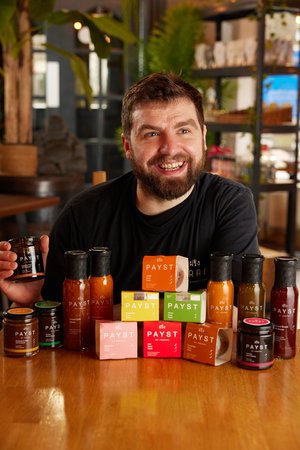
Head chef & founder of Farang London restaurant. Cookbook author of ‘Cook Thai’ & ‘Thai in 7’. Chief curry paste basher and co-founder of Payst London.