
Coconut Milk: What It Is and How to Buy a Good One
Thai Ingredients
In Thai: kati
Coconut milk is the richness in most of the Thai curries people know, and in nearly every Thai dessert. It also varies more than almost anything else on the shelf, so it pays to know what you’re buying.
- Tastes like
- Rich, sweet, nutty, creamy
- Find it
- Every supermarket, Asian grocers
- Swap
- Creamed coconut blended with hot water
What it is
Coconut milk is squeezed from the grated white flesh of a mature brown coconut, mixed with water. In Thai, coconut is kati. The first, thick squeeze is coconut cream, hua kati. The thinner second squeeze, or cream let down with water, is coconut milk, hang kati.
Not every Thai curry has coconut in it. Jungle curry and most northern curries are made with stock or water, so nothing softens the chilli and they hit a lot harder. Try my beef cheek jungle curry if you want to see the difference.
Five coconut things people mix up
Walk down the world food aisle and there are five things with coconut on the label, and they don’t swap for each other.
| Product | What it is | Use it for |
|---|---|---|
| Coconut cream | The thick, rich first squeeze. Roughly twice the fat of coconut milk | Frying curry paste, desserts, finishing a curry |
| Coconut milk | Thinner, with more water | The body of curries and soups, rice, desserts |
| Creamed coconut | A hard white block of ground, dried flesh | Grate and blend with hot water in a pinch |
| Cream of coconut | Sweetened coconut syrup | Cocktails. Never curry |
| Coconut water | The clear liquid from young green coconuts | Drinking |
If your curry has come out sickly sweet, nine times out of ten someone grabbed cream of coconut. Check the label for sugar.
Buying a good one
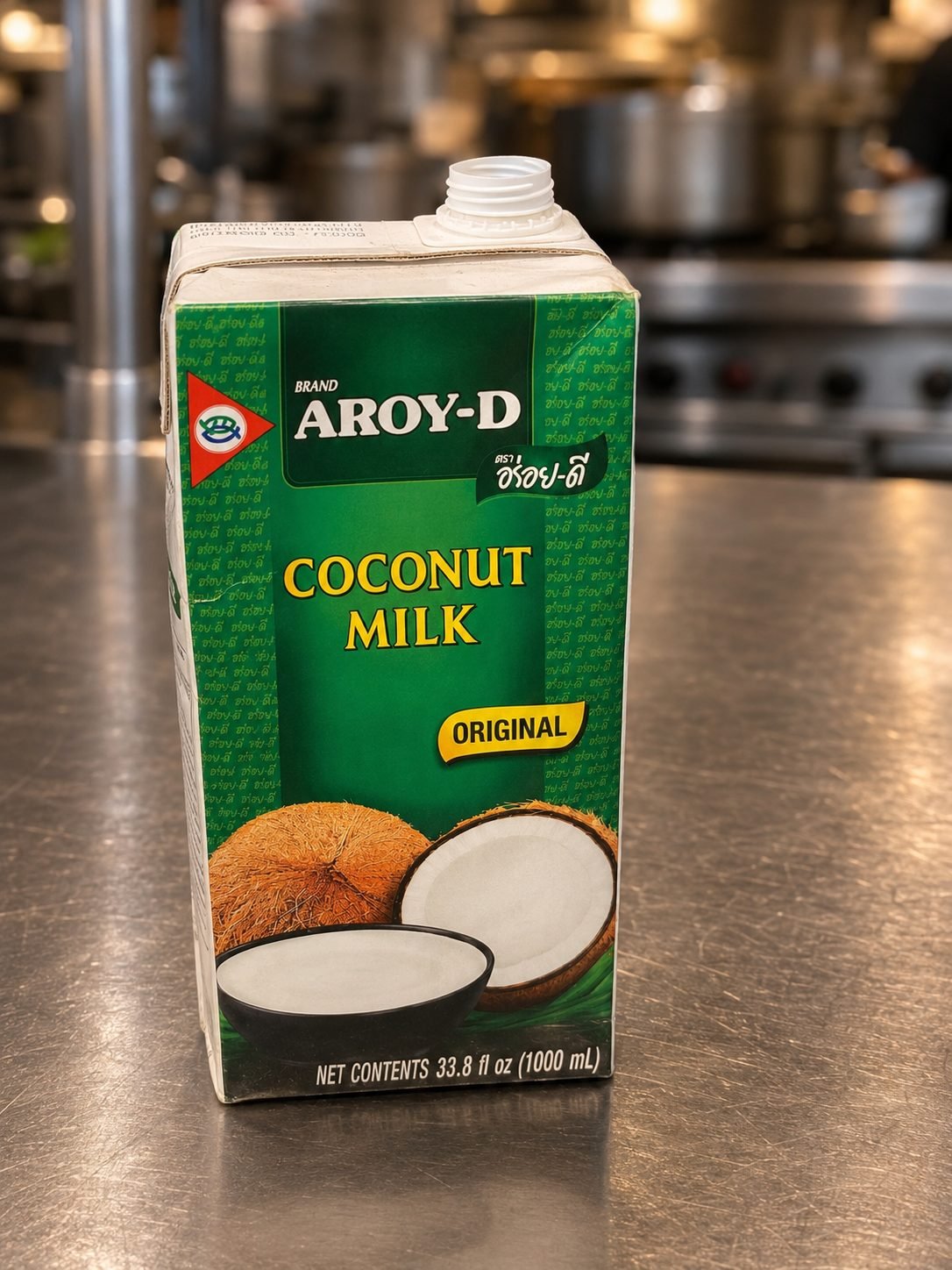
I buy coconut milk and cream in cartons, because tins can give them a metallic edge. Aroy-D is the brand I use. Whatever you pick, check the label and go for the one with the most coconut and the least water. Some UK coconut milks have been found with as little as a quarter coconut, so the percentage matters more than the price.
Look for a short ingredient list, ideally coconut and water. Many brands add gums like guar or xanthan to stop the fat separating. They’re harmless, but they also stop coconut cream from cracking when you fry paste in it, which is where a lot of the flavour in a proper curry comes from.
Skip anything labelled light. It’s just watered down, and you can add water yourself for free.
Cracking the cream
This is the step most home cooks skip, and it’s the difference between a curry that tastes of coconut and one that tastes of curry. Thai cooks often fry their paste in cracked coconut cream instead of oil.
Simmer the cream hard for a few minutes, stirring all the time. It thickens, then splits, and a layer of clear oil appears with little curds of coconut sitting in it. That’s it cracked. Your paste goes straight into that oil and fries until it smells toasty and nutty. Then the coconut milk goes in to make the sauce.
If your coconut cream has gums and won’t crack, or you just can’t be bothered, fry the paste in a little crispy garlic oil instead. It does a similar job. My cooking a curry skill walks through the whole thing step by step.
Cream or milk?
Leave a carton still and the cream rises to the top. Scoop that off for frying paste. Shake the carton if a recipe asks for coconut milk.
Cream for richness and frying, milk for the body of a curry or soup. A splash of cream stirred in right at the end gives a curry a glossy finish. In desserts, coconut milk softens the texture of sorbets and ice creams, and a squeeze of lime stops it tasting flat.
Making your own from a whole coconut is a treat, and it cracks beautifully. The full method is in my coconut milk and cream skill.
Storing it
Never leave it in an open tin. Tip leftovers into a clean, sealed tub in the fridge and use them within a few days. It freezes, but comes back slightly grainy, fine for curries and soups, not for desserts. Ice cube trays are handy for small amounts.
What to use instead
Creamed coconut, grated and blended with hot water, makes a decent coconut milk in a pinch. Thin it to taste. There’s no good dairy swap for coconut milk in Thai food, but it works the other way round: coconut cream is a good dairy-free stand-in for double cream in plenty of desserts.
Quick answers
What’s the difference between coconut milk and coconut cream?
Coconut cream is the thick, rich first squeeze of the coconut flesh, with roughly twice the fat. Coconut milk is thinner, with more water.
Is cream of coconut the same as coconut cream?
No. Cream of coconut is sweetened and made for cocktails. Don’t put it in a curry.
Should I buy coconut milk in a tin or a carton?
Cartons, if you can. Tins can give coconut milk a metallic taste. Whichever you buy, pick the one with the highest coconut content.
Can I use light coconut milk?
You can, but it’s just watered down. Buy full-fat and add water yourself if you want it lighter.
What does cracking coconut cream mean?
Simmering coconut cream until the fat splits out as a clear oil, then frying curry paste in that oil. It gives a curry a rich, nutty base.
Can you freeze coconut milk?
Yes, in a sealed tub or ice cube trays. It comes back a little grainy, which is fine in curries and soups.
Is coconut milk dairy-free?
Yes. It’s made from coconut and water, so it’s naturally dairy-free and vegan.
Further reading: Hot Thai Kitchen on choosing coconut milk, America’s Test Kitchen on coconut cream vs milk.
More from the Thai larder
Every ingredient I cook with, explained: what it is, where to find it and what to use instead.
All Thai ingredients, A to ZGet my free Thai Pantry guideSubscribe and new recipes, articles and guides land in your inbox as soon as they go up.

Head chef & founder of Farang London restaurant. Cookbook author of ‘Cook Thai’ & ‘Thai in 7’. Chief curry paste basher and co-founder of Payst London.