Bird’s Eye Chillies
Thai Ingredients
In Thai: prik kee noo
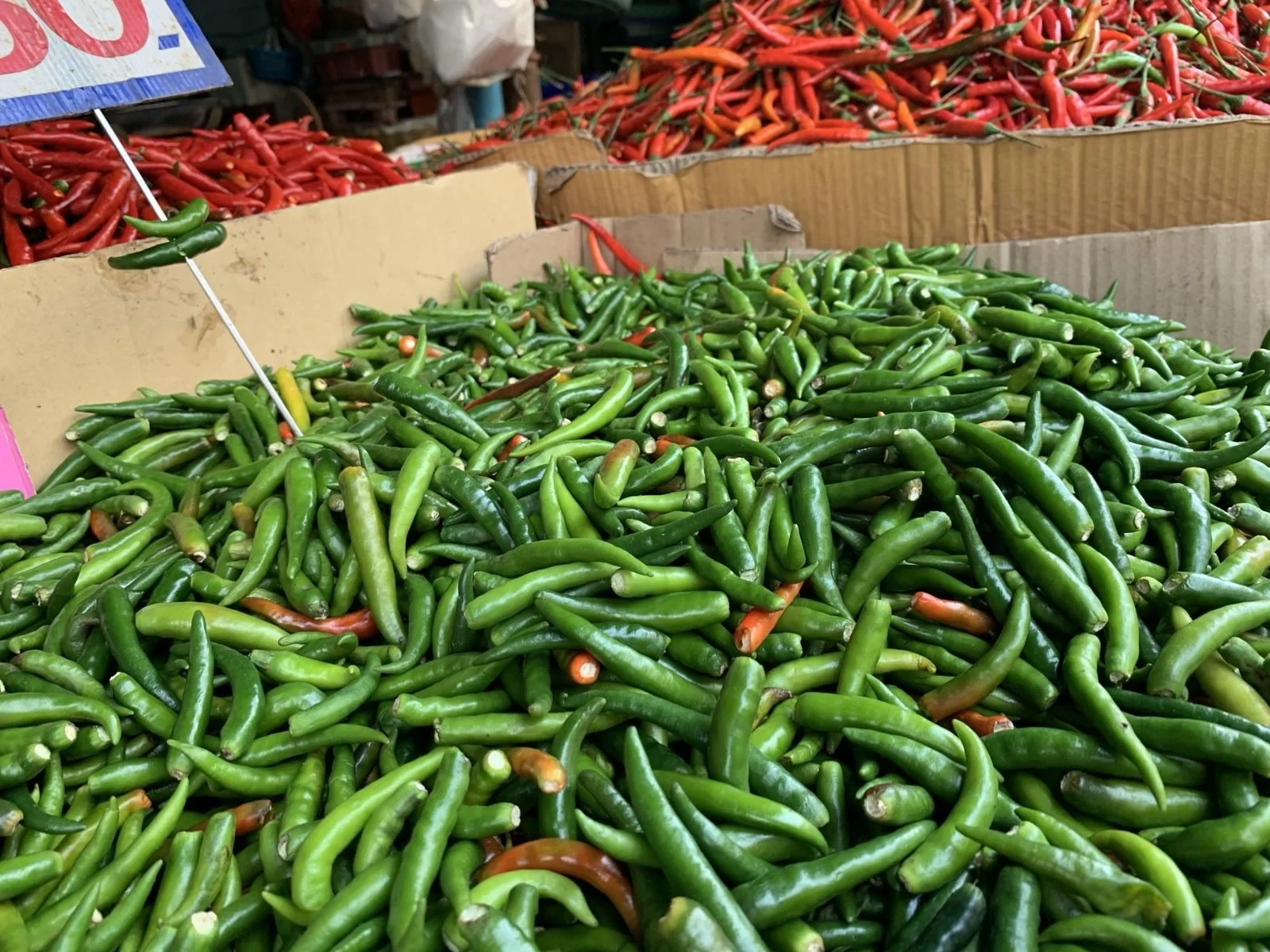
Small, pointy and much hotter than they look. Bird’s eye chillies are where most of the heat in Thai food comes from, and the quickest way to ruin a dinner if you don’t respect them.
- Tastes like
- Sharp, fast heat, a little fruity
- Find it
- Supermarkets, Asian grocers
- Swap
- Fewer of a hot red chilli
What they are
Prik kee noo means mouse-dropping chilli, which tells you all you need to know about the size. It’s the Thai name for the standard bird’s eye chilli: red or green, two or three centimetres long, with a sharp heat that hits the front of the mouth and doesn’t hang about. Green ones are picked unripe and taste spicy with a slight bitterness. Red ones are riper and a touch fruitier. The heat is about the same.
Here’s where it gets confusing, even for chefs. There’s a second, even smaller chilli with almost the same name: prik kee noo suan, the garden mouse-dropping chilli. Thai Cookbook describes it as a variety of prik kee noo that’s smaller and spicier still, The flavour is a little different too. In English both get called bird’s eye, which is why nobody’s sure what they’re buying.
Thailand grows a whole family of chillies beyond these, from mild yellow ones for stuffing to long chillies for colour. In a British kitchen you really only need three: bird’s eye, the tiny garden ones, and long chillies.
Bird’s eye or long chillies?
This is the bit that trips people up. At Farang we split the jobs. Bird’s eye chillies, red and green, are there for heat. Long red and long green chillies are there for colour and flavour, so they go into curry pastes, garnishes, dipping sauces and marinades, where you want a lot of chilli without blowing anyone’s head off.
| Chilli | Heat | What I use it for |
|---|---|---|
| Bird’s eye, green | Very hot | Heat in green curry paste, salads, som tam, nahm jim |
| Bird’s eye, red | Very hot | Heat in dressings, dipping sauces, chilli jam |
| Garden bird’s eye (prik kee noo suan) | Hotter still | Thinly chopped in salads and prik nahm pla |
| Long green (prik chee fa) | Mild | Colour and flavour in green curry paste, garnish, dipping sauces |
| Long red (prik chee fa) | Mild | Colour in pastes, marinades, sauces and garnishes |
| Dried bird’s eye | Hotter still | Roasted chilli powder |
Get that split and you can control any dish. Want it hotter? More bird’s eye. Want it redder or greener without the extra fire? More long chillies.
How hot are they?
Very. Usually somewhere between 50,000 and 100,000 on the Scoville scale, against a few thousand for a jalapeño. Heat varies from batch to batch and plant to plant, so slice a sliver off one and taste it before you commit a handful.
Most of the heat sits in the white membrane and seeds. Scrape those out for less fire. Leave the chillies whole and just bruise them, and the heat stays milder still, which is handy in soups and curries where you can fish them out later.
The tiny ones: prik kee noo suan
If you see bags of tiny chillies, often a mix of yellow, orange and red, those are prik kee noo suan. Some people, me included, call them Lao chillies. They’re smaller than standard bird’s eye and noticeably hotter. UK suppliers like Thai Food Online sell them separately and rate them at around 110,000 on the Scoville scale.
I like them chopped thinly through salads, or floating in a bowl of prik nahm pla, where a few go a very long way. Use about half as many as you would standard bird’s eye, then taste.

In a curry paste
Green curry is the dish most people think of as mild. It isn’t. As I told National Geographic Traveller, red and green pastes are close to identical, except red uses dried red chillies and green uses fresh green bird’s eye. That actually makes a proper green curry the hotter of the two.
The trick is to pair them. Green bird’s eye bring the heat, long green chillies bring the colour and a fresh, grassy flavour. If you don’t like it too spicy, don’t just cut the chillies, or your curry turns grey. Swap some of the bird’s eye for long green chillies and keep the total the same.
Pound the chillies first with a pinch of salt, which acts like grit and breaks them down. My curry paste skill walks you through the rest, and the green curry deep dive covers where the dish came from.
Prik nahm pla
If you only do one thing with bird’s eye chillies, make this. Fish sauce and chopped chillies, maybe a squeeze of lime, a few slices of shallot or garlic. That’s it. It sits on every table in Thailand and goes on fried rice, eggs, noodles and anything else that needs a lift. Think of it as Thailand’s salt and pepper. Fish sauce and fresh chillies are all you really need.
Chop the chillies finely, tip them into a small bowl with the lime and shallot, and pour over the fish sauce. Leave it ten minutes so the chilli works its way in. Make it on the day, as the chillies go soft. For the full family of Thai dips, see dipping sauces.
Where to buy them
Big supermarkets sell small packs labelled bird’s eye or Thai chillies. Asian supermarkets sell big bags for the same money, and that’s where you’ll find the long chillies too. At Farang we buy from New Spitalfields Market and from our Thai importer, but they’re widely available now, so you don’t need to go far.
Look for shiny, firm chillies with fresh green stalks. Wrinkled skin or soft, dark patches mean they’re on the way out. Most bird’s eye in the UK are flown in weekly, so freshness varies. Squeeze before you buy.
Storing them
In a bag in the fridge, they keep a week or two. They freeze brilliantly, whole, in a bag. Use them straight from frozen, they slice easily half-thawed and lose nothing in a paste or sauce.
Dried bird’s eye chillies are hotter still. Toast them gently in a dry pan with dried long chillies, let them cool so they go brittle, and grind them into roasted chilli powder, the stuff on every Thai noodle stall.
Taming the heat
Use fewer, swap in long chillies, or leave them whole. If a dish has come out too hot, don’t just add water. Add more of the base, a bit more coconut milk in a curry or stock in a soup, and serve it with rice and something cool and crunchy like cucumber. My balancing flavour guide covers the rest.
A bit of history
Chillies aren’t Thai at all. They started in the Americas, and the Portuguese, the first Europeans to reach the kingdom of Ayutthaya in 1511, brought them along with tomatoes and peanuts. According to The Nation, they took hold around 400 years ago and changed Thai cooking for good. Before that, the heat came from peppercorns. If you want the UK side of the story, read my piece on chilli culture in Britain.
Quick answers
How hot are Thai bird’s eye chillies?
Very hot, usually around 50,000 to 100,000 Scoville heat units, many times hotter than a jalapeño.
Are mouse-dropping chillies and bird’s eye chillies the same?
Mostly. Prik kee noo, mouse-dropping chilli, is the Thai name for bird’s eye. The smaller, hotter garden variety is prik kee noo suan, and both get sold as bird’s eye in the UK.
Are green or red bird’s eye chillies hotter?
They’re about the same. Green ones are unripe and slightly bitter. Red ones are riper and slightly fruitier.
What’s the difference between bird’s eye and long chillies?
Bird’s eye chillies are small and very hot, used for heat. Long red and green chillies are much milder and used for colour and flavour in pastes, sauces and garnishes.
Can you freeze bird’s eye chillies?
Yes, whole in a bag. Use them straight from frozen.
What can I use instead of bird’s eye chillies?
Any small hot red or green chilli, used sparingly. For less heat, use long red or green chillies.
What is prik nahm pla?
Thailand’s everyday table sauce: fish sauce with chopped bird’s eye chillies, often with lime and shallot or garlic. It goes on rice, eggs and noodles.
How do I make Thai food less spicy?
Use fewer bird’s eye, swap in long chillies, or remove the seeds. If it’s already too hot, add more of the base and serve with rice.
Further reading: Thai Cookbook on prik kee noo suan, Hot Thai Kitchen on prik nam pla, SheSimmers on nam pla prik, National Geographic on the Portuguese in Thailand, The Nation on chillies in Thai history.
More from the Thai larder
Every ingredient I cook with, explained: what it is, where to find it and what to use instead.
All Thai ingredients, A to ZGet my free Thai Pantry guideSubscribe and new recipes, articles and guides land in your inbox as soon as they go up.
Head chef & founder of Farang London restaurant. Cookbook author of ‘Cook Thai’ & ‘Thai in 7’. Chief curry paste basher and co-founder of Payst London.