
How to Make Som Tam, Thai Green Papaya Salad
Kitchen Skills
Som Tam
Green papaya salad, pounded to order in a clay mortar on every street corner in Thailand. How to choose and shred the papaya, what goes in when, and how to get the seasoning right.

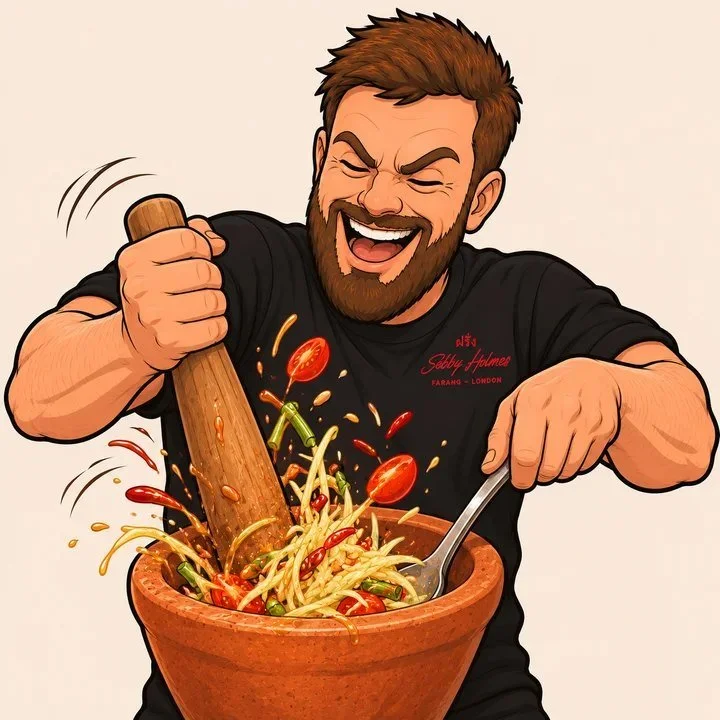
Pound with one hand, scoop and turn with the other. It’s a dance. A slightly violent one.

At a glance
The som tam kit
- 1A tall clay mortar, not granite
- 2A wooden pestle: bruise, don’t smash
- 3A spoon in your other hand to turn it all
Before you start
Pounded, sour and slightly dangerous
Som means sour. Tam means pound. The name is the method.
Som tam comes from Isaan, the north-east, and it’s now eaten all over the country. A vendor with a clay mortar, a pile of green papaya and a row of bowls makes each one to order, asks how many chillies you want, and gives you more than you asked for.
It isn’t really a salad in the British sense. It’s a seasoning exercise. Sour, hot, salty and a little sweet, all pounded into crunchy shreds that soak up the dressing. Make it three times and you’ll taste all food differently. That’s why it’s the best dish there is for learning Thai seasoning.
I wrote about the whole family of pounded salads in my piece on regional Thai food, if you want the background.

Order “phet mak” in Thailand and you’re asking for very hot. They will take you at your word.
Kit
Clay, wood and a spoon
Som tam needs a different mortar to curry paste.
Clay mortar, wooden pestle
Tall, deep, terracotta, with a wooden pestle. It bruises the vegetables so they soak up the dressing but stay crunchy. A granite mortar is for pastes. Pounding papaya in granite smashes it to pulp.
A long spoon
You need it in your other hand to scoop and turn everything while you pound.
A julienne peeler
The safest way to shred papaya. More on that over the page.
No clay mortar?
A big, sturdy bowl and the end of a rolling pin will do it. Or toss everything with your hands in a bowl, squeezing as you go. There’s a good no-mortar method if you want to see it done.
Clay mortars are sold in Asian supermarkets and online, usually with a wooden pestle. Get the biggest one you have room for. Small ones overflow.

The sound of wood on clay is so famous in Thailand that an American chef named a chain of restaurants after it.
Tea towel under the mortar. Always. Otherwise it walks off the worktop.
The star
Choose and shred it
Green papaya is unripe papaya. Crisp, white inside and very mild. It’s there for crunch and to drink up the dressing.
Choosing
Bright, solid green, very firm, heavy for its size, with no yellow and no soft patches. Asian supermarkets sell them, often near the herbs.
Peel and rinse
Peel it, cut it in half, scoop out any seeds, and rinse off the sticky white sap. The sap can irritate your skin, so gloves if you’re sensitive.
Shred it
A julienne peeler gives long, thin strands with your fingers well out of the way. A mandoline with a julienne blade works too. Street vendors hack at the papaya with a big knife, then shave off the strips. It looks mesmerising and it’s also how you lose a fingertip.
Soak it
Into iced water for 10 minutes to firm up, then drain and spin it dry. Wet papaya waters the dressing down.
No papaya?
Green mango, cucumber, carrot, kohlrabi, crunchy apple or even shredded white cabbage all take the dressing well. In Thailand, tam taeng with cucumber and tam khao pot with sweetcorn are classics in their own right.

Sharp green apple and carrot is my British go-to when there’s no papaya. It’s not traditional. It’s delicious.
Pounding
What goes in when
Everything goes in the mortar in order, getting gentler as you go.
- Garlic and chillies. Pound just enough to break them up.
- Palm sugar, pounded until it melts into the garlic.
- Long beans cut into short lengths, and dried shrimp if you’re using them. Bash lightly so they crack open.
- Cherry tomatoes and a couple of wedges of lime, bruised to release their juice.
- Fish sauce and lime juice. Some cooks add a splash of tamarind water too.
- The papaya. Pound lightly with one hand while you scoop and turn with the spoon in the other, for 20 to 30 seconds.
Taste from the mortar before it goes on the plate. Sour and hot should come first, then salt, then just enough sweet to round it off. Fix it in the mortar, then pound and turn again.

Some cooks pound the garlic and chillies to a paste. I like them just broken, so you get little hits of heat.

Wear gloves for the chillies or wash your hands twice. Rubbing your eye after som tam is a mistake you only make once.
Variations
Every kind of tam
There’s a whole family of pounded salads. These are the ones you’ll meet.
Som tam Thai
The Bangkok version. Sweeter, with roasted peanuts and dried shrimp. The one most people outside Thailand know.
Som tam Lao or Isaan
With pla ra, a thick, funky fermented fish sauce, instead of or as well as fish sauce. Saltier, hotter, more pungent. No peanuts. An Isaan cook’s version is worth a read.
Tam poo
With salted black field crabs, pounded in shell and all.
Tam ponlamai
Mixed fruit: green mango, apple, grapes, pineapple. Sweeter, often with a little salt and chilli.
Tam taeng and tam khao pot
Cucumber, and sweetcorn. Both brilliant.
In Isaan, som tam is eaten with sticky rice and grilled chicken, with a plate of raw cabbage and long beans on the side to cool your mouth down between mouthfuls.
Pla ra smells like a fishmonger’s bin on a hot day. Tastes incredible. Open the window.
Get it right
Eat it straight away
Som tam doesn’t wait.
Timing
Once it’s dressed, the papaya starts to soften and goes watery. Pound it last, just before everyone sits down.
On the side
Raw white cabbage wedges, long beans, Thai basil and mint, to eat between mouthfuls.
Make it ahead
Shred the papaya and keep it in iced water in the fridge. Mix the fish sauce, lime and sugar. Then it’s a minute of pounding.
Leftovers
There aren’t any. If there are, it’s soup by tomorrow.
Too hot? Don’t add sugar to cover it. Add more papaya and a bit more lime and salt so it all comes back into balance.
Questions I get asked
Quick answers
What is som tam?
Som tam is a Thai green papaya salad from the north-east, pounded in a clay mortar with garlic, chilli, palm sugar, fish sauce, lime, tomatoes and long beans.
What can I use instead of green papaya?
Green mango, cucumber, carrot, kohlrabi, crisp green apple or shredded white cabbage all work well.
Do I need a pestle and mortar for som tam?
It helps, but a big sturdy bowl and the end of a rolling pin will do. You want to bruise the vegetables, not smash them.
What is the difference between som tam Thai and som tam Lao?
Som tam Thai is sweeter, with peanuts and dried shrimp. Som tam Lao, or Isaan style, uses pla ra, a fermented fish sauce, and is saltier, funkier and usually hotter.
How do I make som tam less spicy?
Use fewer chillies and leave them whole so they only bruise. Long red chillies are much milder than bird’s eye.
Ask me what to pound if you can’t find green papaya. There are plenty of options.
Now use it
Put it to work
The best way to learn a skill is to cook with it. Start with these, all from my recipe pages.
Further reading: Som tam with or without a mortar · Som tam Isaan
Keep going
Next skill: Thai dipping sauces. Som tam needs palm sugar and good seasoning more than anything.
If you want more of this, subscribe. New recipes, articles and skills straight to your inbox, and my free Thai Pantry guide to get you started.
Sign up here
Head chef & founder of Farang London restaurant. Cookbook author of ‘Cook Thai’ & ‘Thai in 7’. Chief curry paste basher and co-founder of Payst London.