
Thai Green Curry: The Real Version

Green curry is the most misunderstood dish in Thai cooking, at least in this country. Most people in Britain have eaten it, or think they have. What they've eaten is a sweet, mild, pale green soup from a takeaway box, thickened with something unspecified, made from a jar of paste that's been on a warehouse shelf for six months. It is categorically not the same thing.
Kaeng Khiao Wan. That's the Thai name and it translates, almost exactly, as sweet green curry. Not spicy green curry. Not hot green curry. Sweet. The sweetness isn't added. It comes from the coconut and from the aromatics in the paste, from the freshness of the green chillies and lemongrass working together. When you taste a properly made green curry for the first time after years of the takeaway version, the sweetness is the first thing you notice. It's real, and it's nothing like sugar.
The paste is everything. This applies to every Thai curry, but green is where the difference between good paste and bad paste is most obvious, because there's nowhere to hide. The flavour profile is cleaner than red or massaman. Less complexity in the spice blend, more reliance on the freshness of the aromatics. Day-old paste tastes flat. Paste from a jar tastes flat and wrong.
At Farang we make our green curry paste fresh. The core: green chillies (a mix of bird's eye and long green), lemongrass, galangal, makrut lime leaves, makrut lime zest, coriander root, white peppercorns, shrimp paste. Every one of those ingredients has to be right. Ginger instead of galangal and you'll know. No coriander root and you'll know. I went into the full paste-making process in a separate piece on Thai curry pastes. If you want to make your own from scratch, that's where to start.
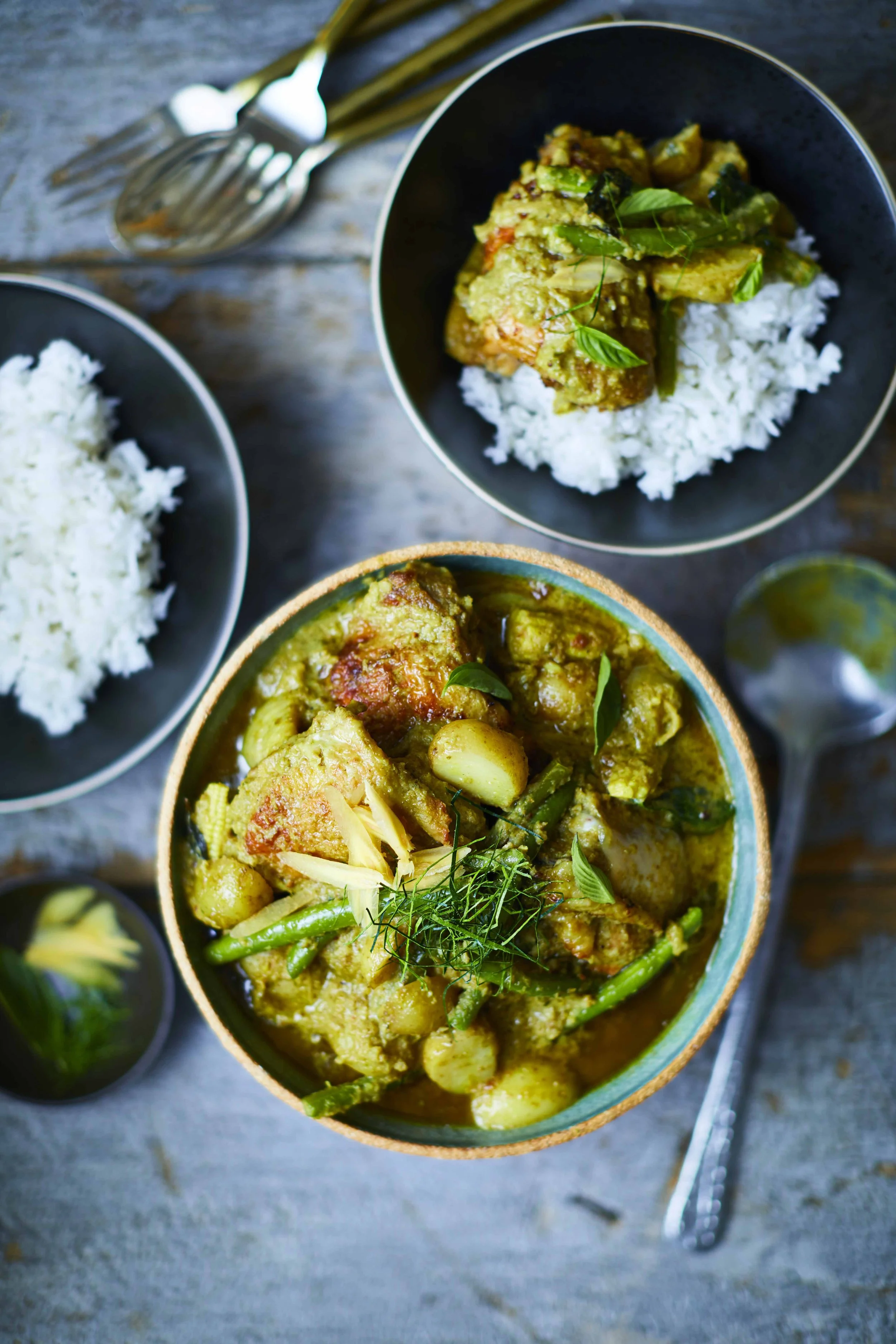
If you're cooking at home and not spending forty minutes at a mortar and pestle, the Payst green curry paste is made from the same recipe. That's where the Farang paste ends up when we sell it.
The coconut technique matters as much as the paste, and it's the step most people skip. Cook the paste in coconut cream first, on its own, until it's fragrant and the oils start to separate out. Then add more liquid. If you go straight to adding coconut milk, the curry never properly comes together and the paste floats in it rather than becoming part of it. That step takes three minutes and changes the dish completely.
Green curry varies significantly by region in Thailand. In the central plains, where the dish originates, it's richer and smoother, the coconut milk doing more of the work. In the south, where Indian and Malay influences run deeper, it gets spicier and more aromatic, more turmeric and cumin in the paste, the whole profile shifted. Neither is more authentic. They're different dishes that share a name.
What ends up in a British Thai takeaway is usually neither of those. It's a third thing, engineered over decades to be inoffensive, adjusted to what someone decided British customers wanted. That thing exists and it feeds a lot of people. Once you've had the real version it becomes quite hard to go back.
We serve green curry at Farang. Thai aubergines and makrut lime leaves are constants. The protein depends on the season and what the fishmonger has. It's a dish that rewards attention.
If you want more of this, subscribe. New recipes and articles straight to your inbox, and my free Thai Pantry guide to get you started. Sign up here.
Visit us at faranglondon.co.uk. Sauces and pastes for cooking Thai at home at payst.co.uk.
For more recipes, signed copies of my cookbooks are available at Payst: Cook Thai and Thai in 7.
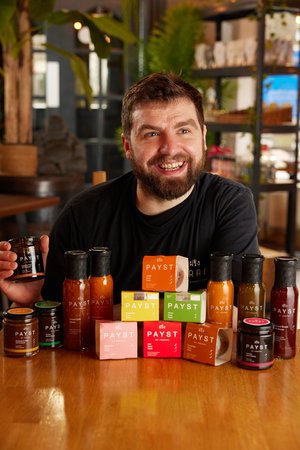
Head chef & founder of Farang London restaurant. Cookbook author of ‘Cook Thai’ & ‘Thai in 7’. Chief curry paste basher and co-founder of Payst London.