
How to Make Thai Curry Paste by Hand

Kitchen Skills
Curry Paste
How to pound your own, where to find the ingredients, how to pick a good shop-bought paste when you can’t be bothered, and how to fry it so the curry actually tastes of something.

In Thai, curry is gaeng, and the paste is everything. Get this right and the rest of the curry follows.

At a glance
The pestle and mortar, explained
- 1The pestle: heavy, so its weight does the work
- 2The mortar: deep granite, so nothing jumps out
- 3Toughest ingredients first, softest last
Before you start
What a curry paste is
A Thai curry paste is chillies, aromatics and spices pounded into one thing. It’s the whole flavour of the curry, built before a single pan goes on.
The biggest difference between most curries I’ve eaten in Britain and the ones in Thailand is complexity. A Friday night curry here is often a test of how much chilli you can handle. In Thailand every paste points in a direction: sour and hot for fish, rich and spiced for beef, fresh and grassy for green curry with chicken.
Most pastes follow the same frame. Dried or fresh chillies. Lemongrass, galangal, shallot and garlic. Coriander root, makrut lime zest, shrimp paste. Then toasted spices for the richer ones: coriander seed, cumin, white pepper, and for massaman, cardamom, cassia, cloves and nutmeg.
Not every Thai curry has coconut milk in it, either. Jungle curries and a lot of the northern and Isaan ones are made with stock or water, because coconuts don’t grow well there. They tend to be hotter and funkier, sometimes almost a soup.

Chillies only arrived in Thailand a few hundred years ago, with Portuguese traders. Before that, white pepper did the heavy lifting. It’s still in most pastes.
Shopping
Where to get it all
Most of this is easier to find than it used to be. When I was cooking in Australia I couldn’t believe what was on the supermarket shelves. The UK is catching up.
Big supermarkets
Lemongrass, fresh chillies, shallots, garlic, ginger, coriander and limes are everywhere now. Some carry makrut lime leaves, Thai basil and fresh turmeric too.
Asian supermarkets
Galangal, krachai, coriander with the roots still on, Thai shallots, dried long red chillies, shrimp paste and makrut limes. Cheaper, fresher and in bigger bundles.
Online
Every Asian grocer of any size delivers now, including chilled and frozen boxes. If you don’t live near one, there’s nothing in a Thai curry paste you can’t order.
Frozen
Galangal, lemongrass, makrut lime leaves, krachai and turmeric all freeze well, and Asian supermarkets sell them frozen. For pastes they’re close to fresh. Buy a bag of each and you’re never stuck.
Things to swap
No galangal: more ginger, but it won’t taste the same. No krachai: ginger. No coriander root: the bottom few centimetres of the stalks. No makrut lime zest: a little normal lime zest.
More on handling the fresh stuff in my guide to lemongrass, galangal and lime leaves.

Asian supermarkets keep dried shrimp in the freezer section. Took me years to stop looking in the dried goods aisle.

Coriander roots are the best bit and the supermarket cuts them off. Buy it from an Asian grocer with the roots still on.
Kit
Pestle and mortar
Pounding crushes fibres and squeezes out oils. Blades just chop them. That’s why a pounded paste smells bigger than a blitzed one.
Granite
Heavy, rough and deep. The weight of the pestle does the work. The deeper bowl stops lemongrass flying across the kitchen. A good Thai granite mortar is about 20cm across.
Clay and wood
A tall clay mortar with a wooden pestle is for som tam, bruising and mixing. It isn’t made for pounding pastes and can crack if you try.
Food processor
Pounding by hand is the traditional way, but this is home cooking. A food processor is quicker, and I don’t blame anyone for using one. Add things in the same order as you would with a pestle, scrape down often, and only add a splash of water if the blades stall.
Best of both
Pound the toughest things by hand first, then finish in the processor. Or blitz everything and give it a final five minutes in the mortar to bring the oils out.
If you’re buying a mortar, this guide to Thai mortars is the most useful thing I’ve read on choosing one.
Put a damp tea towel under the mortar. It stops it walking across the worktop.

You will get paste on the ceiling at some point. Everyone does.
Before you pound
Most of the work is prep
Get the prep right and the pounding is quick. Skip it and you’ll be there all afternoon with a sore arm and a stringy paste.
- Dried chillies. Snip off the stalks, cut them open with scissors and shake out as many seeds as you can. A few left won’t hurt. Soak in warm water for about 20 minutes until soft, then drain and squeeze them dry.
- Toast the spices. Whole spices in a dry pan over a medium heat, kept moving, until they smell fragrant and go a shade darker. Cool them, then grind to a powder before the mortar gets wet. Dry spice won’t break down in a sticky bowl.
- Slice everything thin. Lemongrass, galangal and coriander root sliced as thinly as you can, across the grain. The finer it goes in, the less pounding you do.
- Shrimp paste. Wrap a teaspoon in foil and dry-toast it in a pan for a minute or two each side. Straight from the jar it’s ferocious. Toasted, it goes deep and savoury.
- Gloves. For chillies and fresh turmeric. Turmeric stains your fingers yellow for days, and chilli on your hands finds your eyes eventually.
Years ago I got jungle curry paste in my eye. The whole kitchen thought it was the funniest thing they’d ever seen. I didn’t. Wear gloves and keep your hands off your face.
The order
Hardest first, softest last
Everything goes in a set order. Tough and dry first, soft and wet last.
- Salt and chillies. A pinch of salt goes in as grit, then the soaked chillies. Pound to a rough paste.
- Woody aromatics. Lemongrass and galangal next. They take longest, so give them time. Then lime zest and coriander root.
- Fresh roots. Turmeric and krachai, if the paste uses them.
- Soft and wet. Shallot and garlic, then the shrimp paste last.
- Ground spices. Stirred through at the very end.
- Check it. Rub a little between your fingers. If you can feel fibres, keep going. It should be a thick, smooth paste with no stringy bits.
Struggling? Take half out, pound the rest in two batches, then bring it all back together. At Farang we make red curry paste ten kilos at a time. You only need enough for tonight.

Pound straight down, then grind round in circles to bring it together. Not side to side, or it climbs out of the bowl.
Twenty minutes of pounding counts as an arm workout. I’m telling you that so you feel better about it.
When you can’t be bothered
How to buy a good one
There are plenty of great shop-bought pastes, and buying one isn’t cheating. Just buy a good one.
Fresh beats jarred
The difference between a fresh paste and a long-life jar is like the difference between a fresh tuna steak and a tin. Fresh pastes are sold chilled or frozen and smell of lemongrass when you open them. Jars are cooked and sealed so they last on a shelf, which dulls the top notes.
Read the label
Chillies, lemongrass, galangal, shallot and garlic near the top of the list. Water, sugar, oil and thickeners near the top is a bad sign.
Salt and heat vary
Brands differ wildly. Use less than you think the first time, taste the curry, and season at the end with fish sauce, not at the start.
Vegan?
Most pastes have shrimp paste or fish sauce in them. Check the label, or make your own and leave the shrimp paste out.
Full disclosure: Payst is the paste company I run with my brother Tony, and our fresh pastes come out of the Farang kitchen. The green, red and hung lay are made the way this page tells you to make yours.
A paste that tastes flat in the curry usually just needs more fish sauce and a squeeze of lime. Fix it in the pan, not with more paste.
Where it becomes curry
Fry the paste
Raw paste in coconut milk tastes raw. Fried paste tastes like a curry. This is the step people skip.
Crack the coconut cream
Simmer thick coconut cream hard, stirring, for a few minutes until it splits and a layer of clear oil floats on top. The paste goes into that oil. It gives the curry a rich, nutty base. More in my coconut milk guide.
Or use oil
Neutral oil works, and garlic and shallot oil from my crispy shallots is even better.
Low and patient
Medium heat, stirring all the time, for 5 to 10 minutes. It darkens, the oil goes red, and the smell changes from raw onion to something rounder. If it catches, add a splash more cream.
Season the base
Palm sugar and fish sauce go in once the paste has fried, so the sugar can catch and caramelise a little, then the rest of the coconut milk or stock.
Fry curry paste with the window open. Chilli fumes in a hot pan will have the whole house coughing.
You know it’s ready when the oil separates and sits on top in little red pools. That’s what you want.
Make extra
Keep it fresh
Paste darkens and dulls quickly once air gets to it, so store it properly.
Fridge
Press cling film right onto the surface of the paste, then lid on. About a week.
Freezer
Spread it flat in a freezer bag and freeze it. Snap off a piece when you need it. Three months easily.
Ice cube tray
A tablespoon per hole. A cube or two is enough for a midweek stir-fry.
The trimmings
Lemongrass tops, galangal peel and lime leaf stems are too woody for paste but still full of flavour. Keep them in a box in the freezer for stocks. We do it at the restaurant and it’s the basis of my zero-waste Thai cooking.
Make double. It takes the same amount of washing up.
Questions I get asked
Quick answers
What is the difference between red and green curry paste?
Red curry paste is built on dried red chillies and toasted spices, so it’s deeper and smokier. Green uses fresh green chillies and more herbs, so it’s brighter and fresher. Green is usually hotter.
Can I make curry paste in a blender?
Yes. A food processor or a small blender is fine. Slice everything thin, add the tough ingredients first and scrape down often. It won’t be quite as fragrant as pounded paste, but it’s far better than most jars.
How long does homemade curry paste last?
About a week in the fridge with cling film pressed on the surface, and three months in the freezer.
How much curry paste do I use?
Roughly 2 tablespoons per person for homemade paste in a coconut curry. Shop-bought pastes vary, so start with less and taste.
Is Thai curry paste vegan?
Usually not, because most contain shrimp paste. Yellow and massaman pastes often don’t. Make your own without it and season the curry with seaweed sauce or a little extra salt.
Paste too hot? Don’t add more coconut milk to the paste. Use less paste and season the curry harder.
Now use it
Put it to work
The best way to learn a skill is to cook with it. Start with these, all from my recipe pages.
Further reading: Hot Thai Kitchen’s red curry paste · Choosing a Thai mortar
Keep going
Next skill: Thai grilling over charcoal. Before you make a paste, read up on prepping the aromatics, and for more on the curries themselves, my curry paste deep-dive and the real Thai green curry.
If you want more of this, subscribe. New recipes, articles and skills straight to your inbox, and my free Thai Pantry guide to get you started.
Sign up here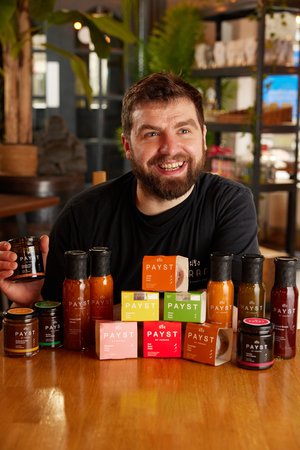
Head chef & founder of Farang London restaurant. Cookbook author of ‘Cook Thai’ & ‘Thai in 7’. Chief curry paste basher and co-founder of Payst London.