
Braised Beef Cheek Jungle Curry with Green Peppercorns, Fresh Herbs and Seasonal Vegetables

Jungle curry is one of my favourite dishes on the planet. It comes from northern Thailand where coconut palms don't grow as easily and its absence makes for a unique character. Without coconut cream to soften things down, you need something else to balance the bitterness and the heat. What it needs is fat. Beef cheek is ideal for this: slow-cooked until it collapses, it releases enough fat into the braising stock that the finished curry becomes rich without ever going mild. Beef shin with the bone in works equally well. The marrow seeps into the liquid over eight hours and gives the curry a depth you cannot shortcut.
The braise runs overnight at 100°C. The braising stock becomes the curry. Pack it with fresh herbs at the very end - coriander, Thai basil, cha plu, hot Vietnamese mint - and eat it immediately while everything is still vibrant and the heat is still properly felt.
I wrote this for The Independent for a piece on seasonal affective disorder and whether food can improve your mood in winter. The capsaicin in chillies triggers endorphin release, which triggers serotonin. The science gave me a good excuse to cook something fiery. The Payst jungle curry paste is the same one we use at Farang.
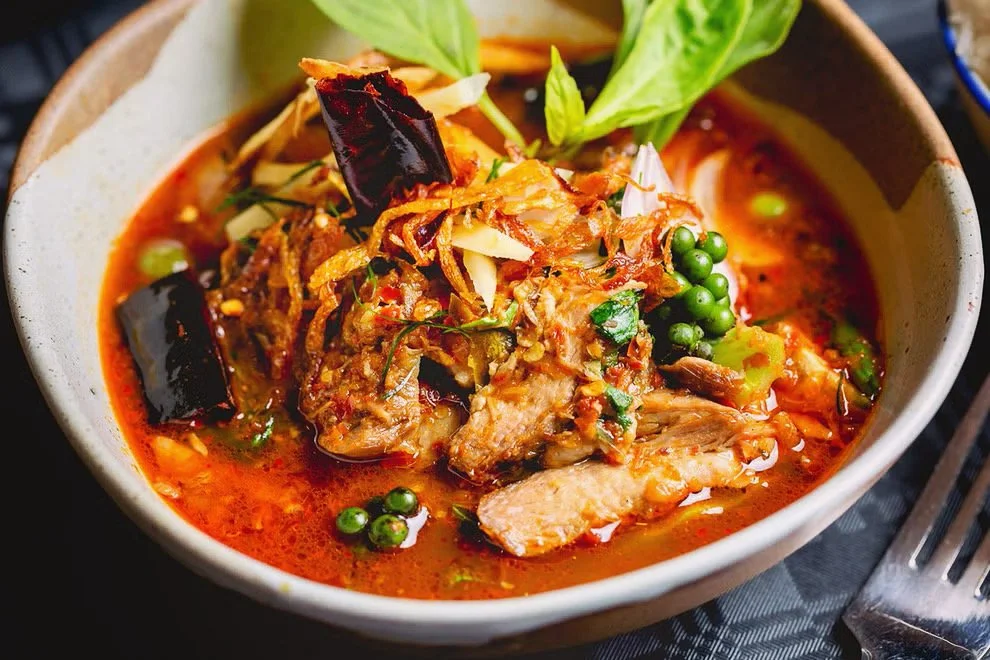
Braised Beef Cheek Jungle Curry with Green Peppercorns, Fresh Herbs and Seasonal Vegetables
Serves: 2 | Prep: 20 mins | Cook: 8 hours (start the night before)
Ingredients
For the braise:
200g beef cheek, trimmed (beef shin with the bone in also works - the marrow makes the stock)
2 lemongrass sticks, bruised
20g galangal, bruised
4 makrut lime leaves, torn
1 whole garlic head, halved across the equator
4 banana shallots, halved
2 tbsp table salt
For the fresh paste:
2 tbsp coriander roots, washed and finely chopped
4 garlic cloves, peeled
2 tbsp krachai (wild ginger), peeled and roughly chopped (regular ginger works)
1/2 tbsp coarse sea salt
For the curry:
1 pot Payst jungle curry paste (pre-seasoned. If using another brand, add palm sugar and fish sauce)
2 tbsp vegetable oil
1 tbsp caster sugar
2 tbsp fish sauce
30g new potatoes, halved
30g green beans
1 head pak choi, core removed, cut into bite-sized pieces
Fresh chillies to taste
To finish:
10g hot Vietnamese mint
10g cha plu (betel leaves - spinach works if you can't find them)
10g coriander
10g Thai sweet basil
10g fresh curry leaves
To serve:
Steamed jasmine rice
Crispy shallots, crispy garlic and fresh chillies
Method
Start the braise the night before. Place the beef cheeks in a deep oven-proof pot and cover with water. Add the lemongrass, galangal, makrut lime leaves, banana shallots, table salt and halved garlic head. Cover the surface with parchment paper, seal tightly with foil and put in an oven at 100°C for 8 hours. A slow cooker on high works just as well. The cheeks are ready when a spoon pressed gently against the meat meets no resistance. Pull from the oven, set the meat aside and keep every drop of the braising stock.
Pound the coriander roots, garlic cloves and krachai together in a pestle and mortar, using the coarse salt as an abrasive. Work it into a rough, deeply aromatic paste.
Heat the oil in a wok over medium heat and fry the fresh paste, scraping the bottom constantly. When it catches and darkens at the edges, add the Payst jungle curry paste and keep frying. Retrieve the makrut lime leaves and lemongrass from the braising stock and add them to the wok. Cook until the combined paste has darkened and smells deeply fragrant. This is where the flavour builds, so don't rush it. Add the sugar and fry for another minute until it caramelises into the paste.
Deglaze with the fish sauce and 300ml of the braising stock. Bring to a simmer, add the potatoes and cook for 10 minutes until just starting to yield. Add the pak choi, green beans and beef cheeks, and pour in a little more braising stock if the curry needs loosening. Simmer until everything is cooked through. Taste: it should be salty, fiercely spiced and deeply savoury with a faint sweetness sitting underneath. Add more fish sauce if it needs salt, more fresh chilli if it needs heat.
Off the heat, fold through all the herbs - hot mint, cha plu, coriander, Thai basil, curry leaves - and serve immediately. The herbs wilt fast and the curry should be eaten while it is properly hot. Serve in bowls over jasmine rice, topped with crispy shallots, crispy garlic and fresh chillies.
Chef's notes
The reason this works with beef cheek, and not with something leaner, is the fat. Jungle curry has no coconut milk to carry it, so the fat rendered from the meat over eight hours does that work instead. It rounds the bitterness, sits behind the spice, and gives the curry a richness that lighter cuts can't provide.
If you use beef shin with the bone in, push the bone down into the braising liquid when you set it up. The marrow dissolves slowly into the stock and makes the finished curry noticeably deeper.
This recipe was also published by The Independent as part of a piece on seasonal affective disorder and mood-boosting food.
Visit us at faranglondon.co.uk. Sauces and pastes for cooking Thai at home at payst.co.uk.
For more recipes, signed copies of my cookbooks are available at Payst: Cook Thai and Thai in 7.
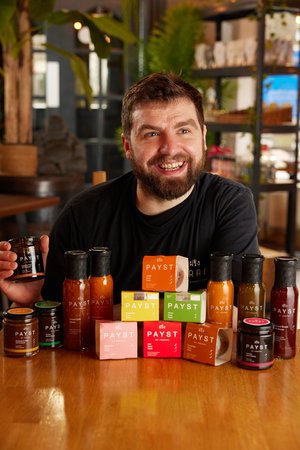
Head chef & founder of Farang London restaurant. Cookbook author of ‘Cook Thai’ & ‘Thai in 7’. Chief curry paste basher and co-founder of Payst London.
Eat it at Farang
Cook it at home, or let us cook it for you. Farang, Sebby's Michelin Bib Gourmand Thai restaurant in Highbury, N5.
Book a table