
Braised Duck Leg Massaman with Roasted Pineapple, Sultanas and Salt Roasted Potatoes
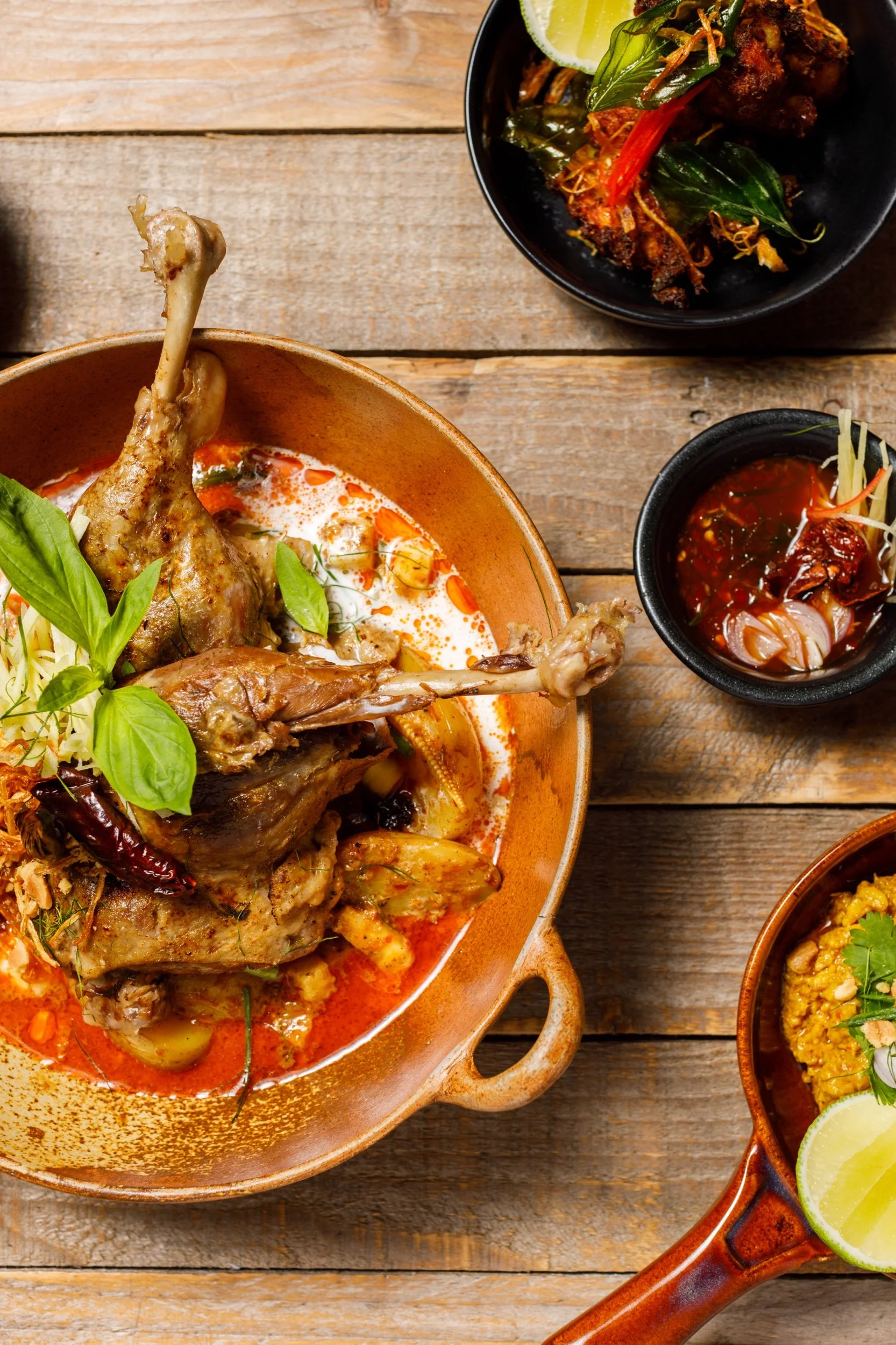
Massaman shows you how far Thai food has travelled. Cardamom, cassia, cloves, nutmeg and mace do not grow in a Thai kitchen garden. They came in on boats with Persian and Indian Muslim traders several hundred years ago, southern Thailand took them, and what came out the other side belongs to nobody else. It is the mildest curry on most menus and the most heavily spiced at the same time, which sounds wrong until you cook one.
Duck leg belongs in it. Massaman is built for cuts that need hours, and a duck leg is all worked muscle and fat and connective tissue that turns to nothing given enough time in a pot. The dark soy does two jobs overnight. It seasons the meat right the way through, and the molasses in it gives you a skin that goes almost black when it hits hot oil. Fry them hard before they go near the curry. Duck that has been fried tastes different to duck that has only been braised, and you can tell in one mouthful.
The sultanas and the roasted pineapple are where this stops being a textbook massaman. Sultanas go in at the start and spend two hours drinking the sauce until they burst savoury against the duck fat. The pineapple gets roasted separately so the edges catch, then goes in at the end with its acidity intact, because a paste this heavy with sweet spice needs something sharp coming back at it. Farang means foreigner and we cook for flavour, not authenticity. This is the Payst massaman paste, the same one we bash at the restaurant every week. Start the duck the night before.
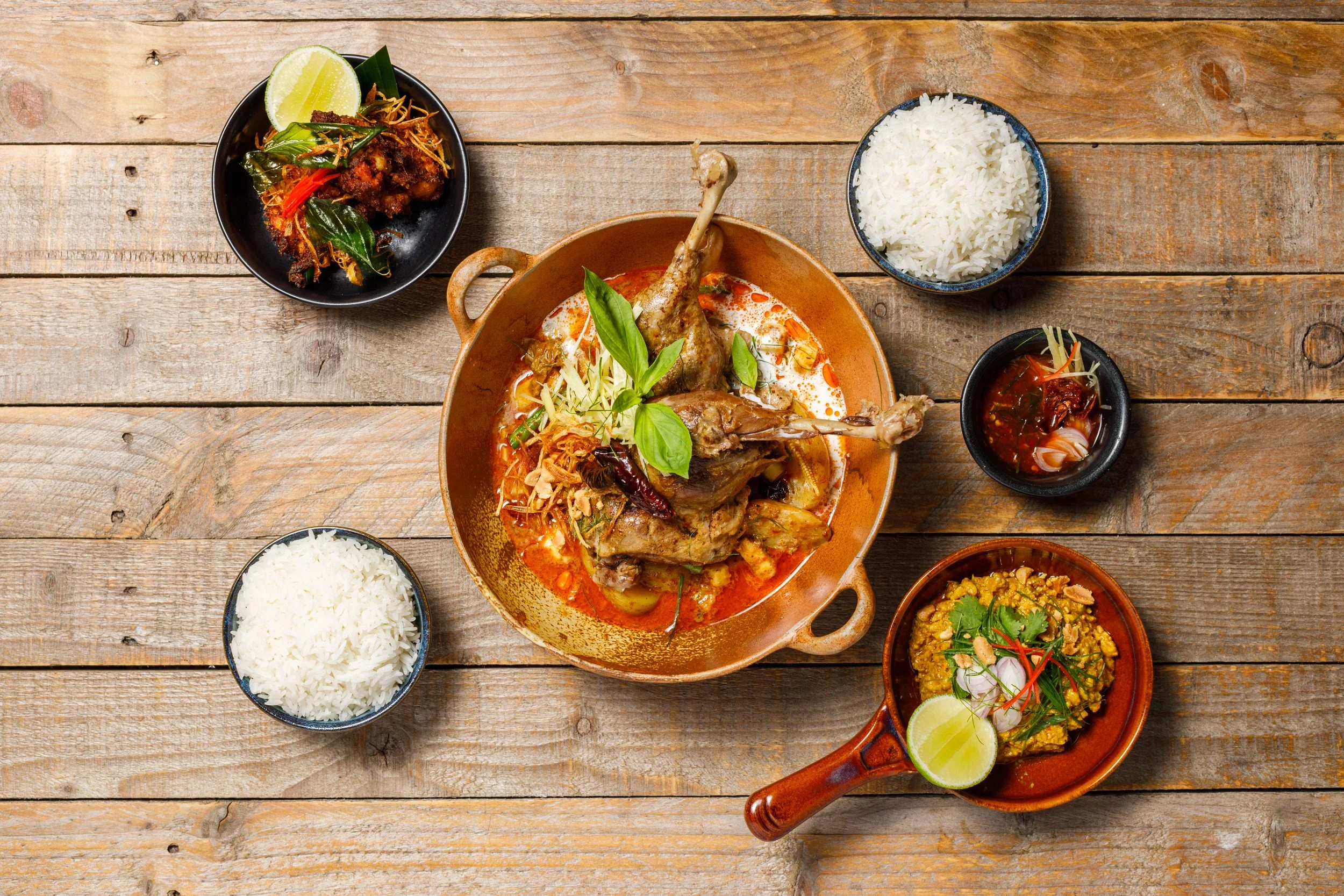
Braised Duck Leg Massaman with Roasted Pineapple, Sultanas and Salt Roasted Potatoes
Serves: 4 | Prep: 30 mins | Cook: 2 hours 30 mins
Ingredients
For the duck:
4 duck legs, around 250g each
100ml dark soy sauce
1 tsp ground white pepper
200ml vegetable oil (for frying, not all of it ends up in the dish)
For the roasted pineapple:
1 small pineapple (peeled, cored, cut into 3cm wedges, ripe enough to smell across the kitchen)
20g palm sugar
20ml vegetable oil
1 pinch sea salt
For the salt toasted potatoes:
500g new potatoes (halved if they are bigger than a golf ball)
50g table salt (for the cooking water, most of it goes down the sink)
For the curry:
50g coconut oil
100g Payst massaman curry paste (or 100g massaman paste, fresh not ambient if you can get it)
60g palm sugar
60ml fish sauce
60ml tamarind water (tamarind pulp loosened with warm water and strained, not concentrate)
60g sultanas
400ml coconut milk (full fat, nothing labelled light)
600ml chicken or duck stock
3 makrut lime leaves
150g green beans (topped and cut into bite-sized lengths)
150g baby corn (cut into bite-sized chunks)
1 large handful Thai basil leaves (picked, sweet Thai basil not holy basil)
To garnish and serve:
Crispy shallots
30g fresh ginger (peeled, cut into fine matchsticks)
3 Thai shallots (peeled, sliced as thinly as you can manage)
1 small handful coriander (leaves and fine stalks)
1 small handful Thai basil leaves
Steamed jasmine rice
Method
The night before, turn the duck legs through the dark soy and white pepper until every surface is coated, then cover and refrigerate. Overnight is what you want. Four hours will season the outside but it will not get into the meat, and the difference shows up at the table.
Lift the duck out and pat it properly dry with kitchen paper. Wet skin steams instead of colouring, and the soy will catch and go bitter if there is moisture sitting on top of it. Heat the vegetable oil in a wide heavy pan over a medium-high heat and lay the legs in skin side down. Leave them alone for 6 to 8 minutes, until the skin has gone mahogany and releases from the pan on its own, then turn and give the other side 3 minutes. Fry in two batches if the pan is tight. A crowded pan drops the oil temperature and you will get grey duck. Pour off all but a tablespoon of the oil and keep it for roast potatoes.
Heat the oven to 200C. Toss the pineapple with the palm sugar, oil and salt, spread it in a single layer on a tray and roast for 20 to 25 minutes, until the edges have gone dark and sticky and the sugars are bubbling. You are looking for caramelisation, not softness. Pineapple that has only gone soft will collapse into the curry.
Put the potatoes in a pan with the table salt, cover with cold water and boil for 12 to 15 minutes until a knife goes in with no resistance. Drain them completely, put them back in the dry pan over a low heat and shake them every 30 seconds for 3 to 4 minutes. The surfaces dry out and go chalky white with salt. That chalky exterior grips the sauce and the potato arrives already seasoned all the way through instead of sitting there taking flavour and giving nothing back.
Melt the coconut oil in a large casserole over a medium-high heat and add the massaman paste. Fry for 5 to 6 minutes, stirring constantly, until it darkens by a couple of shades and the oil starts to separate and pool at the edges. The kitchen should smell of cardamom and cassia rather than raw garlic. Underfrying the paste is the single most common mistake with this curry and the raw note never cooks out later. Add the palm sugar and stir until it melts and caramelises into the paste, then pour in the fish sauce and tamarind water to deglaze, scraping everything off the bottom.
Add the sultanas, coconut milk, stock and makrut lime leaves and bring to a bare simmer. Return the duck legs skin side up, nearly submerged but not drowned. Cover and cook on the lowest heat your hob will hold for 2 hours. Boil it and the coconut milk will split and the duck will tighten instead of relaxing. The legs are ready when the meat has pulled back from the bone and gives under a spoon with no argument.
Lift the duck out and keep it somewhere warm. Bring the sauce up to a steady simmer for 5 minutes to tighten it, then add the salt toasted potatoes, green beans and baby corn and cook for 6 to 8 minutes. The beans should still snap.
Slide the duck back in with the roasted pineapple and warm through for 2 minutes. Taste it now, properly, with rice. Massaman should land sweet first, then salty, then sour, with the spice sitting underneath rather than on top. More palm sugar if it tastes sharp, more fish sauce if it tastes flat and dull, more tamarind if the sweetness is sitting on your tongue and not moving.
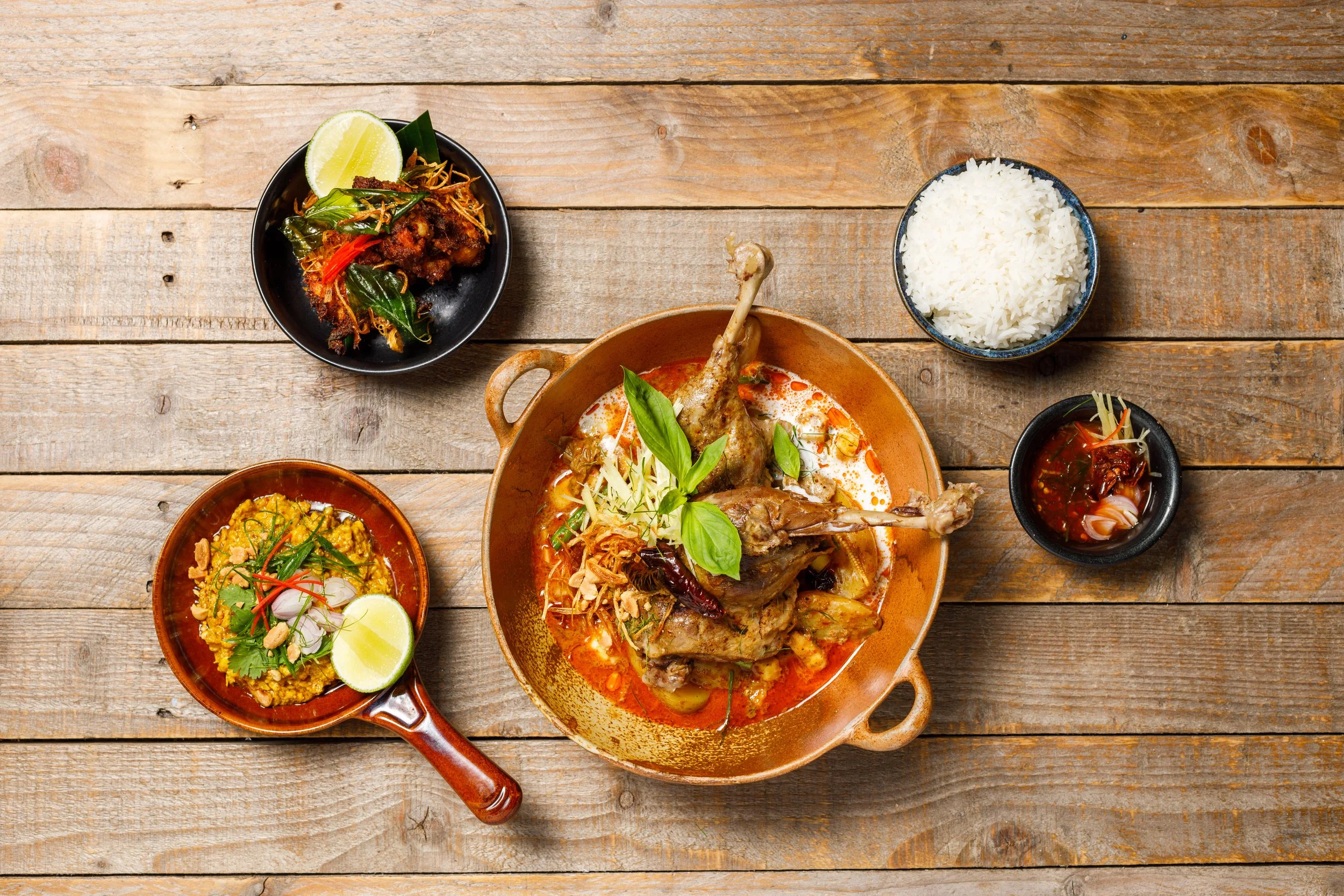
Off the heat, fold through the large handful of Thai basil so it wilts in the residual heat rather than cooking. Serve straight from the pan over steamed jasmine rice, scattered with crispy shallots, ginger matchsticks, sliced Thai shallots, coriander and the last of the basil.
Chef's notes
Leave most of the duck fat sitting on top of the sauce. Massaman is a rich curry and the split fat carrying the spice up is part of how it eats. Spoon a little off before the vegetables go in if it looks excessive, but do not chase it. A massaman with no fat on it tastes thin and you will not know why.
Do not upgrade the sultanas. Whatever dried fruit is in the cupboard works, and they need the full two hours in the pot to stop tasting like a snack and start tasting like part of the curry. Add them at the end and you get sweet chewy bits sitting on a savoury sauce, which is a different and worse dish.
The salt toasted potato works anywhere you would otherwise roast or fry them, and once you have seen what it does you will stop seasoning potatoes at the end. It is the same principle behind the braise in the Beef Curry of Braised Yorkshire Beef Cheeks, where the seasoning goes into the ingredient rather than the sauce around it.
If you want the opposite end of the Thai curry range, the Braised Beef Cheek Jungle Curry is the same slow braise with no coconut milk and no mercy. Cook that one when you want heat instead of spice.
Duck legs freeze well raw and the marinade doubles as the freezer bag. Marinate, freeze flat, defrost overnight and pick the recipe up at step two.
Visit us at faranglondon.co.uk. Sauces and pastes for cooking Thai at home at payst.co.uk.
For more recipes, signed copies of my cookbooks are available at Payst: Cook Thai and Thai in 7.
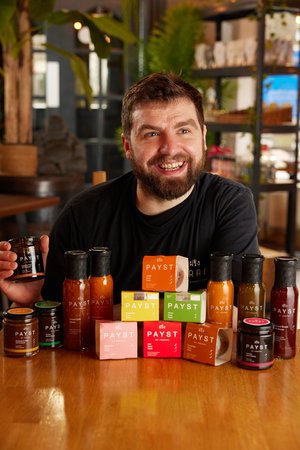
Head chef & founder of Farang London restaurant. Cookbook author of ‘Cook Thai’ & ‘Thai in 7’. Chief curry paste basher and co-founder of Payst London.