
Beef Curry of Braised Yorkshire Beef Cheeks with Sweet Basil, Wild Ginger, Betel Leaves & Pickles

Beef cheeks are one of those cuts that reward patience above everything else. There's no shortcut to what happens when a collagen-rich, heavily-worked muscle spends four hours in a braise, the connective tissue breaking down slowly into the liquid and the meat becoming something that gives rather than resists. The cheeks at Farang come from Swaledale Butchers, a Yorkshire Dales supplier we've worked with for years. Grass-fed native breeds, always fresh, never frozen, with a depth of flavour that's hard to find anywhere else. The quality of the beef matters here more than it would in most recipes.
The technique that makes this dish what it is sits in what you do with the braising liquid. You don't discard it. You strain it, reduce it by half, and it becomes the backbone of the curry sauce. That's four hours of concentrated beef stock going back into the pan with the Payst gaeng gari paste, the coconut milk and the vegetables. Gaeng gari is a yellow curry, warmer and less fiery than red or green, built on dried spices and turmeric rather than fresh chilli heat. The richness of the reduced stock and the warmth of the paste together make something you couldn't get from a yellow curry built on anything less.
The pickle is there to cut through all of it. Ginger and cucumber in a quick vinegar brine, made while the beef braises and ready in under an hour. The acidity and crunch against the silky braised meat is what keeps the dish from feeling heavy. Don't skip it.
Betel leaves go in off the heat at the end, torn through with the Thai basil. They're listed as optional, but if you can find them at a Thai or Asian supermarket, use them. They have a slightly peppery, aromatic quality that belongs here. This is a three-stage recipe: the braise, the pickle, the curry. Start the beef in the morning.
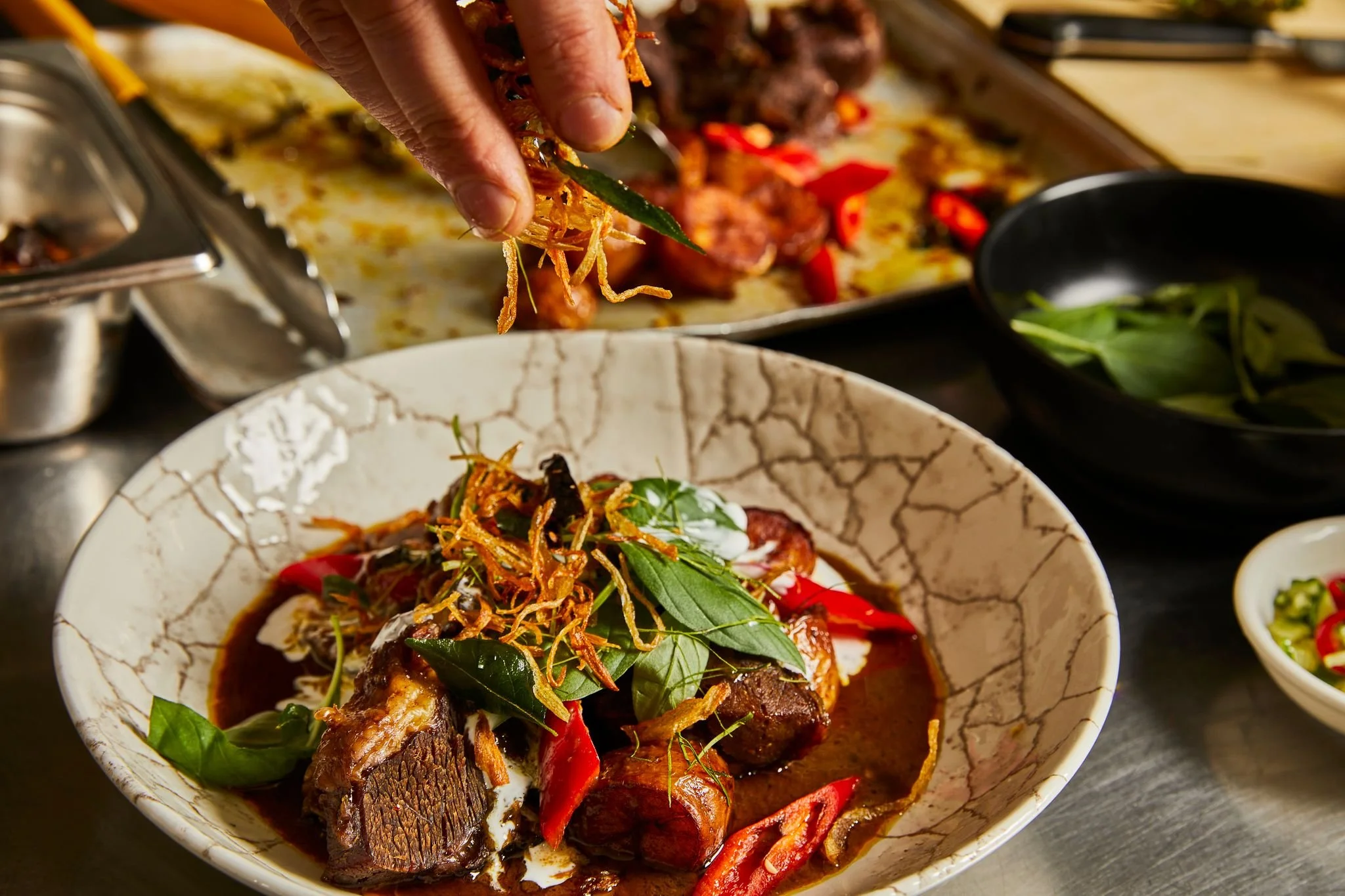
Beef Curry of Braised Yorkshire Beef Cheeks with Sweet Basil, Wild Ginger, Betel Leaves & Pickles
Serves: 2 | Prep: 30 mins | Cook: 4 hours 30 mins
Ingredients
For the beef braise
2 beef cheeks (around 800g to 1kg total), fat and skin removed
100ml vegetable oil
2 sticks lemongrass, bruised
50g galangal, bruised
2 pandanus leaves, tied in a knot
1 makrut lime leaf
2 litres vegetable stock or water, enough to submerge the beef
50ml fish sauce
50g palm sugar
For the pickle
200ml distilled white vinegar
200ml water
50g caster sugar
50g table salt
300g fresh ginger, peeled and very thinly sliced
300g cucumber, thinly sliced
For the curry
50g coconut oil
100g Payst gaeng gari curry paste (or 100g yellow curry paste)
1 makrut lime leaf
50g palm sugar
50ml fish sauce
500ml reduced beef braising stock (from above)
100g new potatoes, boiled and halved
100g baby corn, cut into bite-sized chunks
100g green beans, cut into bite-sized chunks
2 long red chillies and 2 long green chillies, roll cut into bite-sized pieces
50g krachai (wild ginger / finger root), peeled and sliced
10g fresh green peppercorns (optional)
400ml coconut milk
1 handful Thai basil leaves, picked
1 handful betel leaves (optional)
To garnish and serve
Crispy shallots
Steamed jasmine rice
Method
Get the braise going first. Heat the vegetable oil in a thick-bottomed, deep pan over medium-high heat. Season the beef cheeks and sear on all sides until deeply browned all over, about 10 minutes. Remove and set aside. Add the bruised lemongrass, galangal, pandanus leaves and makrut lime leaf to the same oil and sauté for 2 minutes until aromatic.
Return the beef cheeks to the pan and pour over enough vegetable stock to submerge them completely. Add 50ml fish sauce and 50g palm sugar. Bring to a simmer, cover with a lid and cook on the lowest heat for 3.5 to 4 hours. The cheeks are ready when they yield completely under light pressure with no resistance at all. Remove the beef and set aside. Strain the braising liquid, discard the aromatics, and return the liquid to the pan. Reduce over a high heat until you have approximately 500ml of concentrated stock. This is your curry base.
While the beef braises, make the pickle. Combine the water, vinegar, caster sugar and salt in a small saucepan over a low heat. Stir until the sugar and salt dissolve. Add the sliced ginger while the liquid is still hot and leave it to soften for 10 minutes. Take off the heat and leave to cool to room temperature, then stir in the cucumber. Refrigerate until needed.
To build the curry, melt the coconut oil in a large heavy pan over medium-high heat. Add the gaeng gari paste and the second makrut lime leaf. Fry for 4 to 5 minutes, stirring constantly, until the paste darkens and the raw aromatics cook off. Add the remaining 50g palm sugar and stir until it caramelises. Pour in the remaining 50ml fish sauce to deglaze, scraping the bottom of the pan.
Add the 500ml reduced beef stock. Add the cooked beef cheeks, boiled potatoes, baby corn, green beans, chillies and krachai. Simmer for 8 minutes until the vegetables are just cooked through and the beef has warmed back through and absorbed the curry sauce.
Pour in the coconut milk and green peppercorns if using. Bring to a gentle simmer. Taste carefully. It should be rich, deeply savoury and warmly spiced from the gaeng gari. Adjust with more fish sauce if it needs salt.
Off the heat, tear in the betel leaves and Thai basil and fold them through. Serve immediately over steamed jasmine rice, with the pickled ginger and cucumber alongside and crispy shallots scattered over the top.
Chef's notes
The beef cheeks from Swaledale Butchers are available online and deliver next day across the UK. They dry-age their grass-fed native breeds and it makes a real difference to this braise. If you can't source them, ask your butcher for cheeks from a well-reared grass-fed animal rather than a standard supermarket pack. The braising liquid will only be as good as the beef you started with.
Don't rush the reduction. The 2 litres of stock needs to come down to 500ml, and it should taste intensely of beef before it goes near the paste. If it doesn't, reduce it further. It's the most important component in the dish and most of it happens while you're doing something else.
The pickle keeps well. The ginger will last two to three weeks in the fridge. The cucumber goes soft after a day or two, so if you want it at its best, add it on the day you're eating. The ginger on its own is worth making in a larger batch and keeping in the fridge. It goes with everything.
Visit us at faranglondon.co.uk. Sauces and pastes for cooking Thai at home at payst.co.uk.
For more recipes, signed copies of my cookbooks are available at Payst: Cook Thai and Thai in 7.
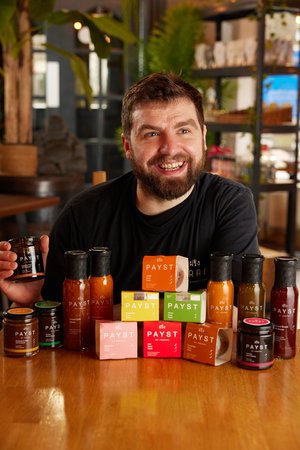
Head chef & founder of Farang London restaurant. Cookbook author of ‘Cook Thai’ & ‘Thai in 7’. Chief curry paste basher and co-founder of Payst London.