
Red Curry of Tiger Prawns, Wild Ginger, Green Peppercorns & Sweet Basil
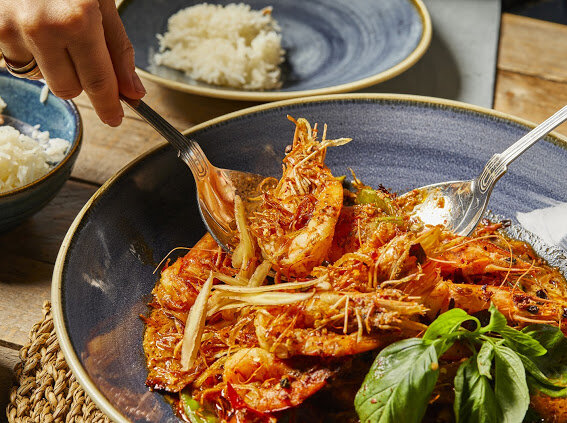
This is a Farang regular and one of the dishes I keep coming back to. The point of the recipe is the prawn heads. That's not decorative and it's not about presentation. The fat inside a tiger prawn head is sweet and deeply savoury, and when it dissolves into the hot coconut oil at the start of the curry it becomes part of the sauce. You end up with something that tastes of prawn in a way that stock alone doesn't give you. Pull the heads off at the table before you eat. But leave them in for the cooking.
Fresh green peppercorns are a different ingredient to anything that comes in a jar. Brined ones are soft and salty. Dried ones are just a step towards black. Fresh ones have a floral, aromatic heat that sits closer to citrus than to the dry burn of black pepper. Bite through one in the curry and you get a short burst of that heat rather than anything that builds slowly. They're worth seeking out at a Thai or Asian supermarket when you can find them. If you can only get brined, use them, but they're doing a different job in the dish.
The krachai (wild ginger, also called finger root) goes in with the prawns rather than at the start with the paste. It cooks gently in the liquid and keeps its floral sharpness that way. Fry it out at the beginning and you'd lose most of what makes it interesting here. Fifty grams of it, peeled and sliced, through a prawn curry is not a small amount. It's supposed to be that much.
Both aubergines matter. The pea aubergines go in first with the paste, where they give off a slight bitterness that becomes part of the base. The apple aubergine goes in later with the stock, where it has enough time to soften without collapsing. Season this properly throughout. A red curry that's underseasoned eats flat regardless of the quality of the paste. Palm sugar first, then fish sauce to deglaze, then taste again before you serve.
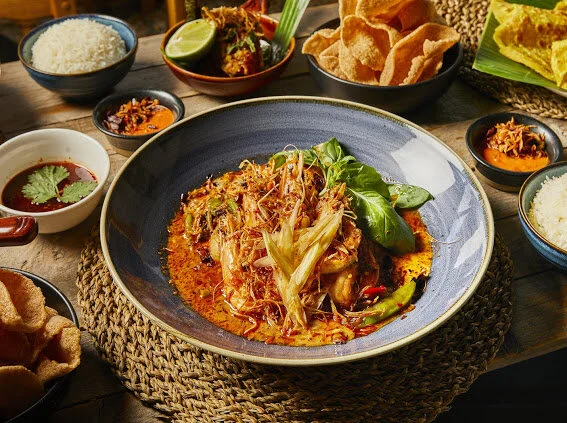
Red Curry of Tiger Prawns, Wild Ginger, Green Peppercorns & Sweet Basil
Serves: 2 | Prep: 15 mins | Cook: 20 mins
Ingredients
50g coconut oil
10g pea aubergines, picked from stem and washed
20g fresh green peppercorns
2 makrut lime leaves
20g palm sugar
20ml fish sauce
200ml fish or prawn stock
1 apple aubergine, cut into 8 pieces
400ml coconut milk
50g krachai (wild ginger / finger root), peeled and sliced
10-12 whole tiger prawns, de-veined and peeled, heads and tails left on
A handful of Thai sweet basil leaves, picked
1 lime, cut into 2 cheeks
Steamed jasmine rice, to serve
Method
Melt the coconut oil in a large, heavy pan or wok over a high heat. Add the pea aubergines, green peppercorns and makrut lime leaves and let them sizzle for about 30 seconds. They'll start to blister and pop.
Add the red curry paste and fry hard for 4 to 5 minutes, stirring constantly to stop it catching. The paste should darken slightly and the oil will begin to split back through it. The smell shifts from raw and sharp to something deeper and more fragrant. That's when you know it's ready.
Add the palm sugar and stir until it melts and begins to caramelise, darkening the paste further. Pour in the fish sauce and deglaze, scraping the bottom of the pan.
Add the stock and half the coconut milk. Bring to a simmer. Add the apple aubergine pieces and cook for 3 to 4 minutes until they start to soften at the edges.
Add the krachai and the whole prawns, pushing them down into the liquid. Cover if you have a lid. Simmer for 5 to 6 minutes until the prawns are cooked through and the shells have taken on the colour of the curry.
Pour in the remaining coconut milk and stir gently. Taste. It should be rich, properly salty and fragrant, with heat that builds. Adjust with more fish sauce if it needs salt, a touch more palm sugar if the paste bitterness is too forward.
Off the heat, toss through the Thai basil leaves. Serve immediately over steamed jasmine rice with a cheek of lime at the side.
Chef's notes
The red curry paste matters here. At Payst we make ours fresh and it's available for next day delivery across the UK. A fresh paste fries out differently to one from a jar, the aromatics haven't had time to flatten, and you can actually taste the lemongrass and galangal working. It makes a real difference in a dish where the paste is the foundation.
If you can't get fresh green peppercorns, brined are the next best option. Add them at the same point in the recipe. Dried green or black peppercorns work in a pinch but you'll lose the burst of heat and the freshness. It's worth the trip to a Thai supermarket for the fresh ones when they're available.
Tiger prawns are the right prawn for this. They're substantial enough to hold up in the curry without disappearing, and the heads are large enough to actually contribute to the sauce. Smaller prawns won't give you the same result. If you genuinely can't find whole tiger prawns with heads, use shell-on king prawns. Avoid peeled.
Visit us at faranglondon.co.uk. Sauces and pastes for cooking Thai at home at payst.co.uk.
For more recipes, signed copies of my cookbooks are available at Payst: Cook Thai and Thai in 7.

Head chef & founder of Farang London restaurant. Cookbook author of ‘Cook Thai’ & ‘Thai in 7’. Chief curry paste basher and co-founder of Payst London.