
Stir-fried Wagyu Beef with Jaew and Pineapple Vinegar
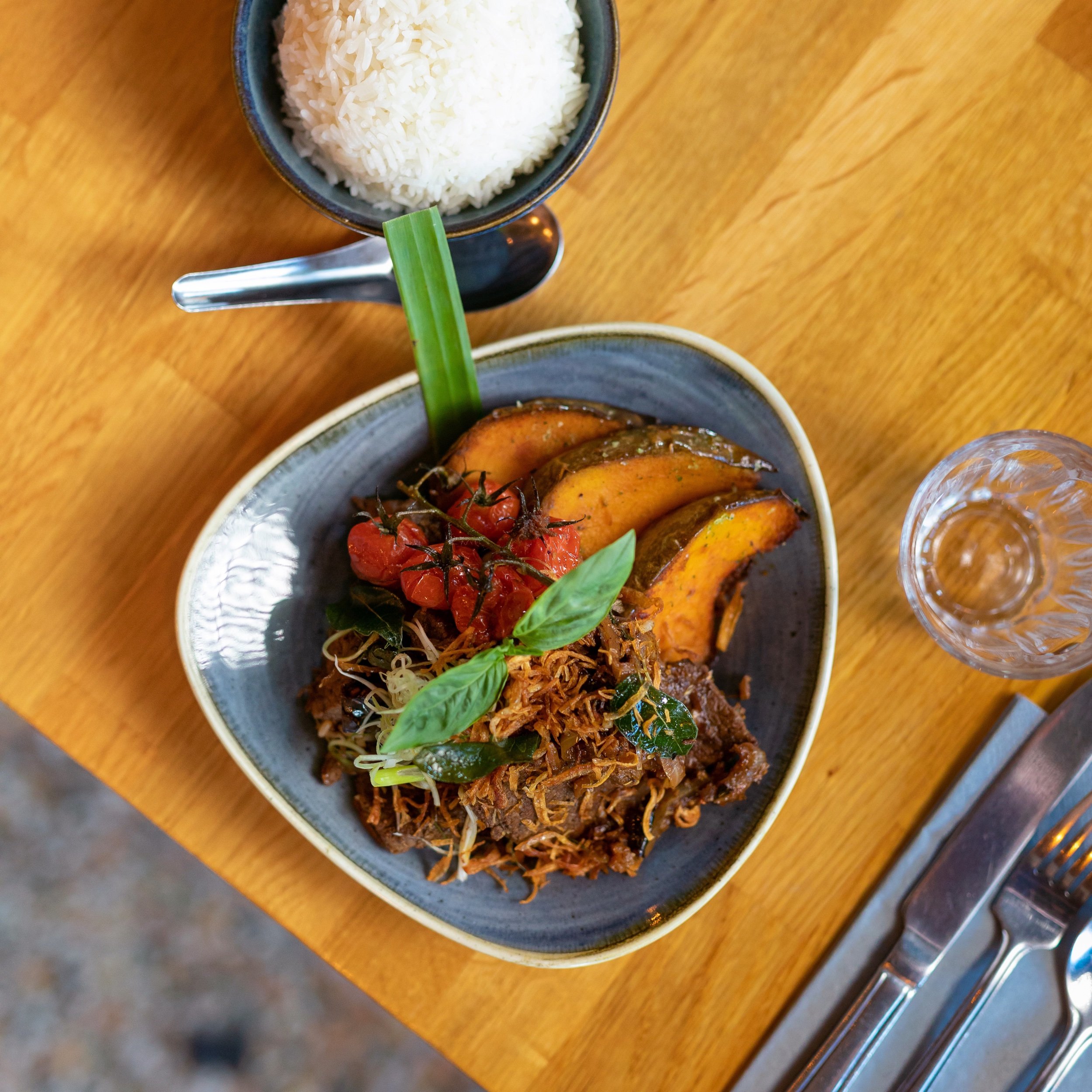
Japanese Wagyu Beef Company got in touch and sent me a knuckle to cook with. That was the brief: here's the beef, what would you make? This is it. The marbling on wagyu does something in a hot wok that cheaper beef won't. The fat carries the spices and the char of the jaew right through the meat. It's expensive and hard to come by, but if you can get hold of it, this is the dish to make with it. The jaew does a lot of work here. Roasted chilli and tomato, smoky and punchy. The pineapple vinegar provides the acidity: it cuts through the fat in a way lime juice alone won't.
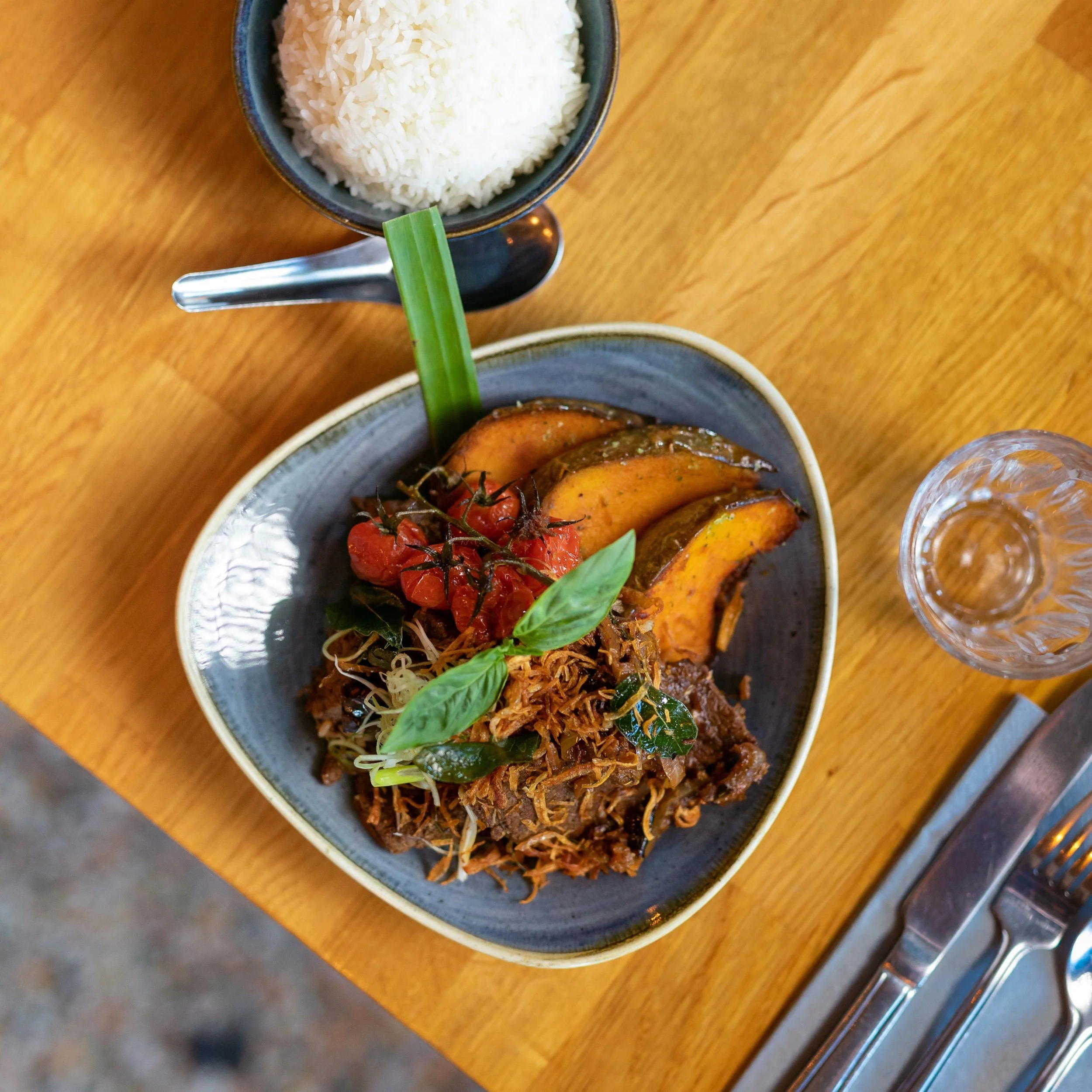
Stir-fried Wagyu Beef with Jaew and Pineapple Vinegar
Serves: 2-3 | Prep: 20 mins | Cook: 15 mins (plus 1 hour for the jaew)
Ingredients
For the beef:
200g wagyu beef knuckle, sliced against the grain into 2cm x 5cm pieces
1 tsp toasted ground cumin
1 tsp toasted ground coriander seeds
½ tsp chilli powder
3 tbsp vegetable oil
½ white onion, peeled and thickly sliced lengthways
50ml beef stock
1 tbsp fish sauce
1 tbsp palm sugar
1 tsp pineapple vinegar
2 tbsp thick tamarind water
5g Thai basil leaves
20g jaew (recipe below)
To serve:
Steamed jasmine rice
Roasted pumpkin
Method
Combine the wagyu with the cumin, coriander seeds, chilli powder and 1 tablespoon of oil. Mix thoroughly and set aside for 10 minutes.
Get a wok over the highest heat possible. When it's smoking hard, add the remaining 2 tablespoons of oil.
Add the beef and shake the wok immediately to stop it sticking. Stir-fry for 1 minute until sealed and starting to colour.
Add the jaew and sliced onion. Stir-fry for another minute until the onion begins to soften and the jaew is coating the beef.
Deglaze with the stock, then add the fish sauce, palm sugar, pineapple vinegar and tamarind water. Toss over high heat for 30 seconds until the sauce thickens and coats the beef.
Toss through the Thai basil, taste and adjust seasoning, and serve immediately with jasmine rice and roasted pumpkin.
Chef's notes
The high heat is not optional. Too low and the beef stews rather than fries, and you lose everything the wagyu is bringing. Get the wok as hot as your stove will allow before anything goes in. If wagyu knuckle is out of reach (and it often is), a well-marbled bavette or skirt will work. The dish holds up either way, it just won't have the same richness through the meat.
Make the jaew the day before if you can. It improves overnight as the charred notes settle. It keeps refrigerated for up to a week and works with any grilled meat or fish. Make a large batch.
Pineapple vinegar is available from most specialist Asian grocers. If you can't find it, use rice vinegar with a small squeeze of fresh pineapple juice. It won't be quite the same but it does the job.
Jaew — Roasted Chilli Relish
Makes approximately 400g
Ingredients
For the relish:
50g cherry tomatoes, skewered
6 long red chillies, skewered
6 green bird's-eye chillies, skewered
10 garlic cloves, skewered
50g Thai shallots, skewered
4 banana shallots, skewered
2 lemongrass sticks, bruised
2 tbsp thick tamarind water
2 tbsp palm sugar
2 tbsp fish sauce (or soy sauce for a vegetarian version)
2 tsp smoked chilli powder
2 tbsp coriander roots, finely chopped
Juice of 2 limes
Method
Get the barbecue to high heat. Wood preferred, charcoal or gas is fine.
Grill each skewer, turning regularly, until the vegetables are softened and lightly charred all over. The tomatoes will blister and burst. The chillies will blacken at the edges. That char is what you're building the flavour on. Don't rush it.
Once cool enough to handle, remove the chilli stems, peel the garlic and shallot skins, strip the tough outer sheaths from the lemongrass and finely chop the soft inner core.
Combine the charred vegetables in a food processor or large mortar and pestle with the tamarind water, palm sugar, fish sauce, smoked chilli powder and coriander roots.
Blend or pound to a moist, coarse paste. Keep some texture. This isn't a smooth sauce.
Stir in the lime juice. Taste and adjust. It should be smoky, hot, salty and sour in equal measure.
Chef's notes
This is jaew. Not nahm prik pao. The two are completely different things. Nahm prik pao is a slow-cooked, oil-based chilli paste. Jaew is roasted and sharp, built on char. The tomatoes in this version aren't traditional but they work well here. The sweetness rounds out the heat and works with the lime. Use it with grilled meat, with a whole fish, with leftover chicken. It's worth keeping a jar in the fridge at all times.
Visit us at faranglondon.co.uk. Sauces and pastes for cooking Thai at home at payst.co.uk.
For more recipes, signed copies of my cookbooks are available at Payst: Cook Thai and Thai in 7.
Watch Sebby cook this wagyu stir-fry at Farang
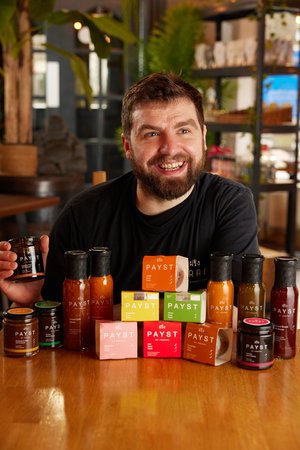
Head chef & founder of Farang London restaurant. Cookbook author of ‘Cook Thai’ & ‘Thai in 7’. Chief curry paste basher and co-founder of Payst London.