
Tom Kha Goong Coconut and galangal soup with tiger prawns and smoked haddock
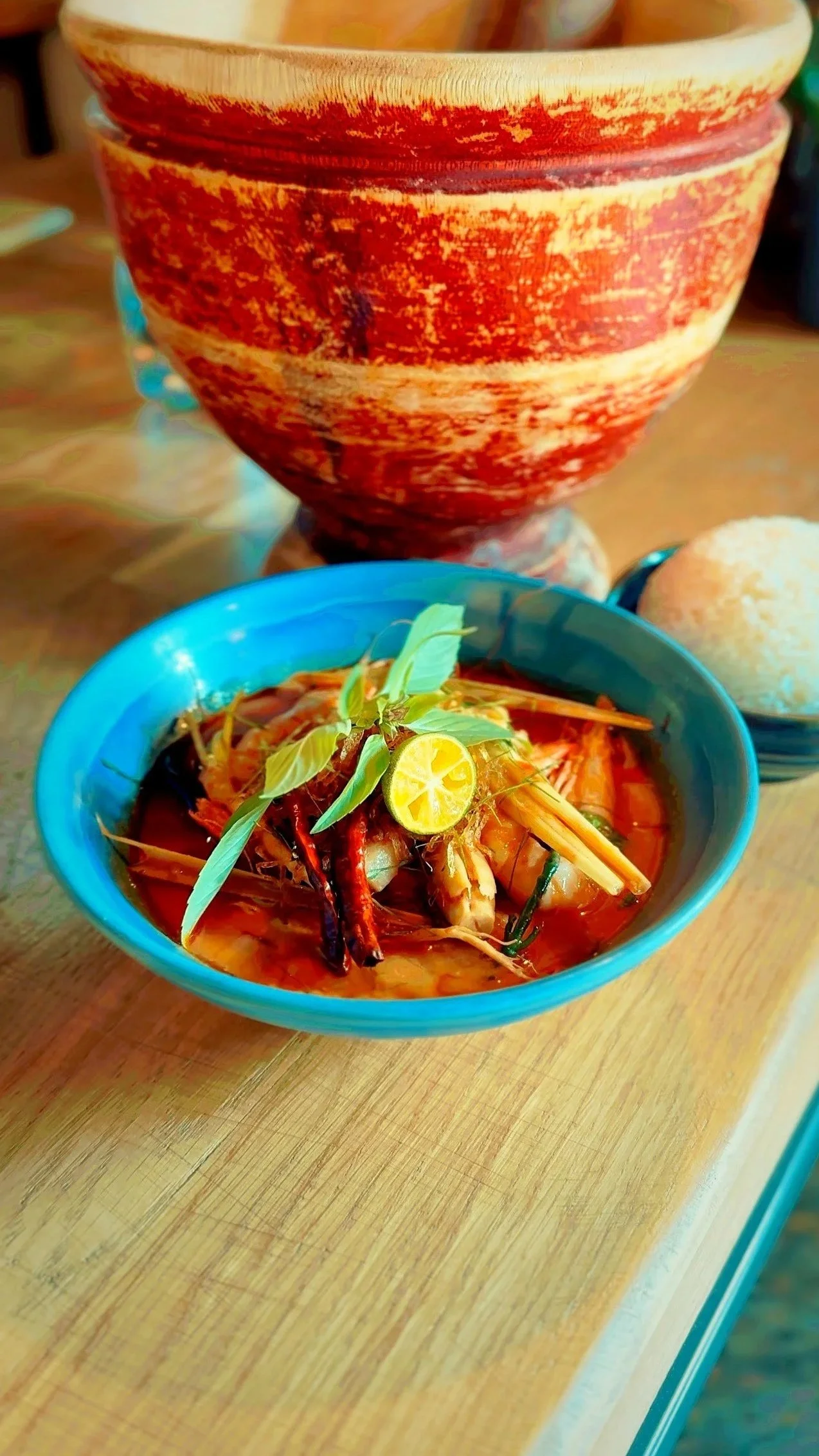
There are dishes that become part of you before you fully understand why. Tom Kha was like that. I had it first with chicken, tom kha gai, unremarkable setting, remarkable bowl, and something clicked into place about what Thai cooking actually is. The lemongrass and galangal are almost impossible ingredients, woody, fibrous, the kind of thing that resists you. Bruise them in a pestle first and they open up completely. Simmer them in stock for ten minutes and they give you everything they have. That speed, that generosity, that depth from almost nothing. Thai cookery at its most honest.
This version came back with me from Thailand, where I tried it made with nahm prik pao, a fried chilli jam built on dried shrimp and gapi paste. It adds a bass note the classic version doesn't have, something fermented and deep underneath all that clean coconut fragrance. The smoked haddock was my addition, an instinct that came from roasting cherry tomatoes one evening and loving what a little smoke did to the broth. In the UK, smoked haddock made sense. Diced and dropped in at the very end alongside the prawns, it dissolves its flavour into the bowl in seconds. Subtle. Completely right.
I've made thousands of these. The tricks are in the timing and in what you hold back.
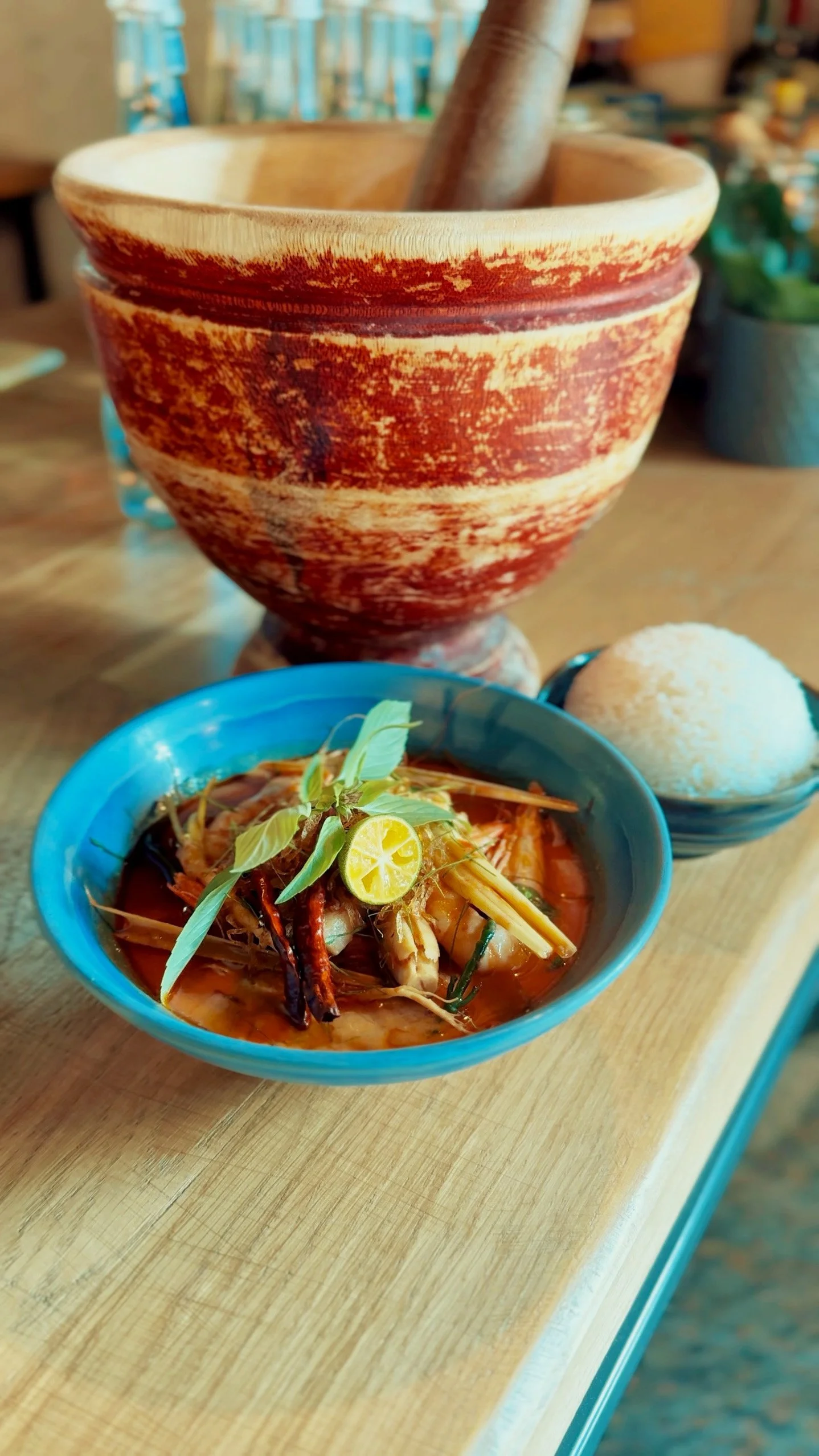
Tom Kha Goong
Coconut and galangal soup with tiger prawns and smoked haddock
Serves: 2 | Prep: 15 mins | Cook: 15 mins | Total: 30 mins
Ingredients
For the broth
2 stalks lemongrass, bashed hard with a pestle or the back of a knife, cut into 4cm lengths
5cm piece of galangal, sliced into coins (not ginger - the flavour is entirely different)
4 makrut lime leaves, torn
1 stem coriander root, bruised in the pestle
2 bird's eye chillies, stems removed, bruised gently in the pestle and left whole
6 cherry tomatoes, squeezed in by hand to break them up
500ml good chicken stock
1 tbsp nahm prik pao (Thai roasted chilli paste - Mae Pranom in the glass jar is the one to look for)
200ml full fat coconut milk, most held back until the end
2 tbsp fish sauce (Tiparos or Megachef)
1 tbsp palm sugar, or light brown sugar
Juice of 2 limes, added off the heat only
Small handful Thai basil leaves, added off the heat at the end
For the proteins
8 raw tiger prawns, shell on if possible
150g undyed smoked haddock, skinned and cut into 2cm dice
To garnish
Picked coriander leaves
Crispy shallots
2 makrut lime leaves, central stem removed, sliced as finely as you can manage
Sliced fresh red chilli, to taste
Half a lime, to serve
Method
In a pestle and mortar, bruise the lemongrass, galangal, makrut lime leaves and coriander root together. Add the bird's eye chillies last and bruise them gently rather than grinding them down. You want them cracked open, flavour released, but still intact enough that a diner can identify and avoid them if they want. You are not making a paste. You are waking everything up.
Bring the chicken stock to a simmer in a medium saucepan. Add everything from the pestle along with the nahm prik pao. Take the cherry tomatoes in your hand and squeeze them directly into the pan, breaking them up as they go in. The juice, the seeds, all of it into the broth. They will dissolve as the soup simmers, giving the broth a sweetness and a gentle acidity that underpins everything else. Simmer gently for 10 to 12 minutes. Taste at 10 minutes. It should be fragrant, deep and complex with a low heat building underneath.
Add about 50ml of the coconut milk now, just enough to round the broth. Season with fish sauce and palm sugar. The balance you are looking for is salty, slightly sweet, fragrant, with that fermented depth from the nahm prik pao sitting below everything else. The lime juice comes later. Don't taste for it yet.
Add the tiger prawns. Shell-on prawns will take about 3 minutes. Watch them, not the clock. When the flesh has turned from translucent to fully opaque and the shells have gone completely red, add the smoked haddock. It needs 90 seconds, no more. It will flake slightly at the edges and release an immediate smokiness into the broth. This is the moment the dish becomes itself.
Take the pan off the heat. Add the remaining coconut milk now, all of it. Coconut milk added to a violent simmer will split, the fat separating into greasy pools on the surface. Added off the heat to a resting broth it folds in cleanly and keeps everything glossy. Squeeze in both limes. Drop in the Thai basil and let the residual heat do the work rather than cooking it directly. You want the fragrance alive, not wilted out of it.
Taste one final time. Fish sauce if it needs salt, a little more lime if it needs lifting, a pinch more sugar if it has gone too sharp. When the balance is right you won't be able to pick any single element out. That is what you are aiming for.
Ladle into bowls. Scatter over the coriander leaves, crispy shallots and the finely sliced makrut lime leaves. The raw sliced makrut is a different thing entirely to the torn leaves in the broth. Added at the end, not cooked, they give a bright citrus hit that lifts the whole bowl. Fresh chilli if you want more heat. Serve with jasmine rice alongside.
A few things worth knowing
The lemongrass, galangal, makrut lime leaves, coriander root and chillies are not eaten. They are in there to give everything they have. The chillies stay whole precisely so you can see them and work around them.
The nahm prik pao is not optional. It is the difference between a good Tom Kha and this Tom Kha. Mae Pranom in the glass jar is the best off-the-shelf version available. A recipe for making your own from scratch is coming to the site.
If you can't find undyed smoked haddock, Arbroath smokies work even better. What you want is the cold-smoked flavour, not a yellow-dyed fillet that tastes of nothing but colour.
This is a hangover soup. A Tuesday soup. A soup for when someone needs feeding properly and you have thirty minutes. It is also, when you make it well, the kind of thing that stops a table.
Visit us at faranglondon.co.uk. Sauces and pastes for cooking Thai at home at payst.co.uk.
For more recipes, signed copies of my cookbooks are available at Payst: Cook Thai and Thai in 7.
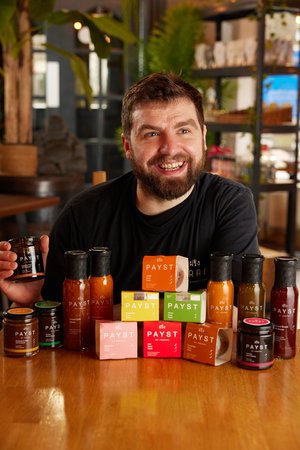
Head chef & founder of Farang London restaurant. Cookbook author of ‘Cook Thai’ & ‘Thai in 7’. Chief curry paste basher and co-founder of Payst London.