
Grilled Greens, Wild Garlic, Pak Choi, Beans, Asparagus, Soy & White Pepper

Wild garlic costs about five pounds for two hundred grams at any deli that considers itself the right sort of place. The irony is that in spring it grows so prolifically across the UK that you're probably stepping over a carload of it on the way to buy it. I have it in the garden, which means for a few weeks a year I can treat it like a herb and just take handfuls of it without thinking twice. Flavour-wise it sits closest to chive flowers or Chinese chives, maximum garlic intensity without the raw heat of a clove, and it doesn't need cooking. Add it off the heat at the very end and toss it through before the dish goes to the table. That's all it needs.
The technique here is a hot dry wok before any oil goes in. Get the wok properly smoking, then add the greens and cook them hard against the metal until you have real colour and some char on the edges. They're not cooking through at this stage, you're building flavour. Then out, paste in, everything back together with stock, soy, white pepper and sugar. The char becomes part of the broth.
The paste is green chilli, garlic, krachai and salt. Krachai, also called wild ginger or finger root, has a floral, clean sharpness that works particularly well with light broths and green vegetables. It's sharper than common ginger and more aromatic. Worth looking for at a Thai or Asian supermarket. If you can't find it, ginger works, but krachai is a different thing.
White pepper with soy sauce is a pairing that runs through Thai and Chinese cooking. Black pepper has more aromatic complexity from the oils in the outer skin, but white pepper gives you a sharper, earthier heat that cuts cleanly through the soy and adds complexity without competing with the other flavours in the wok. Both would work, but white is the better call for a dish like this.

Grilled Greens, Wild Garlic, Pak Choi, Beans, Asparagus, Soy & White Pepper
Serves: 2 | Prep: 10 mins | Cook: 10 mins
Ingredients
For the paste
2 green bird's-eye chillies
4 garlic cloves, peeled
1 teaspoon krachai (wild ginger / finger root), peeled and roughly chopped (substitute with fresh ginger)
½ teaspoon coarse sea salt
For the stir-fry
2 tablespoons vegetable oil (coconut oil works well too)
50g pak choi, washed and cut into 3cm pieces
20g green beans, topped, tailed and cut into thirds
6 asparagus spears, tough ends removed, halved lengthways
100ml hot vegetable stock
1 tablespoon light soy sauce (use tamari to keep it gluten-free)
¼ teaspoon white peppercorns, toasted and ground to a powder
1 teaspoon caster sugar
A handful of wild garlic, roughly chopped
Method
Make the paste. Pound the chillies, garlic and krachai in a pestle and mortar with the coarse salt until you have a coarse paste, using the salt as an abrasive to help everything break down.
Get the wok on the highest heat you have. No oil yet. When it's properly smoking, add the pak choi, green beans and asparagus and cook hard against the metal, tossing occasionally, for 2 to 3 minutes until you have real colour and some char on the edges. You're not cooking them through at this stage, you're after the char. Remove from the wok and set aside.
Add the vegetable oil to the hot wok. Add the paste and fry for about a minute, stirring constantly, until it starts to colour and the smell shifts from raw to fragrant and slightly sweet.
Return the charred vegetables to the wok and toss for a minute on a high heat. Add the vegetable stock, soy sauce, ground white pepper and sugar. Toss everything together until the vegetables are well coated and cooked through but still with some bite. It should take no more than 2 minutes.
Taste. It should be well-seasoned, a little sharp from the pepper, and the soy should be prominent but not overwhelming. Add a touch more soy if it needs salt, a touch more sugar if the paste is too sharp. Remove from the heat, add the wild garlic and toss through. The residual heat is enough. You don't want to cook it.
Serve immediately with steamed jasmine rice.
Chef's notes
The wild garlic goes in off the heat and that's not optional. Cook it and you lose most of what makes it interesting. The same rule applies if you're using chive flowers or Chinese chives as a substitute, which are the closest things to it in flavour. Regular garlic leaves work too if you have them. Add them all at the end.
The vegetables are flexible. Kale, cavolo nero, baby corn, tenderstem broccoli, cucumber, cabbage, whatever looks good at the market. The principle is the same: char them hard in a hot dry wok before the paste goes in. That step is what separates this from a standard stir-fry.
Toasting the white peppercorns before grinding makes a difference. Thirty seconds in a dry pan until they start to smell fragrant is all it takes. Then grind immediately. Pre-ground white pepper from a jar is fine if that's what you have, but freshly ground is noticeably better.
This recipe was also published in Cook Thai.
Visit us at faranglondon.co.uk. Sauces and pastes for cooking Thai at home at payst.co.uk.
For more recipes, signed copies of my cookbooks are available at Payst: Cook Thai and Thai in 7.
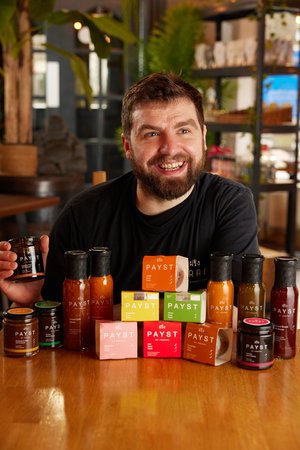
Head chef & founder of Farang London restaurant. Cookbook author of ‘Cook Thai’ & ‘Thai in 7’. Chief curry paste basher and co-founder of Payst London.