
Oyster Sauce: What It Is and How to Use It
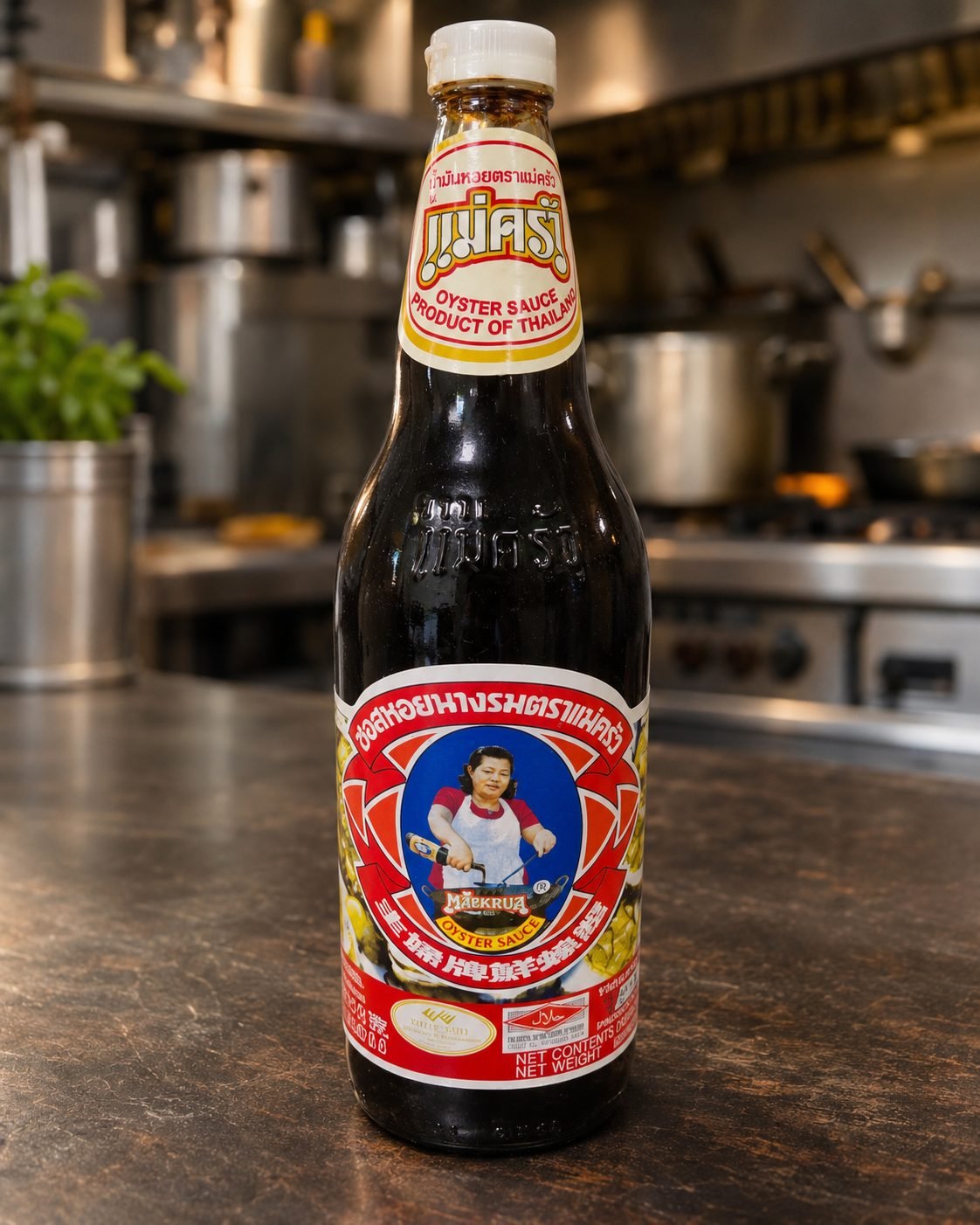
Thai Ingredients
In Thai: nahm man hoi
Oyster sauce came to Thailand with Chinese cooks, and it’s been in the wok ever since. It’s the glossy, savoury, slightly sweet sauce behind stir-fried greens, pad see ew and kra pao.
- Tastes like
- Savoury, sweet, a little briny
- Find it
- Every supermarket, Asian grocers
- Swap
- Mushroom “oyster” sauce
What it is
A thick, dark sauce made from oyster extract, sugar and salt, thickened with starch. In Thai it’s nahm man hoi. It doesn’t taste of oysters so much as deep savouriness with a gentle sweetness, and it gives a stir-fry its gloss.
It’s a young sauce. The story goes that in 1888 a teahouse owner in southern China, Lee Kum Sheung, forgot about a pot of oysters on the stove and found it had cooked down into a thick, savoury brown sauce. He started selling it, and Lee Kum Kee is still one of the biggest names on the shelf. It travelled to Thailand with Chinese cooks and became part of Thai street food.
Oyster sauce, fish sauce, soy
They all bring salt and savouriness, but they’re not interchangeable.
| Sauce | What it brings | Where it goes |
|---|---|---|
| Oyster sauce | Savoury, sweet, thick and glossy | Stir-fries, marinades, glazes |
| Fish sauce | Sharp salt and deep savouriness, thin | Almost everything: dressings, curries, soups, dips |
| Light soy | Rounded salt, thin | Seasoning stir-fries and soups |
| Dark soy | Colour and a little sweetness, thick | Colouring noodles and braises |
In a Thai stir-fry you’ll often use two or three together: oyster for gloss and body, fish sauce for salt, a dash of dark soy for colour.
How to use it
Mix it into your stir-fry sauce with fish sauce and a little sugar before the wok goes on, then pour it down the hot sides at the end so it sizzles and coats everything. It’s in pad see ew, kra pao and almost every stir-fried green. A spoonful in a marinade helps meat caramelise on the grill.
It’s strong and sweet, so go easy. A tablespoon is plenty for a stir-fry for two. My wok skill covers the heat and timing.
Choosing a bottle
Look for oyster extract near the top of the ingredient list, not just water, sugar and flavourings. The cheapest ones are mostly sugar, salt and colouring with a hint of oyster. Thai and Chinese brands from an Asian supermarket are usually better and cheaper than supermarket own-brand. Some brands sell a premium version with more oyster in it, and it’s worth the extra pound.
Storing it
In the fridge once it’s open. It keeps for months there, but it can go mouldy in a warm cupboard.
Vegan and gluten-free swaps
Vegetarian oyster sauce, made with mushrooms, is a very good swap and widely sold. It’s often labelled “vegetarian stir-fry sauce”. For gluten-free cooking, some brands make a gluten-free oyster sauce, so check the label. In a pinch, dark soy or tamari with a little sugar gives colour and sweetness.
Anyone with a shellfish allergy should avoid the real thing.
Quick answers
Does oyster sauce taste of oysters?
Not really. It tastes savoury and slightly sweet, with just a hint of the sea.
What’s the difference between oyster sauce and fish sauce?
Oyster sauce is thick, sweet and glossy, for stir-fries. Fish sauce is thin and salty, and seasons almost everything.
Does oyster sauce need to be refrigerated?
Yes, once it’s open. It keeps for months in the fridge.
Is oyster sauce vegan or gluten-free?
No and usually no. It’s made from oysters and most brands contain wheat. Mushroom oyster sauce is the vegan swap.
What can I use instead of oyster sauce?
Vegetarian mushroom oyster sauce, or dark soy with a pinch of sugar.
Who invented oyster sauce?
The story goes that Lee Kum Sheung, a teahouse owner in Guangdong, created it by accident in 1888.
Further reading: The Daily Meal on the origins of oyster sauce, America’s Test Kitchen oyster sauce taste test.
More from the Thai larder
Every ingredient I cook with, explained: what it is, where to find it and what to use instead.
All Thai ingredients, A to ZGet my free Thai Pantry guideSubscribe and new recipes, articles and guides land in your inbox as soon as they go up.
Head chef & founder of Farang London restaurant. Cookbook author of ‘Cook Thai’ & ‘Thai in 7’. Chief curry paste basher and co-founder of Payst London.