
Makrut Lime Leaves: What They Are and How to Use Them
Thai Ingredients
In Thai: bai makrut
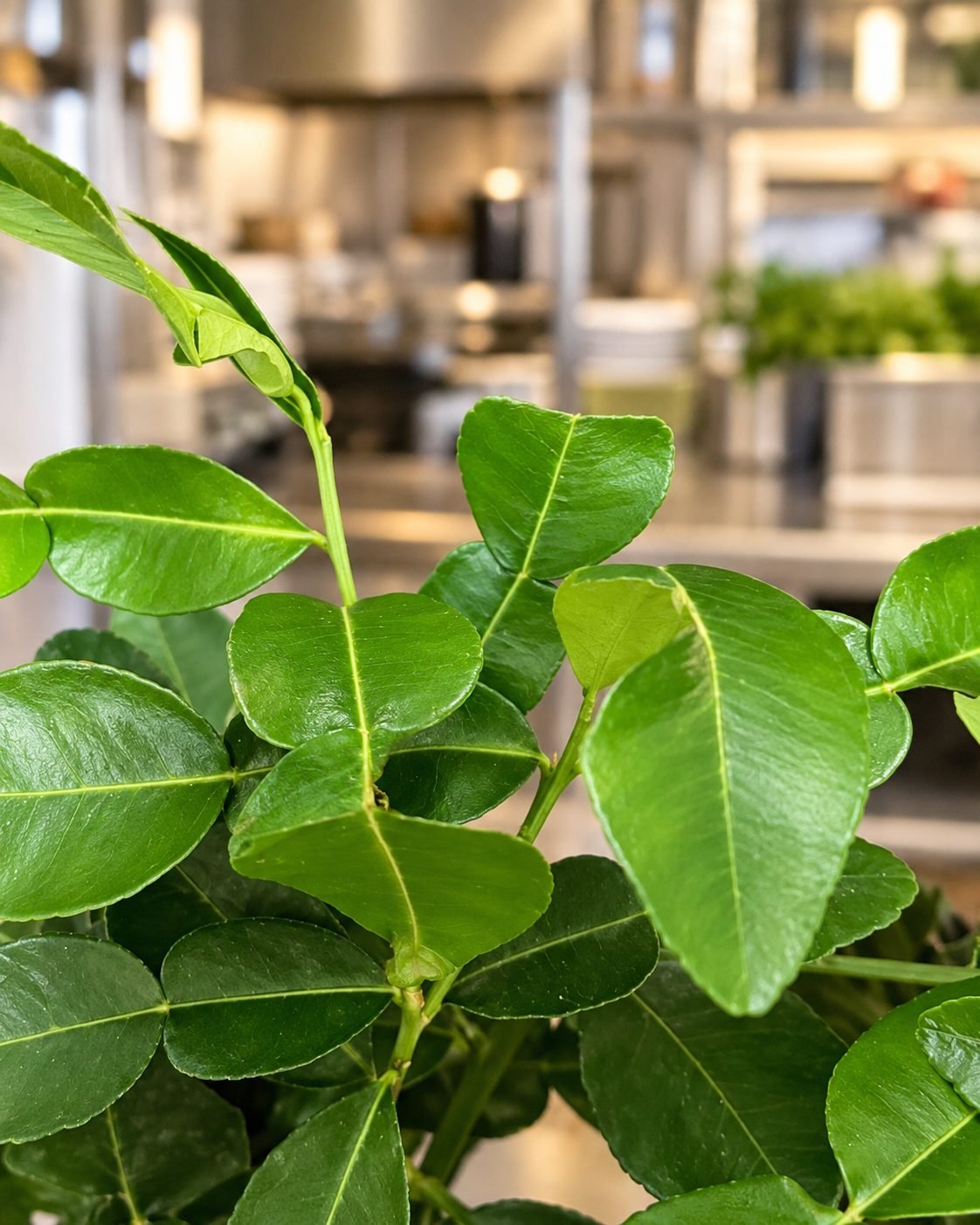
Open a bag of fresh makrut lime leaves and you’ll know what Thai food smells like. Glossy, dark green, shaped like two leaves joined end to end, and stronger than any lime you’ve ever zested.
- Tastes like
- Intense lime zest, floral, fresh
- Find it
- Supermarkets, Asian grocers, frozen
- Swap
- Frozen leaves, then lime zest
What they are
The leaves of the makrut lime tree, Citrus hystrix, a small thorny tree with knobbly, wrinkled limes that have almost no juice. In Thai the leaf is bai makrut. Each leaf looks like two leaves joined end to end, which makes them easy to spot.
Scrunch one and the smell is pure Thai food: sharper and more floral than ordinary lime zest, with none of the sourness. They go into tom yum, tom kha, curries, stir-fries, fishcakes and salads.
Why not kaffir lime?
You’ll still see them sold as kaffir lime leaves. That name is being dropped, because “kaffir” is a racial slur in South Africa, and food writers, chefs and UK supermarkets have been switching to makrut, the Thai name. SBS Food has a good piece on why. It’s the same leaf either way, so if a shop still uses the old name, that’s what you’re looking for.
Leaves, zest and juice
The leaves are the bit you’ll use most. The limes themselves are used for their zest, which is wonderfully fragrant and goes into some curry pastes, especially red and jungle curry. The juice is too bitter to cook with.
| Part | How it’s used |
|---|---|
| Leaves, torn | Dropped into soups and curries to flavour them, then eaten round |
| Leaves, shredded | Sliced into threads for salads, fishcakes and garnish |
| Zest | Grated into curry pastes |
| Juice | Not really used. Too bitter |
If you ever see whole makrut limes, buy a few and freeze them. They’re easier to zest frozen.
How to use them
For soups and curries, fold each leaf in half along the spine, pull the tough central stem away, tear the leaf and drop it in. It flavours the dish and you eat round it.
For salads, garnishes and fishcakes, stack a few, roll them up tight and slice them into the finest threads you can, as thin as a hair. Thick pieces are tough and leathery to chew. In a curry paste, shred them finely first, then pound. I also like toasting a lime leaf with lemongrass and galangal into plain rice.
My lemongrass, galangal and lime leaves skill shows the shredding.
Where to buy them
Big supermarkets sell small packs of fresh leaves, usually with the herbs. Asian supermarkets sell bigger bags for less, fresh and frozen. Dried leaves are a poor relation, with most of the smell gone. Skip them.
Storing them
Fresh, in a sealed bag in the fridge, about a week. They freeze better than almost any herb. Bag them, freeze them and use them straight from frozen for months. Frozen are nearly as good as fresh.
What to use instead
Frozen leaves first. With nothing else, a little finely grated lime zest stirred in at the end gives some of the citrus perfume. A bit of lemongrass helps too. It’s not the same, but it’s better than leaving them out.
Quick answers
Are makrut lime leaves the same as kaffir lime leaves?
Yes. Same leaf. Makrut is the Thai name, and it’s replacing kaffir, which is a racial slur in South Africa.
Do you eat makrut lime leaves?
Not when they’re torn into soups and curries, you eat round them. Shredded into very fine threads, yes.
Can you freeze makrut lime leaves?
Yes. They freeze better than almost any herb and can be used straight from frozen.
What can I use instead of makrut lime leaves?
Frozen leaves first. Otherwise, a little finely grated lime zest added at the end.
Are dried lime leaves any good?
Not really. Most of the smell is gone. Fresh or frozen is far better.
Can you use makrut lime juice?
It’s too bitter for most cooking. Use the zest and the leaves.
Further reading: CooksInfo on makrut lime, Wikipedia on Citrus hystrix.
More from the Thai larder
Every ingredient I cook with, explained: what it is, where to find it and what to use instead.
All Thai ingredients, A to ZGet my free Thai Pantry guideSubscribe and new recipes, articles and guides land in your inbox as soon as they go up.
Head chef & founder of Farang London restaurant. Cookbook author of ‘Cook Thai’ & ‘Thai in 7’. Chief curry paste basher and co-founder of Payst London.