
Lemongrass: What It Is and How to Use It
Thai Ingredients
In Thai: takrai
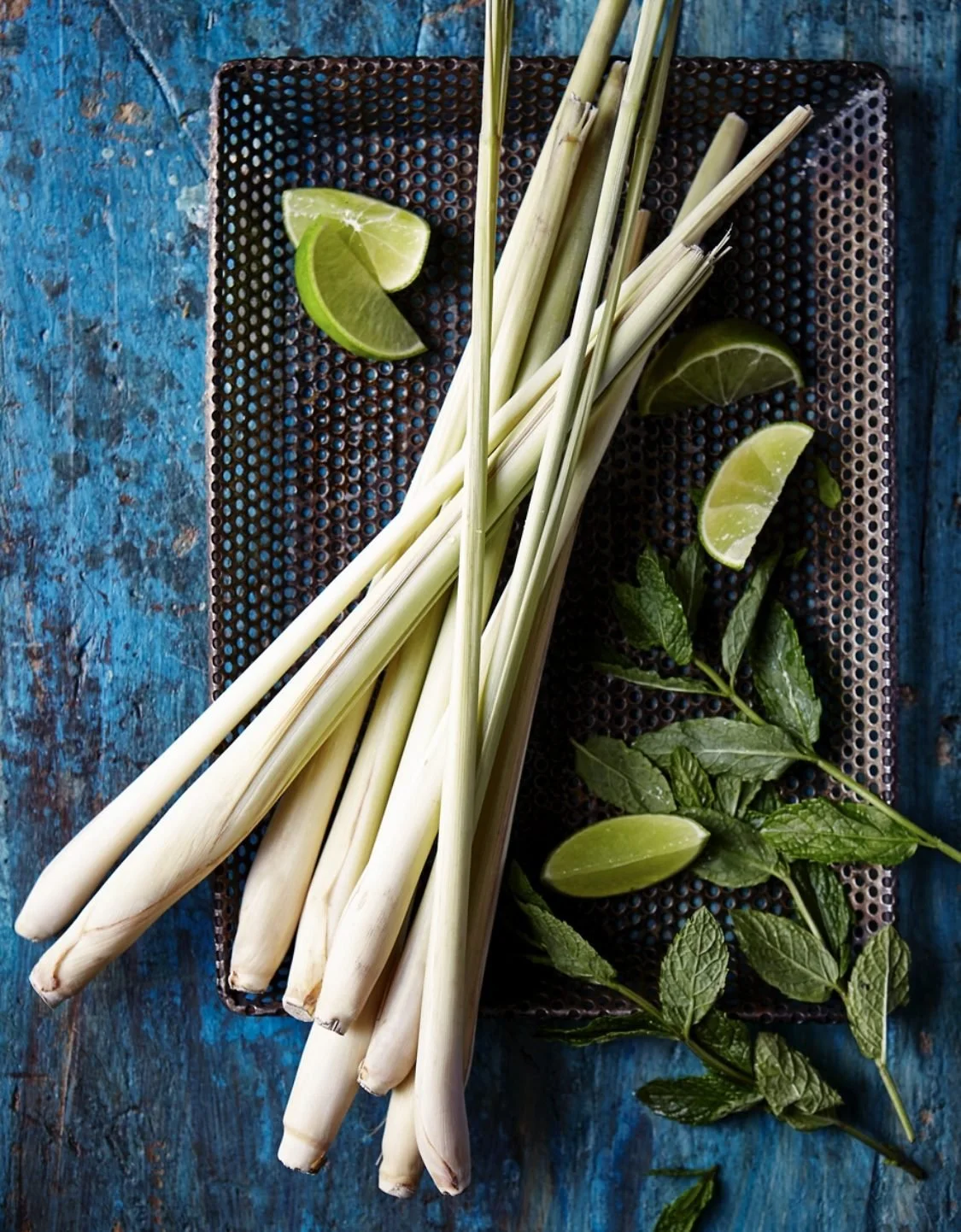
Lemongrass is in more Thai dishes than almost anything else in the fridge. Soups, curry pastes, marinades, salads, drinks. It’s also the one people most often get wrong, by leaving great woody chunks of it in the food.
- Tastes like
- Lemon peel, fresh grass, a little floral
- Find it
- Most supermarkets, Asian grocers
- Swap
- Frozen lemongrass, or lime zest
What it is
A tall tropical grass. In Thai it’s takrai. The pale bottom third of each stalk, sometimes tinged purple, is where the flavour lives. The green tops are tough, dry and best kept for tea or stock.
It tastes like lemon peel without the sharpness, with a fresh, grassy, slightly floral edge. That lemony smell comes from citral, the same oil found in lemon peel. It perfumes a dish rather than souring it, which is why Thai food uses lime and tamarind for sour and lemongrass for smell.
Three ways to cut it
How you cut lemongrass depends on whether anyone’s going to eat it.
| Cut | How | Use it for |
|---|---|---|
| Bashed lengths | Trim, cut into 5cm pieces, bash with the back of a knife | Soups, braises, stocks. Left in the bowl, not eaten |
| Paper-thin rings | Peel to the tender core, slice as thin as you can | Salads, laap, dressings. Eaten raw |
| Pounded | Chop finely first, then pound with salt | Curry pastes and marinades |
Thin rings soften. Thick ones are like eating twigs. When it’s going in a paste, it goes in first with the salt, because it’s the toughest thing in there. My lemongrass, galangal and lime leaves skill has photos of every cut.
How to use it
In tom yum and tom kha it’s one of the three big aromatics with galangal and lime leaves. In curry pastes it’s the base. Pounded with garlic, coriander root and fish sauce it makes a great marinade for grilled meat. And in Thailand there’s a whole salad built around it, yum takrai, where thin rings of raw lemongrass are the star.
It goes into toasted rice powder too, and a stalk tied in a knot is a quick way to perfume a pot of rice or a sweet syrup.
Where to buy it
Most big supermarkets sell packs of three or four stalks. Asian supermarkets sell big bundles for the same money, fresher, plus frozen bags of chopped lemongrass. Look for firm, heavy stalks with tight layers, not dry, light and papery ones.
Jars of lemongrass paste are handy but taste duller, and many have added sugar and acid. Fine in a marinade, no good in a salad.
Storing it
Wrapped in damp kitchen paper in a bag in the fridge, about two weeks. Or trim it, cut it into lengths and freeze it. Frozen lemongrass is nearly as good as fresh for soups and pastes, and you can use it straight from frozen.
What to use instead
Frozen lemongrass first. Lemongrass paste in cooked dishes. With nothing else, a strip of lime or lemon zest gives you the citrus, though you lose the grassy, floral side. A couple of makrut lime leaves help fill the gap in a soup.
Quick answers
Which part of lemongrass do you use?
The pale bottom third of the stalk. The green tops are too tough to eat, but good for tea or stock.
Can you eat lemongrass?
Yes, if it’s peeled to the tender core and sliced paper-thin. Thick or woody pieces should be left in the bowl.
How do you prepare lemongrass for soup?
Trim the root, peel off the tough outer layer, cut it into lengths and bash it with the back of a knife.
Can you freeze lemongrass?
Yes. Cut it into lengths and freeze. Use it straight from frozen in soups and pastes.
What can I use instead of lemongrass?
Frozen lemongrass or lemongrass paste. Failing that, a strip of lime or lemon zest.
How do you know if lemongrass is fresh?
Bend the bottom of the stalk. Fresh lemongrass snaps. Old, dry lemongrass folds.
Further reading: Hot Thai Kitchen on lemongrass, America’s Test Kitchen on buying and storing lemongrass.
More from the Thai larder
Every ingredient I cook with, explained: what it is, where to find it and what to use instead.
All Thai ingredients, A to ZGet my free Thai Pantry guideSubscribe and new recipes, articles and guides land in your inbox as soon as they go up.
Head chef & founder of Farang London restaurant. Cookbook author of ‘Cook Thai’ & ‘Thai in 7’. Chief curry paste basher and co-founder of Payst London.