
Krachai (Wild Ginger or Fingerroot): What It Is and How to Use It
Thai Ingredients
In Thai: krachai
If you’ve had a jungle curry at Farang and wondered what that earthy, slightly medicinal note was, it was krachai. It’s the least-known of the Thai roots and one of the most distinctive.
- Tastes like
- Earthy, peppery, slightly medicinal
- Find it
- Asian grocers, frozen or in jars
- Swap
- Ginger, with a little galangal
What it is
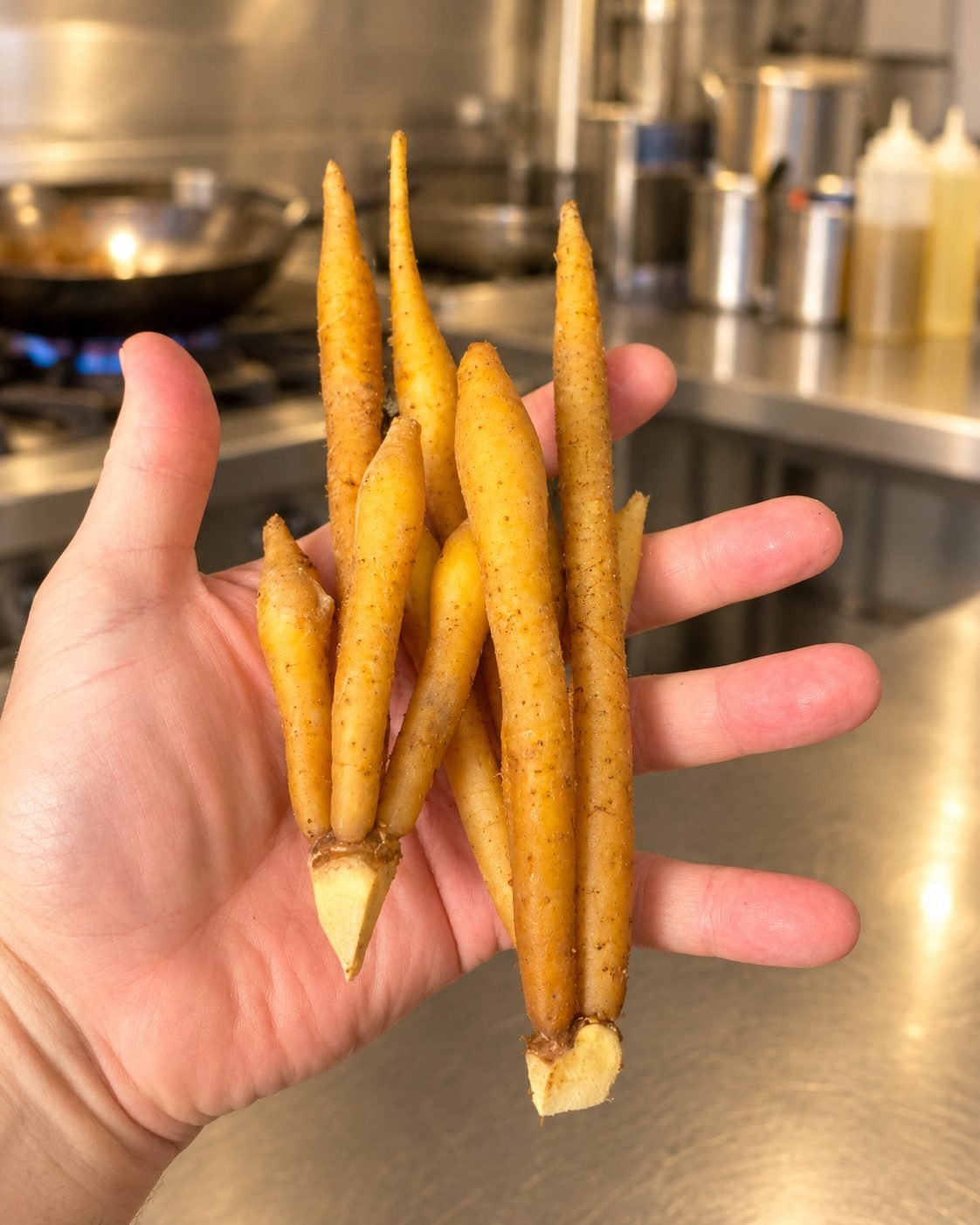
Krachai grows in clusters of long, thin, brown fingers hanging off a central knob, which is why it’s called fingerroot. Inside, it’s pale yellow, softer than galangal, with an earthy, peppery, slightly camphor-like taste.
It goes into jungle curry, fish curries and stir-fries with fish and seafood, where it cuts through any muddiness. Some of my recipes call it wild ginger. It’s the same thing.
One root, too many names
Krachai has more names than any other Thai ingredient, and that’s why people struggle to find it. Fingerroot, wild ginger, Chinese ginger, Chinese keys and lesser galangal are all used for it on packets and in recipes.
The last one causes the most trouble. There’s a completely different plant also called lesser galangal, and krachai is sometimes wrongly labelled as it. If you see a packet of thin brown fingers in a cluster, that’s krachai, whatever it says on the front. If it’s a reddish, knobbly root that looks like small galangal, it isn’t.
How to use it
Scrub it, peel it if the skin is tough, and either pound it into a paste or cut it into long, thin matchsticks. Matchsticks go into curries and stir-fries and get eaten, so cut them fine.
In a paste, it goes in with the fresh roots, after the woody lemongrass and galangal and before the garlic and shallots. I put it in my green and yellow curry pastes, and it’s a classic in jungle curry. My curry paste skill covers the order.
Where to buy it
Asian supermarkets, usually frozen in bags, and in jars in brine. Fresh turns up now and then. Frozen is the best bet, and it’s close to fresh. Jarred krachai is fine in a curry but softer and saltier, so rinse it first.
Dried krachai, in strips or powder, exists too, but it’s more bitter and much less fragrant. Use it only if there’s nothing else.
Storing it
Fresh, in a bag in the fridge, about a week. Frozen, for months, used straight from the freezer. Once a jar is open, keep it in the fridge in its brine.
What to use instead
Fresh ginger is the usual swap, though it won’t have the earthiness. A mix of ginger and a little galangal gets closer. Leave it out of a jungle curry and you’ll notice, but it’s still a good curry.
Quick answers
What is krachai in English?
Fingerroot. It’s also sold as wild ginger, Chinese ginger or Chinese keys.
Is krachai the same as lesser galangal?
No. Krachai is sometimes labelled lesser galangal, but that name belongs to a different plant.
What does krachai taste like?
Earthy and peppery, with a slightly medicinal, camphor-like note.
Where can I buy krachai in the UK?
Asian supermarkets, usually frozen or in jars in brine. Fresh turns up occasionally.
What can I use instead of krachai?
Fresh ginger, ideally with a little galangal. It won’t be as earthy.
What is krachai used for?
Jungle curry, fish curries and seafood stir-fries, either pounded into paste or cut into matchsticks.
Further reading: Wikipedia on fingerroot, CloveGarden on krachai.
More from the Thai larder
Every ingredient I cook with, explained: what it is, where to find it and what to use instead.
All Thai ingredients, A to ZGet my free Thai Pantry guideSubscribe and new recipes, articles and guides land in your inbox as soon as they go up.

Head chef & founder of Farang London restaurant. Cookbook author of ‘Cook Thai’ & ‘Thai in 7’. Chief curry paste basher and co-founder of Payst London.