
Sticky Pork Belly with Salted Roast Pumpkin & Crispy Shallots

Every time I get the large wooden pestles and mortars out at Farang, the smell of dried shrimp, garlic and fish sauce baked into the grain of the wood takes me straight back to Kho Phangan when I was 18. Stumbling along the beach one morning like Bambi on ice after consuming an heroic amount of Sangsom rum and Red Bull the previous night, I came across a vendor working a giant pestle and mortar on the beach. The thump, thump, thump of it echoing across the sand, the smell of palm sugar, fish sauce and lime juice spraying through the sea air. Som tam. I'd never had it before. Within about 30 seconds of the first mouthful I understood that this was the thing I'd been waiting to eat. It moved very quickly from a hangover cure to a staple, and it's still one of my favourite things to eat on earth.
This sticky pork belly is how I like to eat it: served alongside a good som tam and sticky rice to soak up the sauce. If you don't have a som tam recipe, there's one on the site already as part of the grilled tiger prawn and citrus som tam, or you'll find it in Cook Thai. In Thailand this kind of dish is almost always eaten with sticky rice rather than jasmine, the rice acting as a sponge for the braising liquid rather than a side dish.
At Farang we cold smoke the pumpkin and the pork belly over cherry wood before braising. It adds a layer that you can't replicate any other way, but it also involves having a smoker, which most people don't. The salted pumpkin method here is the home version: the coarse salt draws out moisture and intensifies the flavour as the pumpkin braises in the sauce. It's not the same as smoked, but it's very good in its own right and considerably less likely to set off your neighbours.
The technique for the pork is blanch first, braise second. A quick 15 to 20 minute simmer in salted water firms the meat and cleans it before it goes into the sauce. Then it braises in the palm sugar and soy for 30 to 40 minutes until the sauce has reduced to something dark, sticky and almost lacquered. Palm sugar is the backbone here: 500g feels like a lot until you taste the finished sauce and understand what it's doing.
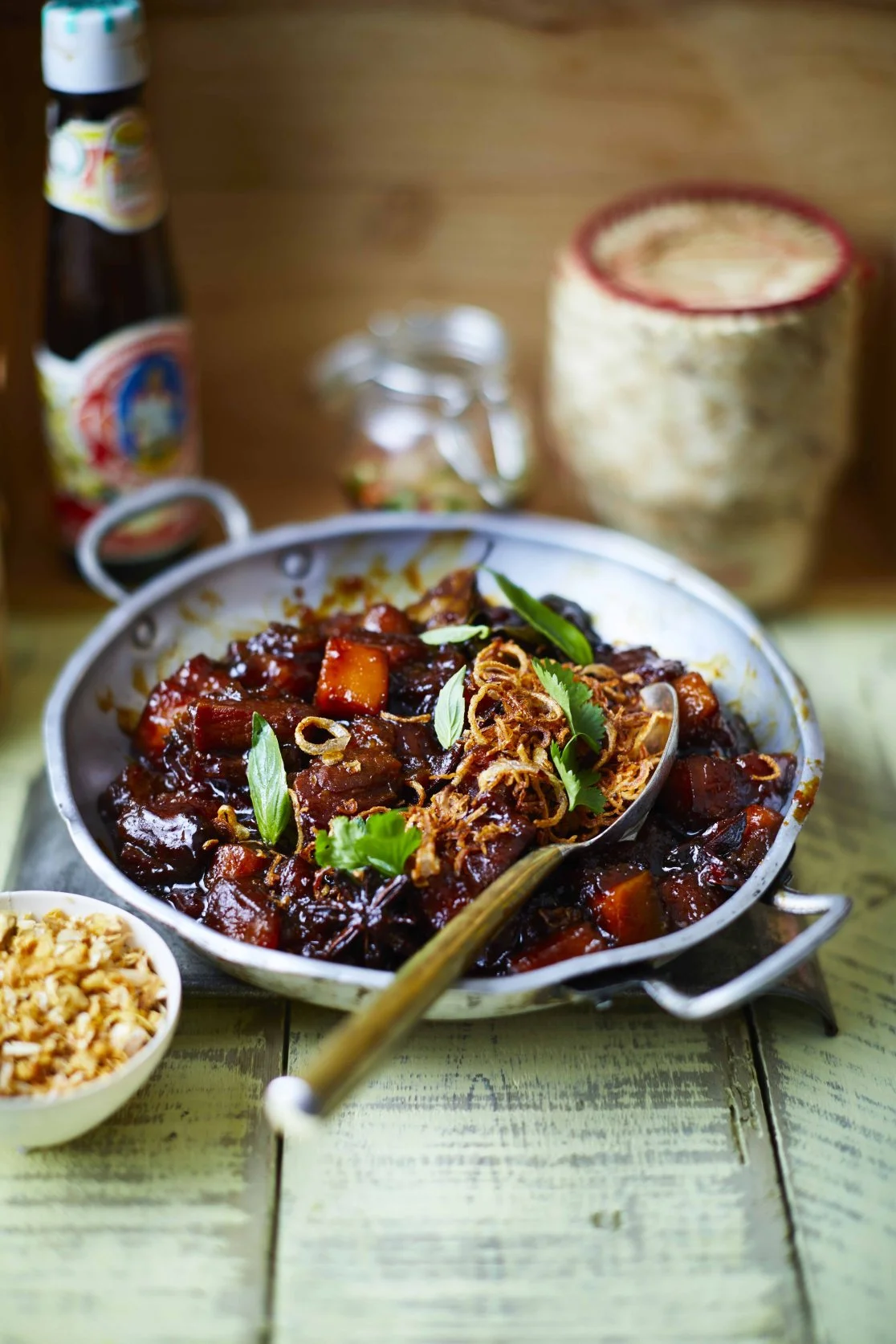
Sticky Pork Belly with Salted Roast Pumpkin & Crispy Shallots
Serves: 2 as a small plate | Prep: 20 mins | Cook: 1 hr
Ingredients
300g pork belly, skin removed
100g pumpkin, peeled and cut into 2cm by 2cm chunks
5g coarse sea salt, plus extra for blanching
2 fresh bay leaves (dried will work)
1 star anise
1 x 4cm piece cassia bark (cinnamon sticks will do)
500g palm sugar (dark soft brown sugar can also be used)
100ml oyster sauce
300ml vegetable stock
50ml dark soy sauce
100ml fish sauce (50ml goes into the sauce, the rest for seasoning at the end)
1 pandan leaf, tied in a knot and torn to release flavour (optional but worth using if you can find it)
2 spring onions, thinly sliced
4 banana shallots, peeled and thinly sliced
500ml sunflower oil, for deep-frying the shallots
Method
Bring a pan of well-salted water to a gentle simmer. Add the pork belly and simmer for 15 to 20 minutes, keeping the water below a rolling boil. A hard boil will tighten the meat and toughen the outside before the inside has had time to relax. After 15 to 20 minutes the pork should be firm to the touch but not cooked through. Remove, leave to cool slightly, then cut into 2cm by 2cm chunks.
In a separate pan, bring salted water to the boil and blanch the pumpkin chunks for 6 to 8 minutes until just starting to soften but still holding their shape. They should take a little resistance when pressed. Refresh immediately under cold running water to stop the cooking and set the colour. Drain and set aside.
Toss the blanched pumpkin in the 5g of coarse sea salt while still warm and leave it to sit for 10 minutes. The salt draws out a little moisture and concentrates the flavour before it goes into the sauce.
In a wide, heavy-bottomed ovenproof pan, combine the palm sugar, vegetable stock, oyster sauce, dark soy sauce, pandan leaf, cassia bark, star anise and 50ml of the fish sauce. Place over a low heat and stir until the sugar has completely dissolved. Don't rush this: high heat will cause the sugar to catch on the base before it's had time to incorporate with the liquid.
Add the blanched pork belly pieces and stir to coat in the sauce. Lay a circle of greaseproof paper (a cartouche) directly onto the surface of the liquid and cover the pan. Bring to a very gentle simmer and braise for 30 to 40 minutes, turning the pork occasionally, until the meat is tender and beginning to collapse at the edges and the sauce has thickened and darkened considerably.
Add the salted pumpkin and fold in gently, being careful not to break the pieces apart. Simmer uncovered for a further 5 to 10 minutes until the pumpkin is soft and the sauce has reduced to a thick, glossy, dark braising liquor that coats everything heavily. Taste now: the sauce should be deeply sweet from the palm sugar, savoury and slightly bitter from the dark soy and oyster sauce, with a rich saltiness underneath. If it needs more seasoning, add the remaining fish sauce a little at a time. If it tastes one-dimensional and flat, a splash more fish sauce will bring it into balance immediately.
While the pork finishes, heat the sunflower oil in a small saucepan to 180°C. Test with a single ring of shallot: it should sink slightly, then rise and sizzle steadily. Add the sliced banana shallots in batches and fry for 2 to 3 minutes until golden and crisp. Lift out with a slotted spoon onto kitchen paper. Separate the rings with a fork while they're still hot: they'll crisp further as they cool and stick together if left in a pile.
Serve the pork and pumpkin directly from the pan, scattered with the crispy shallots and sliced spring onions. Sticky rice alongside to soak up the braising liquid. Som tam if you have it.
Chef's notes
The fish sauce in the ingredients is split deliberately: 50ml goes into the braising liquor, and the remaining 50ml is for seasoning at the end to taste. The sauce will already be well-seasoned from the oyster sauce and dark soy, so taste before you add the second measure and go slowly.
At Farang we cold smoke the pork belly and pumpkin over cherry wood before braising. If you have a smoker, do this: roughly 2 hours at 110 to 120°C indirect, just enough to take on colour and flavour before the braise finishes the job. The smoke makes the braising liquid significantly more interesting and gives the dish another dimension entirely. Without a smoker, the salted pumpkin method above gets you somewhere close to the right complexity.
Pandan leaf is available fresh or frozen from most Thai supermarkets. Tie it in a knot and tear it slightly to bruise and release the vanilla-like aroma it gives to the sauce. If you can't find it, leave it out: the dish is still good without it.
The crispy shallots keep for several days in an airtight jar at room temperature. Make more than you need. They go through curries, soups and salads and are one of the most useful things to have in the cupboard. Most Asian supermarkets sell them pre-fried, which is a perfectly good shortcut.
Cassia bark is a variety of cinnamon with a slightly more robust, spicier flavour than the softer Ceylon variety. Both work here. Buy it from a spice shop or Asian supermarket rather than a supermarket jar if you can: the difference in freshness is real.
The best version of this dish is the one eaten on a low table with a proper som tam alongside, sticky rice in a basket and a cold beer. That's how it's done in Thailand and it's hard to argue with.
Visit us at faranglondon.co.uk. Sauces and pastes for cooking Thai at home at payst.co.uk.
For more recipes, signed copies of my cookbooks are available at Payst: Cook Thai and Thai in 7.
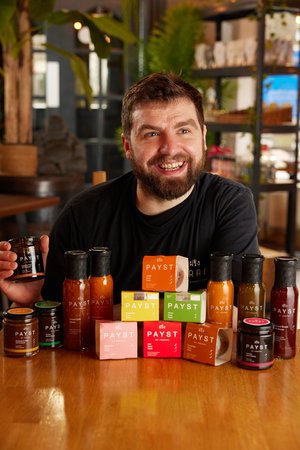
Head chef & founder of Farang London restaurant. Cookbook author of ‘Cook Thai’ & ‘Thai in 7’. Chief curry paste basher and co-founder of Payst London.