
Sticky Mango & Condensed Milk Rice with Salted Black Sesame Seeds
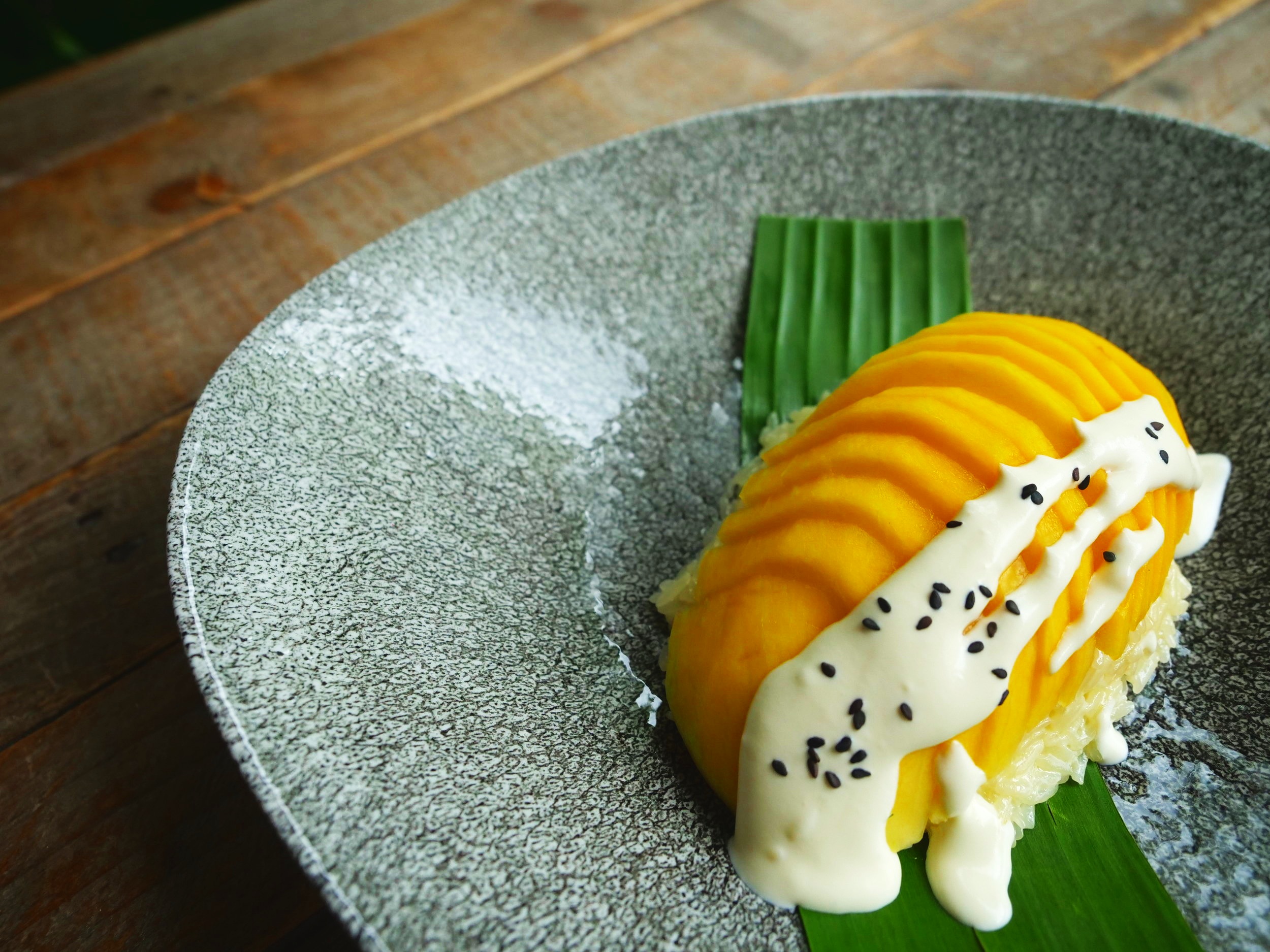
Khao niao ma muang, sticky rice with mango, is one of the most eaten desserts in Thailand and one of the simplest things to get right once you understand the balance. The first time I ate it was at The Begging Bowl in Peckham, Jane Alty's Thai restaurant, and it was also where I learned how to make it. The key is the coconut cream: sweet, slightly salty, thickened just enough to coat the rice and pool around the mango. Not orange, not mango-flavoured, white. The contrast between the cream and the yellow of the mango is part of what makes the dish look right.
The condensed milk goes in alongside the coconut cream and caster sugar. It adds a caramel sweetness that's different from plain sugar, more rounded and slightly deeper, and it helps thicken the cream as it heats. Taste the cream before it goes near the rice. It should taste properly sweet and slightly salty. If you have to think about whether it's well-seasoned, it isn't.
The mango needs to be ripe. Soft to the touch when pressed gently, not bruised, with no green on the skin. Alphonso mangoes are the best thing you can use in the UK when they're available. If you're near an Asian supermarket, look for Nam Dok Mai or Kheaw Sawoey, the Thai varieties that are small, intensely yellow and very sweet. Slice the mango thin and fan it over the rice rather than breaking it into pieces.
The black sesame seeds go on last, warmed and salted. They add a slightly nutty note, a little texture, and the salt in them amplifies the sweetness of everything underneath. This dish is about balance between sweet and salty throughout, and the seeds are the final version of that.
Sticky Mango & Condensed Milk Rice with Salted Black Sesame Seeds
Serves: 4 | Prep: 10 mins (plus soaking overnight) | Cook: 30 mins
Ingredients
200g glutinous rice
400ml coconut cream (the thick kind, not coconut milk)
50ml condensed milk
150g caster sugar
1 pinch table salt
2 ripe mangoes, soft to the touch but not bruised
5g black sesame seeds
1 pinch table salt (for the sesame seeds)
Method
Wash the glutinous rice by placing it in a sieve and running cold water over it for 1 minute. Soak the rice, fully submerged in cold water, for at least 2 hours and ideally overnight. The longer it soaks, the more evenly it cooks.
Set up a rice steamer over a pan of boiling water. Drain the soaked rice and add it to the steamer. Steam over a medium heat for 20 to 25 minutes until the grains are soft and sticky throughout. Test by pressing a grain between your fingers. It should give completely with no hard centre.
While the rice steams, make the coconut cream mixture. Combine the coconut cream, condensed milk and caster sugar in a saucepan over a medium heat. Stir until the sugar dissolves and the cream is smooth. Season with a pinch of table salt. Taste it. It should be sweet and properly salty before the rice goes anywhere near it.
Tip the hot cooked rice into the coconut cream mixture. Stir thoroughly to combine, then cover tightly with cling film. Leave to rest for at least 10 minutes. The rice absorbs the cream as it sits. Don't skip the resting time, it's where the texture comes from.
Warm the black sesame seeds in the oven at 180°C for 2 minutes. Tip onto a small plate and toss immediately with a pinch of table salt. Set aside.
Peel the mangoes and slice the flesh thinly from either side of the stone. Lay the slices flat and cut each piece lengthways into thin strips, keeping them together so they can be fanned out.
Spoon the sticky rice into the centre of each plate. Fan the mango slices over the top. Drizzle over any remaining coconut cream mixture and scatter the salted black sesame seeds over everything.
Chef's notes
Glutinous rice is not the same as jasmine rice. It's also called sticky rice or sweet rice and it's available at any Asian supermarket. It must be soaked before cooking. Two hours is the minimum. Overnight is better. Skipping the soak means the grains won't cook evenly.
If you don't have a steamer, a metal sieve or colander sitting over a pot of boiling water works. Cover the top with a lid or a plate to keep the steam in. The rice needs steam to cook, not boiling water.
The sticky rice holds well for a few hours once it's been combined with the coconut cream, covered with cling film at room temperature. The mango should be sliced just before serving. Don't refrigerate the assembled dish or the rice will harden.
The condensed milk is what makes this version. It's sweet in a way that plain sugar isn't, more caramelised in flavour, and it thickens the cream into something that coats the rice properly rather than just sitting in the bowl.
Visit us at faranglondon.co.uk. Sauces and pastes for cooking Thai at home at payst.co.uk.
For more recipes, signed copies of my cookbooks are available at Payst: Cook Thai and Thai in 7.

Head chef & founder of Farang London restaurant. Cookbook author of ‘Cook Thai’ & ‘Thai in 7’. Chief curry paste basher and co-founder of Payst London.