
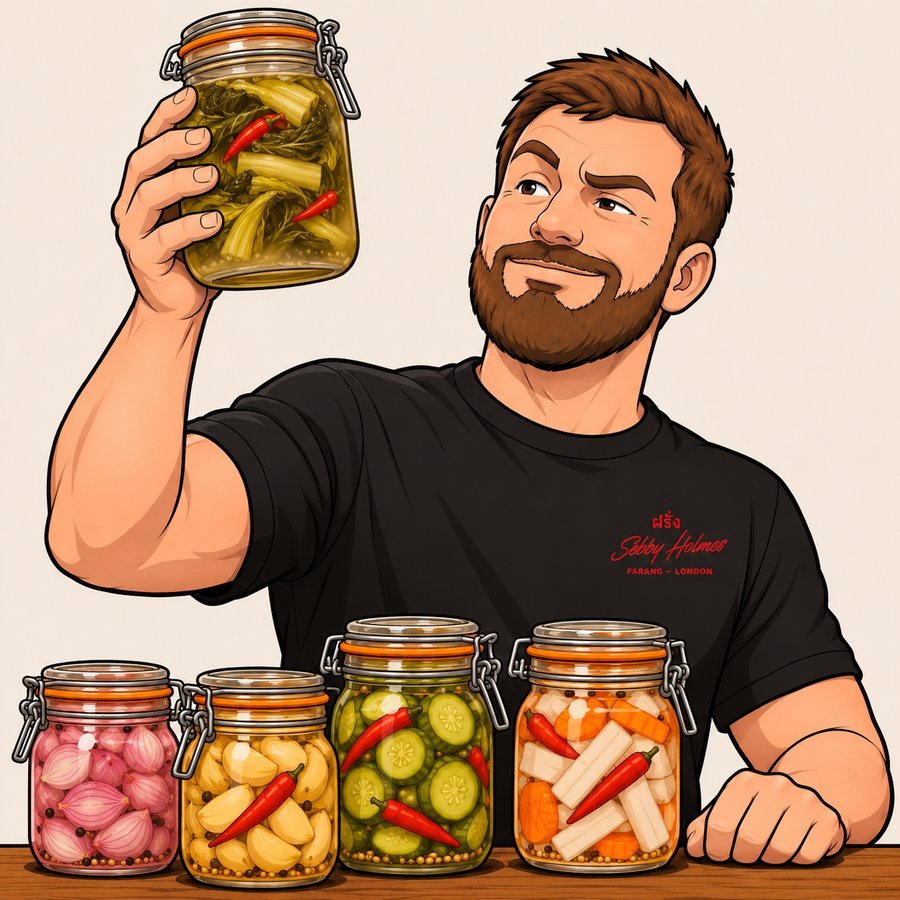
Thai Pickles: Pickled Mustard Greens, Garlic and Chillies
Kitchen Skills
Thai Pickles
Sharp, salty, crunchy things in jars. They cut through rich curries, wake up noodles and turn plain rice into a meal. Quick pickles for tonight, and ferments that look after themselves.

Every Thai table has something sour on it. Usually something pickled.

At a glance
Three ways to pickle
- 1Quick pickles: vinegar, sugar and salt
- 2Ferments: salt and rice water, a few days
- 3Table pickles: chillies in vinegar
Before you start
Sour, crunchy, essential
Thai food is rich, sweet and fatty in places. Pickles are how the table keeps its balance.
What they do
A sharp crunch next to something rich. Cucumber relish with grilled satay. Pickled mustard greens with khao soi and hung lay. Pickled garlic over curries and noodles. Chillies in vinegar splashed on noodle soups.
Two ways to get sour
Quick pickles use vinegar. They’re ready in an hour and live in the fridge. Ferments use salt and a little rice to let good bacteria make the sourness for you. They take a few days and taste deeper.
Kit
Clean glass jars with lids, washed in hot soapy water and rinsed with boiling water. Plain white vinegar or rice vinegar. A pinch of patience.

Khao soi without pickled mustard greens and shallots on the side is just a nice soup.

Pickled garlic is the most underrated thing in a Thai kitchen. Soft, sweet, and nothing like raw garlic.
Tonight
Ajad and other quick pickles
A sweet, sharp brine and something crunchy. Ten minutes’ work.
The brine
Start with 2 parts white vinegar to 1 part sugar, a good pinch of salt and a splash of water. Warm it just enough to dissolve the sugar, then let it cool. Taste it: sharp first, then sweet, with a little salt.
Ajad
Thin slices of cucumber, shallot and long red chilli with a few coriander leaves, with the cooled brine poured over. The classic with satay, fish cakes and anything deep fried. Make it within an hour or two of eating.
Daikon and carrot
Thin matchsticks in the same brine. Ready in an hour, better the next day, and good for a couple of weeks in the fridge. My go-to on the side of pad thai.
Ginger, shallots, anything crunchy
Young ginger, small shallots, green papaya, radishes. Same brine, same rules.

Don’t leave ajad overnight. The cucumber goes floppy and sad.

Plain white vinegar. Malt vinegar makes everything taste of the chip shop.
Patience
Pickled garlic, kratiem dong
The easiest pickle there is, and the one that rewards waiting.
- Pick your garlic. Small whole heads, trimmed, or peeled cloves. Young, fresh garlic is best.
- Make the brine. White vinegar, sugar and salt, simmered until dissolved and left to cool. Roughly 2 parts vinegar to 1 part sugar, plus a teaspoon or two of salt.
- Jar it. Garlic into a clean jar, brine over the top, fully covered. Lid on.
- Forget about it. Three to four weeks in the fridge. It goes from fierce to mellow and sweet.
- Use the brine too. A splash in a stir-fry, a dressing or a bowl of fried rice. It’s seasoning in its own right.
If your pickled garlic goes blue or green, don’t panic. It’s a harmless reaction between garlic and acid. Still safe, still delicious.

Sliced pickled garlic and a splash of its brine through fried rice. You’re welcome.
Let it work
Pickled mustard greens, pak gad dong
Thailand’s answer to sauerkraut. Sour, salty and crunchy, with a funk you’ll get hooked on.
- Wilt the greens. Chinese mustard greens, gai choy, left out for a few hours or rubbed with salt until they go floppy. Rinse and squeeze.
- Make a rice brine. Water with salt dissolved in it, plus a spoonful of cooked rice or the cloudy water from soaking sticky rice. The rice feeds the fermentation.
- Pack and weigh down. Greens into a jar, brine over, and a weight on top so everything stays under the liquid. A small bag of water works.
- Leave it warm. Room temperature for 3 to 5 days, until it smells sour and the greens go yellow-green. Taste it from day three.
- Into the fridge. Once it’s sour enough, it keeps for several weeks.
Your kitchen will smell like a pickle factory for a few days. That’s how you know it’s working.
Keep it under the brine. A flat white film can be skimmed off. Fuzzy, coloured mould, slime or a rotten smell means it goes in the bin.
On every table
Prik nahm som and friends
Little pots of chilli and vinegar that sit on every noodle shop table in Thailand.
Prik nahm som
Sliced chillies in white vinegar, sometimes blitzed with garlic. Splash it over noodle soups, pad see ew and anything that needs a kick. It keeps for weeks in the fridge.
Shop-bought pickled mustard greens
Fine in a pinch, but often milder and saltier than homemade. Rinse and taste before you use them.
Pickled chillies
Long green or red chillies in the same sweet brine as the quick pickles. Brilliant with grilled meat.
The rest of the table
Fish sauce with chillies, sugar and chilli flakes sit next to the vinegar. More in my dipping sauces guide.
Make a jar of prik nahm som on a Sunday and you’ve got it all month.
Questions I get asked
Quick answers
How long do Thai pickles last?
Ajad is best within a couple of hours. Quick-pickled daikon and carrot keep for about 2 weeks in the fridge. Pickled garlic keeps for months. Fermented mustard greens keep for several weeks in the fridge once they’re sour.
Why did my pickled garlic turn blue?
It’s a natural reaction between compounds in garlic and the acid in vinegar. It’s harmless, and the garlic is still fine to eat.
What vinegar should I use for Thai pickles?
Plain white vinegar or rice vinegar. Avoid malt vinegar, which overpowers everything.
What are Thai pickled mustard greens used for?
Khao soi, northern curries like hung lay, stir-fries with egg or pork, soups, and on the side of rich, fatty dishes.
Is the white film on my fermented greens safe?
A thin, flat white film is usually harmless yeast and can be skimmed off. Fuzzy or coloured mould, slime or a rotten smell means you should throw it away.
Tell me what you’re cooking and I’ll tell you which pickle goes with it.
Now use it
Put it to work
The best way to learn a skill is to cook with it. Start with these, all from my recipe pages.
Further reading: Thai pickled mustard greens, Simply Suwanee · Thai cucumber relish, Saveur
Keep going
Next skill: steaming. Pickles love anything deep fried.
If you want more of this, subscribe. New recipes, articles and skills straight to your inbox, and my free Thai Pantry guide to get you started.
Sign up here
Head chef & founder of Farang London restaurant. Cookbook author of ‘Cook Thai’ & ‘Thai in 7’. Chief curry paste basher and co-founder of Payst London.