
Khao Soi with Chicken and Smoked Butternut Squash
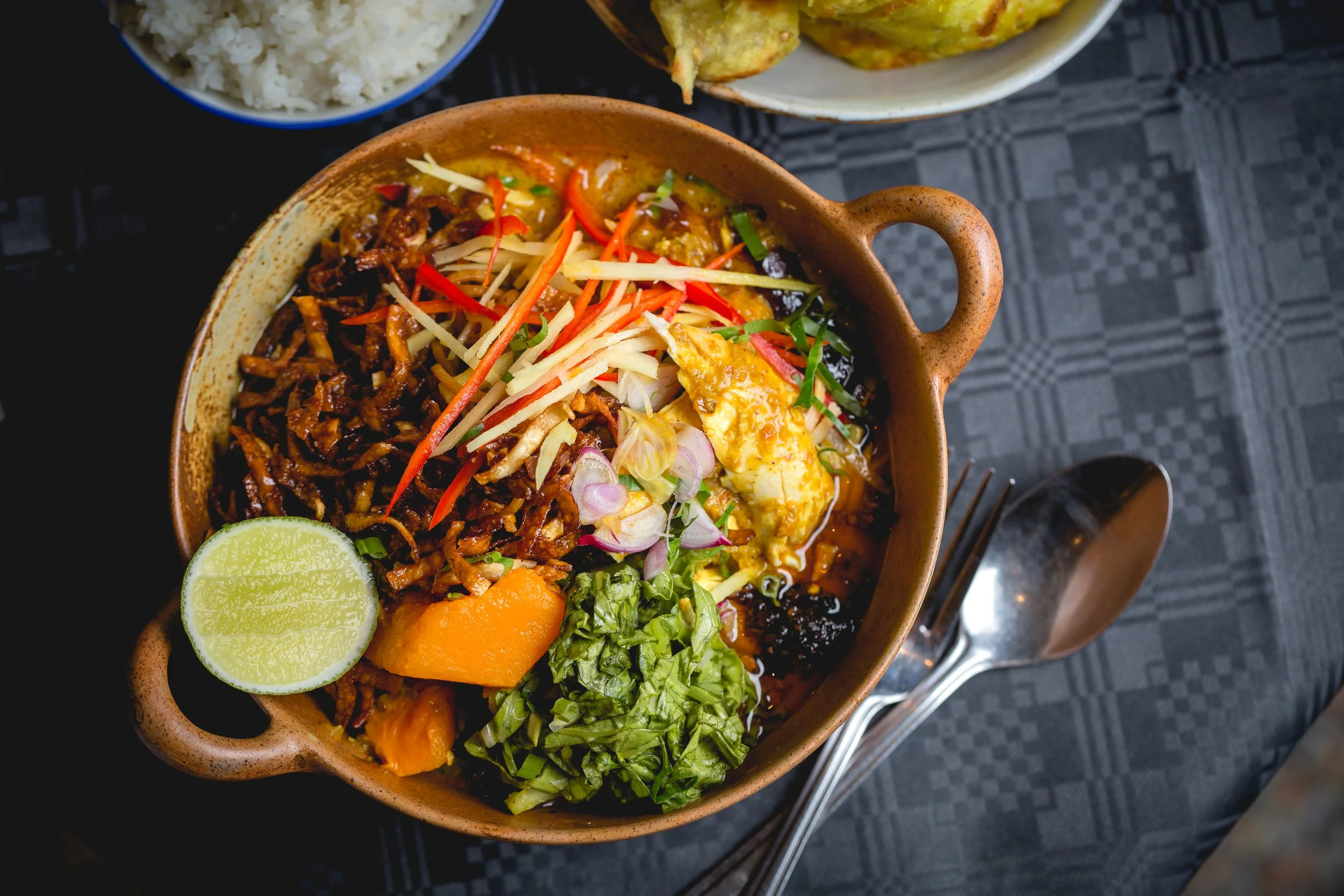
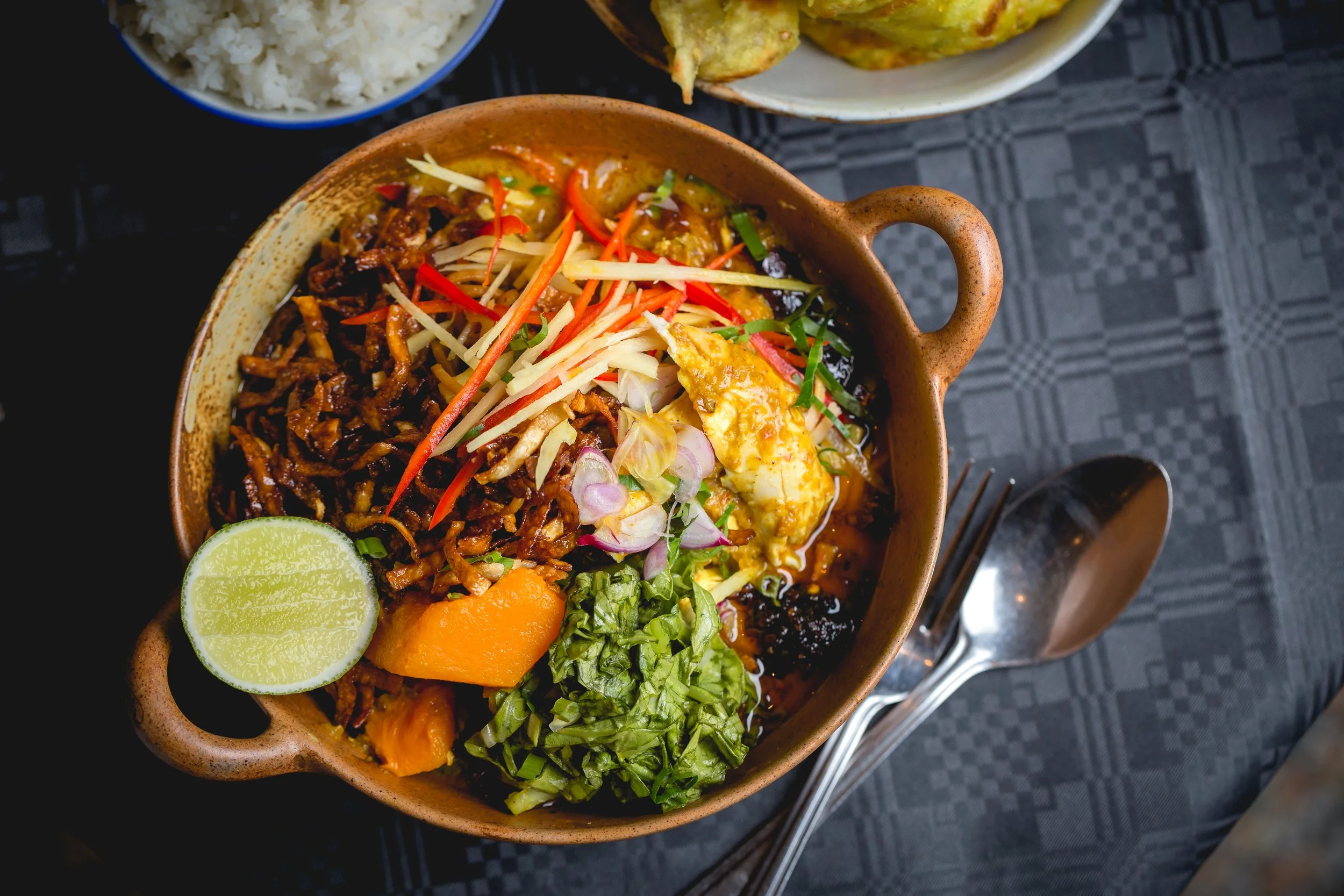
Khao soi has always been a lunch dish at Farang, because that’s when you eat it in Thailand and I’ve never seen a good reason to argue. A bowl of curry rich enough to coat your lips, soft egg noodles underneath, a tangle of the same noodles fried crisp on top, and a little plate of sharp, sour things on the side to keep you going back in.
We’ve cooked it a few ways over the years. We used to order in cold-smoked chickens, braise them in the curry and pull the meat apart, and the smoke sat in that curry like it had always been there. This version keeps that smoky backbone without you needing a smokehouse: chicken thighs braised on the bone, a paste built on aromatics charred over the barbecue, and butternut squash smoked over wood chips until it’s soft, sweet and blackened at the edges. The full story of where the dish comes from, and why its name doesn’t make any sense, lands on Thursday.
Khao Soi with Chicken and Smoked Butternut Squash
Serves: 4 | Prep: 40 mins | Cook: 1 hour 30 mins
Ingredients
For the paste:
6 large dried red chillies (deseeded, soaked in warm water for 20 minutes)
2 long red chillies
6 Thai shallots (or 3 banana shallots, skins on)
8 garlic cloves (skins on)
2 lemongrass stalks
30g ginger
20g fresh turmeric (or 1 tsp ground)
3 coriander roots (or a small handful of coriander stalks)
1 tbsp coriander seed
2 black cardamom pods (seeds only)
1 tsp sea salt
1 tbsp mild curry powder
For the squash:
1 butternut squash, about 1kg (peeled, cut into large chunks)
2 handfuls of wood smoking chips (soaked in water for 30 minutes)
For the curry:
2 x 400ml tins coconut milk (don’t shake them)
6 bone-in, skin-on chicken thighs, about 900g
30g palm sugar
2 tbsp fish sauce (plus more to taste)
1 tbsp light soy sauce
400ml chicken stock
400g fresh flat egg noodles, about 2mm wide
Vegetable oil (for deep-frying)
To serve:
100g pickled mustard greens (rinsed, sliced)
4 Thai shallots (thinly sliced, or 1 small red onion)
2 limes (cut into wedges)
4 tsp roasted chilli paste or chilli oil
A handful of coriander leaves
Method
Light the barbecue and set it up for two zones, with the coals pushed to one side. Bring a pan of salted water to a gentle boil and blanch the squash for 6 to 8 minutes, until the outside has softened but the middle still has a good bit of resistance. Drain and leave it to steam dry. Blanching first means the squash cooks through on the grill before the outside burns.
Grill the squash over the hot side until it chars in stripes, turning once, about 4 to 5 minutes. Scatter the drained wood chips over the coals, move the squash to the cool side, close the lid and leave it to smoke for 15 to 20 minutes, until a knife slides into the middle with no push. No barbecue? Roast it at 200°C (180°C fan) for 25 minutes, then blacken the edges in a very hot dry griddle pan.
While the coals are still hot, grill the paste aromatics. Put the shallots and garlic on in their skins and turn them until the outsides are black and the insides are soft when you squeeze them (carefully). Blister the fresh chillies until scorched in patches but not burnt through, and grill the lemongrass, ginger and turmeric until coloured all over. This charring is what gives the paste its depth and smoke, so don’t rush it.
Toast the coriander seed and the black cardamom seeds in a dry pan over a low heat, shaking, until the coriander smells like warm orange peel and the cardamom smells of smoke, 2 to 3 minutes. Grind both to a fine powder.
Trim the lemongrass, peel away the tough outer layers and finely slice the tender middle. Peel and chop the ginger and turmeric. Squeeze the garlic out of its skins, peel the shallots, chop the fresh chillies, and drain and squeeze the soaked dried chillies. Wash and slice the coriander roots.
Pound the coriander roots with the salt in a pestle and mortar until they turn to a mush, then add the lemongrass, ginger, turmeric, both chillies, shallots and garlic, one at a time, pounding each to a paste before the next goes in. Hard things first, soft things last, or the wet ingredients turn everything to a slurry and the fibres never break down. Stir in the ground spices. A stick blender works too, but pick out any stringy bits of lemongrass before you cook.
Open the coconut tins and spoon the thick cream off the top of both, about 200ml. Heat it in a large heavy pan over a medium heat until it bubbles hard and the oil starts to split out, 3 to 4 minutes. Add the paste and fry it in the cream, stirring and scraping the bottom of the pan, for 10 to 15 minutes, until it darkens, the oil pools red around the edges and it smells toasty rather than raw. This is the step most people cut short, and it’s the one that matters most. Stir in the curry powder for the last minute.
Add the chicken thighs, skin side down, and turn them through the paste for a couple of minutes. Crumble in the palm sugar and let it melt and catch slightly, then add the fish sauce and soy. Pour in the rest of the coconut milk and the stock, bring to a bare simmer, partly cover and cook gently for 40 to 45 minutes, until the meat is falling off the bone.
Lift the chicken out, pull the meat into chunky pieces and throw away the skin and bones. Return the meat to the pan.
Taste the curry. It should be rich and properly salty first, with sweetness behind it and heat building underneath, and a touch saltier than you’d want, because the noodles soak it up. Add fish sauce if it needs salt, a little more palm sugar if it tastes harsh. Don’t add lime to the pot; that goes on at the table. It should be loose like a soup but with body, with a thin red slick of oil on top. Loosen with a splash of stock if it’s too thick.
Heat 5cm of oil in a deep pan to 180°C. Pull a quarter of the noodles apart and fry them in small handfuls for 30 to 45 seconds a side, until golden and crisp. They’ll spit, so stand back. Drain on kitchen paper.
Boil the rest of the noodles for 1 to 2 minutes until just tender, drain and divide between four deep bowls. Add the smoked squash to the curry for 3 to 4 minutes to warm through, then ladle the curry, chicken and squash over the noodles. Pile the crispy noodles on top, scatter with coriander, and put the mustard greens, shallots, lime wedges and chilli paste on the table for everyone to add as they go.
Chef’s notes
If you can get hold of a cold-smoked chicken from a good smokehouse, use it the way we did at Farang: braise it whole in the curry for about an hour, then pull the meat. You can skip the wood chips on the squash, because the chicken brings the smoke. Thighs on the bone are the next best thing. Don’t use breast; it goes dry and stringy long before the curry is ready.
For a vegetarian version, leave out the chicken, use vegetable stock, swap the fish sauce for more light soy and double the squash. A beef version is excellent too: use shin, cut into big pieces, and give it two to two and a half hours.
The side plate isn’t a garnish, it’s the seasoning. Every few mouthfuls the richness needs cutting, and that’s the job of the pickled mustard greens, the raw shallots and the lime. If you’ve got mustard greens left over from my gaeng gatti beef cheek curry, this is where they belong. For the chilli, a spoonful of my nahm prik pao stirred through is about as good as it gets.
The paste keeps for a week in the fridge and freezes well, so make double. The curry is better the next day, but cook the noodles fresh and fry the crispy ones on the day. Flat egg noodles about 2mm wide are the right shape; you’ll find fresh ones in the chiller at most Chinese supermarkets. If you’ve got black cardamom left over, it’s also the backbone of my cassia and black cardamom brownies.
There’s a vegetarian khao soi with barbecued butternut squash in Cook Thai too, if you want to see where this one started.
Can’t find black cardamom? Ask me what to use instead.
Visit us at faranglondon.co.uk.
Sauces and pastes for cooking Thai at home at payst.co.uk. For more recipes, signed copies of my cookbooks are available at Payst: Cook Thai and Thai in 7.
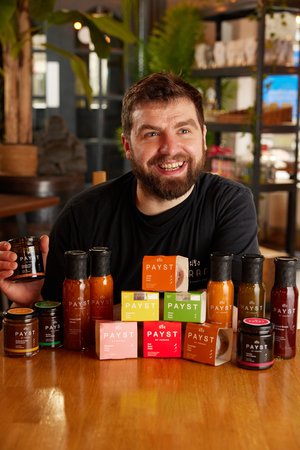
Head chef & founder of Farang London restaurant. Cookbook author of ‘Cook Thai’ & ‘Thai in 7’. Chief curry paste basher and co-founder of Payst London.
Eat it at Farang
Cook it at home, or let us cook it for you. Farang, Sebby's Michelin Bib Gourmand Thai restaurant in Highbury, N5.
Book a table