No Rice, Nothing Cut: Khao Soi, Chiang Mai’s Curry Noodle Soup
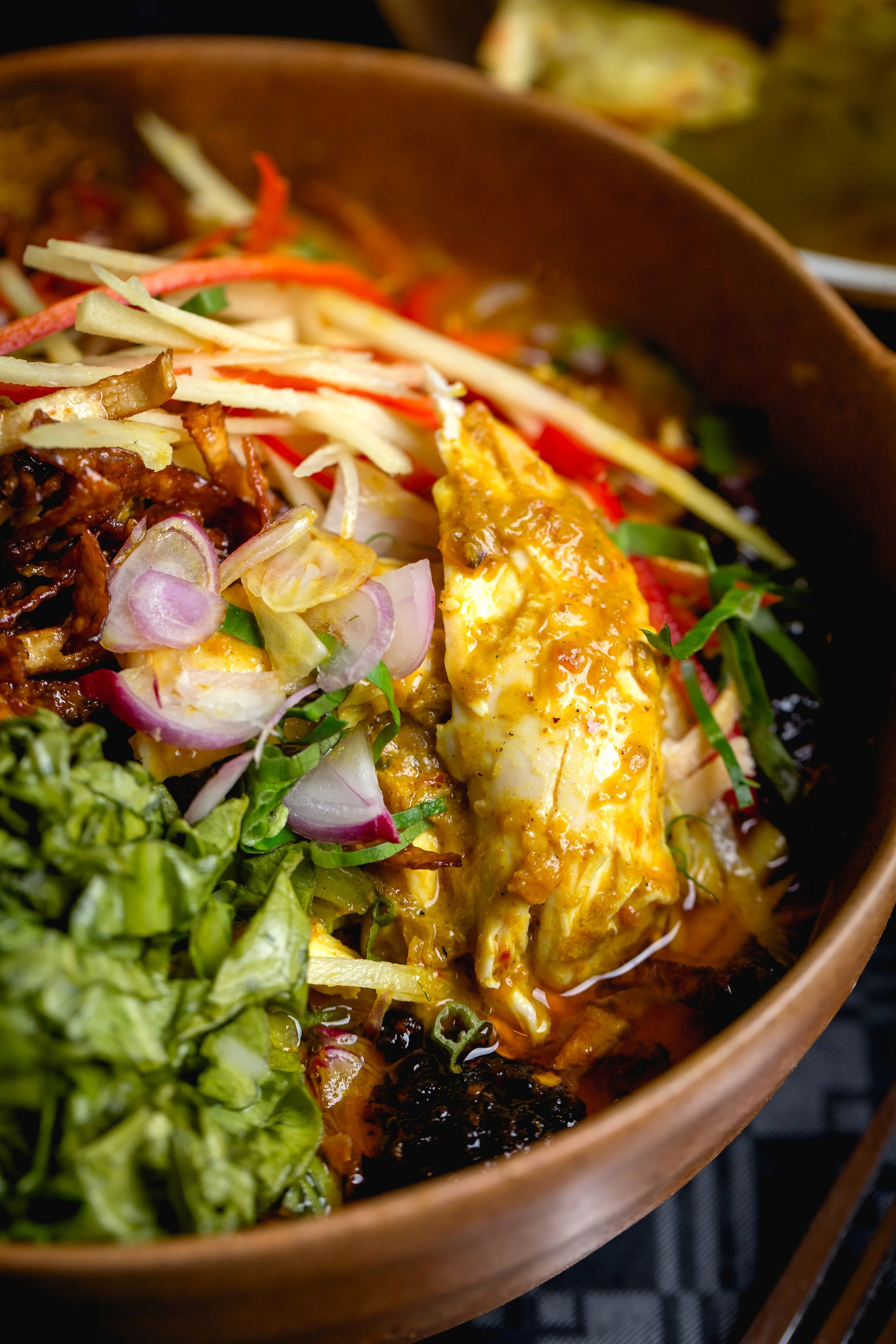
Last week I left you in Chiang Mai with a pot of pork belly and a promise. Here’s the other half of the deal. Khao soi is a bowl of curry so rich it coats your lips, with two kinds of noodle in it: soft, chewy egg noodles sunk underneath, and a nest of the same noodles deep-fried until they shatter, piled on top like a bird has moved in. It comes with a little plate of sour, sharp things on the side, and the whole thing is gone in about six minutes, usually with a splash on your shirt.
It’s also a lunch dish, not a Friday night takeaway. In Thailand you eat it in the morning or at lunchtime, and people who know the north well will tell you nobody there eats it for dinner. At Farang we’ve always served it at lunch for exactly that reason. Some rules are worth keeping.
Start with the name, because it’s a bit of a lie. Khao means rice. Soi, as Pailin Chongchitnant puts it, means “to julienne.” Lovely. Except the dish has no rice in it and nobody’s slicing anything. The theories go like this. Maybe it was once made with rice noodles cut from a sheet of dough, the way some versions still are. Maybe the khao is a squashed-down Thai word for wheat. Or maybe it’s not Thai at all. Austin Bush reckons the name probably comes from the Burmese word for noodles and “doesn’t really mean anything in Thai.” Say khao soi next to hkauk hswe, the Burmese for noodles, and you can hear it. That’s the one I’d put money on.
Which tells you where this is going. Like the gaeng hung lay, khao soi is one of those northern Thai classics that turned up from somewhere else and never left.
Where exactly is murky. The story most people tell is that it came with Chinese Muslim traders, the Haw, whose caravans carried goods from Yunnan down through Myanmar into northern Thailand. There’s a clue in the bowl. Khao soi is almost always chicken or beef, not pork, which is odd in a part of Thailand that loves its pig. A noodle soup built for a Muslim community is a halal one, and that fits.
The second thread runs through the Burmese side. Over the border in Shan State they still eat ohn no khauk swe, a coconut milk noodle soup that looks a lot like khao soi’s older cousin. The most convincing explanation I’ve read is that khao soi is an amalgam of Burmese, Shan and Chinese Muslim cooking: a Burmese coconut noodle soup, carried and changed by Muslim traders, and settled in Chiang Mai. The likely landing spot is Ban Haw, just east of the Night Bazaar and one of the city’s oldest Muslim neighbourhoods, settled by the descendants of those caravan traders. Nobody has a date for the first bowl. One Chiang Mai noodle shop owner will tell you her mother invented it. I’d love that to be true. It almost certainly isn’t.
So Chiang Mai didn’t invent khao soi. It just made it famous, which in food is arguably the harder job.
Now the bit people get wrong, and it starts with the paste. There’s no such thing as a decent khao soi paste in a jar, so plenty of recipes tell you to grab red curry paste and stir in some curry powder. It’s a shortcut, and it tastes like one. A proper khao soi paste is its own animal: big dried chillies, shallots, ginger, turmeric, coriander seed and black cardamom, dry-roasted until fragrant and then pounded, with curry powder stirred in at the end. That roasting step is where the depth comes from. Skip it and the curry tastes flat and dusty.
The black cardamom is the one that matters most. It’s dried over fire, so it smells of smoke and camphor, and it’s what makes khao soi taste like khao soi and not a generic yellow curry with noodles in it. Green cardamom isn’t a swap, it’s a different spice that happens to share a surname. (If you’ve made my cassia and black cardamom brownies, you’ll already have a bag in the cupboard.)
Then fry the paste properly, in the thick coconut cream off the top of the tin, until the oil splits out. That can take ten to fifteen minutes. It’s boring. Do it anyway, because a paste that hasn’t been cooked out tastes raw however long it simmers afterwards.
Last thing. Don’t use chicken breast. It goes stringy and dry, and the curry deserves better. Use thighs and drumsticks on the bone, and season the broth harder than you think, because the noodles soak up the salt and dilute everything as you eat.
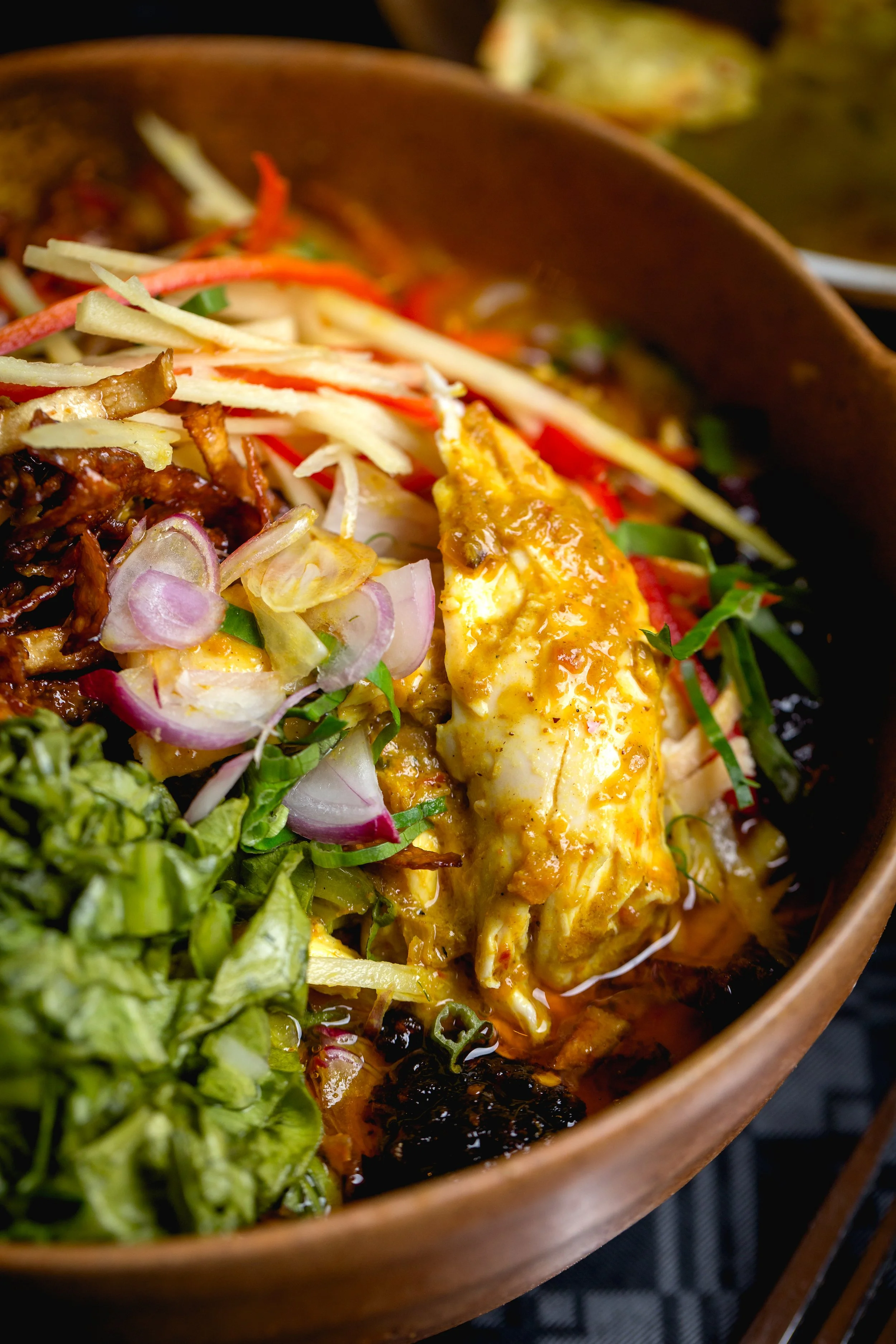
How many versions are there? More than one bowl can hold. Chicken is the one you’ll see most, then beef, usually a cut like shank that wants a long braise, with a bit of star anise in the paste. Pork turns up at some stalls, despite the dish’s halal roots.
The bigger split is between Muslim and Buddhist cooks. At the Muslim shops round Ban Haw, the meat is stewed on its own and the coconut cream goes in to order, so the broth comes out thinner and gentler. The Buddhist versions cook the coconut milk into the curry from the start, and come out richer, spicier and more fragrant. Both have their fans. One of Thailand’s best-known food writers named a Ban Haw beef khao soi her most yearned-for dish of the year, so the gentle version has friends in high places.
Then it gets strange. Cross into Laos and khao soi means something else entirely: flat rice noodles in broth, topped with minced pork cooked down with tomato and fermented soybeans, more like a spicy bolognese than a curry. Up on the Mekong in Chiang Khong you’ll find a version with a clear pork broth and a thick tomato and pork topping, and the locals have to call the coconut curry one khao soi kathi, coconut khao soi, to tell them apart. The Yunnanese bowls skip coconut milk altogether and use thick rice noodles. And in Mae Sai, right on the Myanmar border, khao soi noi isn’t a soup at all. It’s a steamed rice-batter dish. Same name, nothing else in common, which is very on brand for a dish whose name is already a lie.
Is it regional? Very. The curry noodle version is a northern Thai thing, and more than that, a Chiang Mai thing. It’s been called a city dish, and outside Chiang Mai the good bowls get hard to find. Mae Hong Son, out west towards the Burmese border, has it in nearly every town, and the best bowl there comes rich and spicy with a hint of tomato, a little nod to the Lao and Shan side of the family. Head north-east to the Mekong and on into Laos, and the tomato and rice noodle versions take over. The nearer you get to the borders, the more the dish remembers where it came from.
In Chiang Mai it’s the city’s most famous dish, and you eat it the way you’d eat a full English, early and without ceremony. The Friday morning market at Ban Haw is a good place to start, and some of the Buddhist stalls on Fa Ham Road have been ladling it out for decades.
The bowl arrives with a little plate on the side, and that plate is where the seasoning happens. Pickled mustard greens, sharp and crunchy. Raw shallots. A wedge of lime. A spoonful of roasted chilli paste, the same family as my nahm prik pao. You add them as you go, because a curry this rich needs something to cut it, and every few mouthfuls it needs cutting again. Leave the plate untouched and you’ve eaten half a dish. If you’ve got pickled mustard greens left in the fridge from my gaeng gatti beef cheek curry, this is where they belong.
Strip khao soi back and it’s a set of rules. A paste of dried chilli, shallot, ginger and turmeric, roasted and pounded, with black cardamom for smoke and curry powder for warmth. Coconut milk fried until it splits. Meat that wants a long braise. Noodles twice, one soft, one crisp. And a plate of sour, sharp, raw things so every bowl gets finished by the person eating it.
Those rules are why it travels so well, and we’ve pushed it about at Farang over the years. We used to order in cold-smoked chickens, braise them in the khao soi and pull the meat apart, and the smoke and the black cardamom got on like old friends. We’ve done it with beef. And for the vegetarians, I’ve made it with smoked butternut squash, which worked better than it had any right to.
Read those rules again and a few more British ideas jump out. November is game season, and pheasant legs braised slowly in the curry would do what the chicken does, with a bit more to say for themselves. Venison shin could stand in for beef shank. And there’s nothing in the rules that says the pickled greens have to be mustard greens. Pickled sprout tops or kale stalks, sharp and crunchy, would do the same job on the side plate. The black cardamom stays. That’s the one thing you can’t swap.
Farang means foreigner, we cook for flavour not authenticity, and khao soi is a dish that has never once worried about authenticity. It’s a Burmese noodle soup with a Thai name that doesn’t mean anything, brought over the hills by Chinese Muslim traders, made famous by Chiang Mai, and redrawn by every town it passed through. If you want to cook it, my full khao soi recipe went up on Monday, and there’s another version in Cook Thai. The pastes for the rest of the week are at Payst.
Can’t find black cardamom? Ask me what to use instead.
Next time we’re getting into nam prik, the chilli relishes that sit in the middle of almost every Thai table and somehow still get left off British menus.
Further reading: Hot Thai Kitchen, Austin Bush and Saveur.
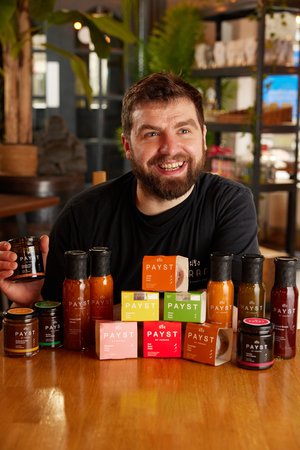
Head chef & founder of Farang London restaurant. Cookbook author of ‘Cook Thai’ & ‘Thai in 7’. Chief curry paste basher and co-founder of Payst London.