
Thai Shallots: What They Are and What to Use Instead
Thai Ingredients
In Thai: hom daeng
Thai cooks use shallots where we’d use onions. Pounded into pastes, sliced raw into salads, and fried into the crispy shallots that go on top of everything.
- Tastes like
- Sweet, mild onion, garlicky
- Find it
- Asian grocers; banana shallots everywhere
- Swap
- Banana shallots
What they are
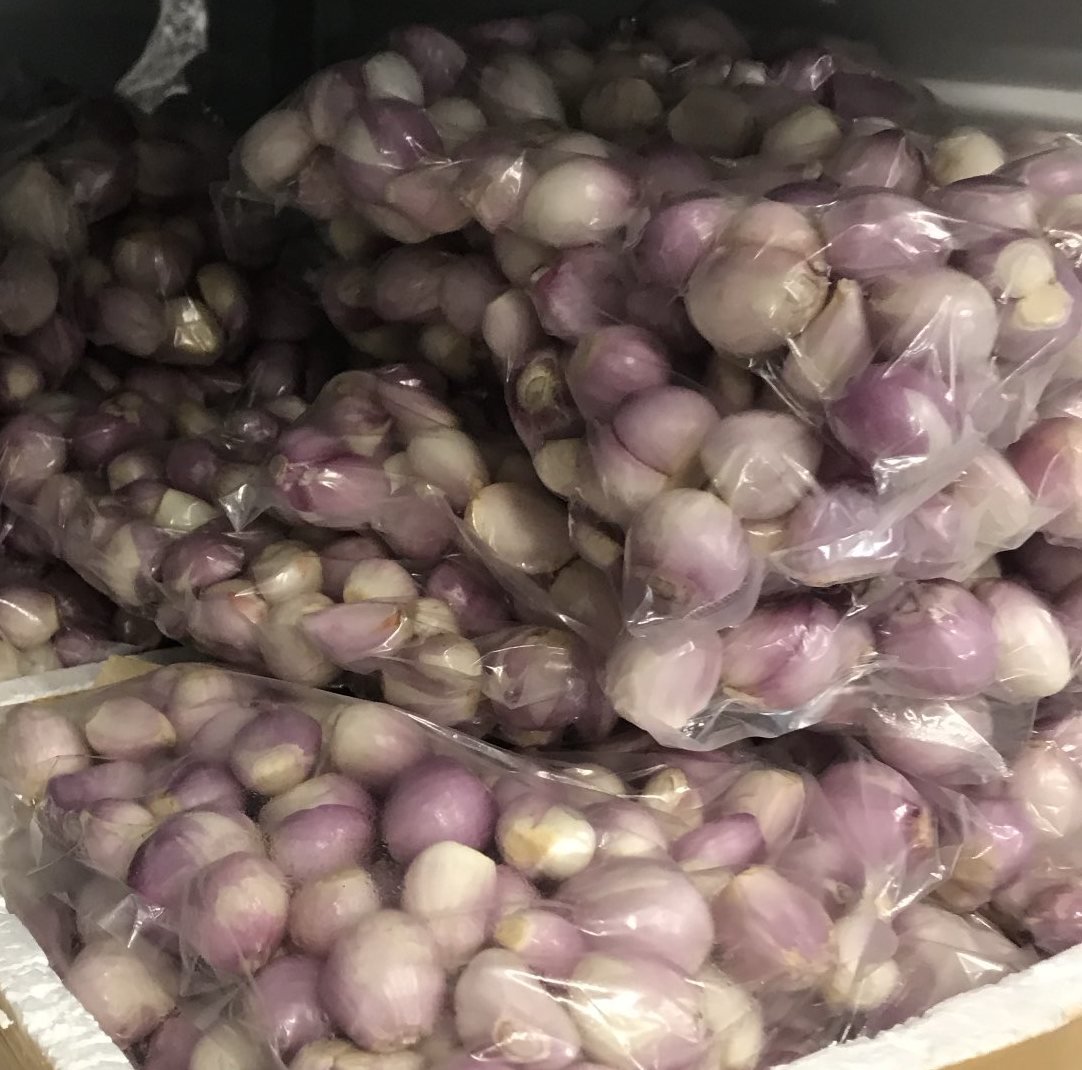
Hom daeng means red fragrant. Thai shallots are small, about the size of a large garlic clove, with pinky-red skins and purple-tinged flesh. They’re sweeter and milder than British shallots and onions, with a slight garlicky note, and they’re less watery, which matters when you’re pounding or frying them.
Raw, they go into som tam, laap and yum salads. Pounded, they go into nearly every curry paste. Roasted, they sweeten yellow curry paste. Fried, they become crispy shallots.
Which shallot should I buy?
Here’s how the shallots in a UK shop compare.
| Shallot | Size and taste | How to use it |
|---|---|---|
| Thai (hom daeng) | Tiny, pink, sweet and mild | The real thing for everything |
| Banana shallot | Long, mild and sweet | Best everyday swap. One for every three or four Thai |
| Round British shallot | Small, sharper | Fine in pastes and frying |
| Red onion | Big, sharp and watery | Salads at a push, use less |
Banana shallots are the easiest swap, and they’re in every supermarket.
How to use them
Peel them, top and tail them, then slice them thin for salads, or roughly chop them for the mortar. In a curry paste they go in after the hard roots, with the garlic, because they’re soft and break down fast.
For yellow curry paste I roast the shallots and garlic first, which turns them sweet and mellow. For crispy shallots, slice them evenly, start them in barely warm oil and take them out the second they turn golden. They keep cooking after they come out. You get shallot oil thrown in, which is brilliant for frying curry paste. The full method is in my crispy shallots and garlic skill.
Where to buy them
Asian supermarkets sell net bags of small red Thai shallots. Everywhere else, banana shallots are the easiest swap. Look for firm shallots with dry, papery skins and no green shoots.
Storing them
Somewhere cool, dark and dry, in a net or paper bag, not the fridge. They keep for weeks. Once cut, wrap them and use them within a couple of days. Crispy shallots keep in an airtight jar for a week or two.
What to use instead
Banana shallots, roughly one banana shallot for every three or four Thai ones. Small round British shallots work too. Red onion at a push, especially in salads, but use less, as it’s sharper and wetter.
Quick answers
What are Thai shallots?
Hom daeng: small, pinky-red shallots, sweeter and milder than British shallots, used raw, pounded and fried.
What can I use instead of Thai shallots?
Banana shallots, about one for every three or four Thai shallots. Round shallots work too.
Are Thai shallots the same as red onions?
No. They’re smaller, sweeter and less watery. Red onion works in salads at a push, but use less.
How do you make crispy shallots?
Slice evenly, start in barely warm oil, and lift them out as soon as they turn golden. They keep cooking after.
Where can I buy Thai shallots in the UK?
Asian supermarkets sell them in net bags. Banana shallots are in every supermarket.
Should shallots be kept in the fridge?
No. Somewhere cool, dark and dry. Cut shallots go in the fridge, wrapped.
More from the Thai larder
Every ingredient I cook with, explained: what it is, where to find it and what to use instead.
All Thai ingredients, A to ZGet my free Thai Pantry guideSubscribe and new recipes, articles and guides land in your inbox as soon as they go up.
Head chef & founder of Farang London restaurant. Cookbook author of ‘Cook Thai’ & ‘Thai in 7’. Chief curry paste basher and co-founder of Payst London.