
Thai Basil: What It Is and How to Use It
Thai Ingredients
In Thai: horapha
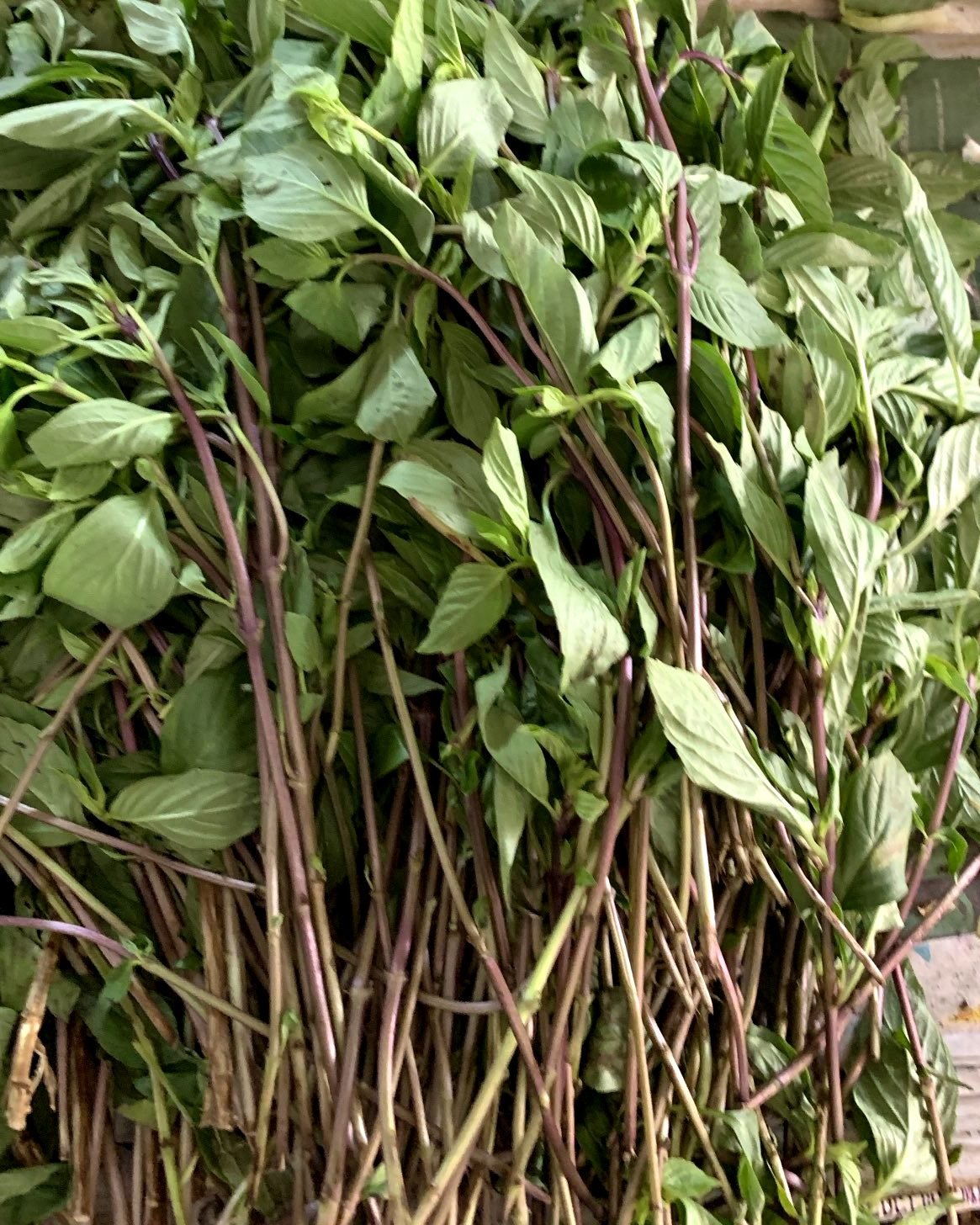
There are three Thai basils, and they’re not interchangeable. Thai basil, horapha, is the one you’ll find most easily, the purple-stemmed one with a hit of aniseed.
- Tastes like
- Anise, liquorice, sweet basil
- Find it
- Supermarkets, Asian grocers
- Swap
- Italian basil with a few mint leaves
What it is
Horapha, often sold as Thai sweet basil. Green leaves, purple stems and purple flowers, with a strong aniseed and liquorice taste that holds up to heat far better than Italian basil. It goes into green and red curries, jungle curry, stir-fries and on the side of noodle soups.
You can find it in most big supermarkets now, which wasn’t the case ten years ago.
The three Thai basils
This is where people go wrong. All three are called basil in English, and they taste completely different.
| Basil | Looks like | Tastes like | Use it for |
|---|---|---|---|
| Thai basil (horapha) | Purple stems, smooth green leaves, purple flowers | Aniseed, liquorice | Green and red curry, stir-fries, noodle soups |
| Holy basil (kra pao) | Fuzzy stems, slightly jagged leaves, green or purple | Peppery, clove-like | Kra pao stir-fry, jungle curry |
| Lemon basil (maenglak) | Small, pale, narrow leaves | Lemony, floral | Soups, salads, and the seeds in desserts |
The big mix-up is with holy basil. A proper kra pao needs holy basil, and Thai basil turns it into a different, sweeter dish. Holy basil is harder to find in the UK, so look in Asian supermarkets and grab it when you see it.
How to use it
Pick the leaves, keep the tender tips, and add it right at the end. Stir it through a curry off the heat, or throw a handful into a stir-fry in the last few seconds. It wilts in moments. Cooked for too long, it goes black and loses its aniseed.
Raw, it’s great torn through salads, piled onto noodle soups, and fried in hot oil for a few seconds until crisp and glassy as a garnish. Stand back when it hits the oil, it spits.
Where to buy it
Big supermarkets sell it in small packs with the herbs. Asian supermarkets sell big bunches for much less, and they’re fresher. Look for perky leaves with no black spots, and purple stems.
Keeping it fresh
Basil hates the cold. Trim the stems and stand it in a glass of water on the worktop, out of direct sun, with a bag loosely over the top. It keeps for several days like that. In the fridge it blackens overnight.
What to use instead
Italian basil with a couple of mint leaves gets you close. A pinch of crushed fennel seed adds the aniseed. It isn’t the same, but it’s a lot better than nothing. For holy basil there’s no good swap, so Thai basil with a pinch of black pepper is about as close as you’ll get.
Quick answers
What’s the difference between Thai basil and holy basil?
Thai basil (horapha) tastes of aniseed and goes in curries. Holy basil (kra pao) is peppery and clove-like, and it’s the one in a kra pao stir-fry.
Can I use Italian basil instead of Thai basil?
At a push. Add a couple of mint leaves or a pinch of fennel seed for the aniseed.
How do you keep Thai basil fresh?
Stand it in a glass of water on the worktop with a bag over the top. Not in the fridge.
When do you add Thai basil to a curry?
Right at the end, off the heat. It wilts in seconds and turns black if cooked too long.
Where can I buy Thai basil in the UK?
Big supermarkets and Asian grocers. Asian supermarkets sell bigger, fresher bunches for less.
What is lemon basil?
Maenglak, a third Thai basil with a lemony, floral taste, used in soups and salads.
Further reading: Simply Suwanee on the types of Thai basil, Messy Vegan Cook’s Thai basil primer.
More from the Thai larder
Every ingredient I cook with, explained: what it is, where to find it and what to use instead.
All Thai ingredients, A to ZGet my free Thai Pantry guideSubscribe and new recipes, articles and guides land in your inbox as soon as they go up.

Head chef & founder of Farang London restaurant. Cookbook author of ‘Cook Thai’ & ‘Thai in 7’. Chief curry paste basher and co-founder of Payst London.