
Shrimp Paste (Gapi): What It Is and How to Use It
Thai Ingredients
In Thai: gapi
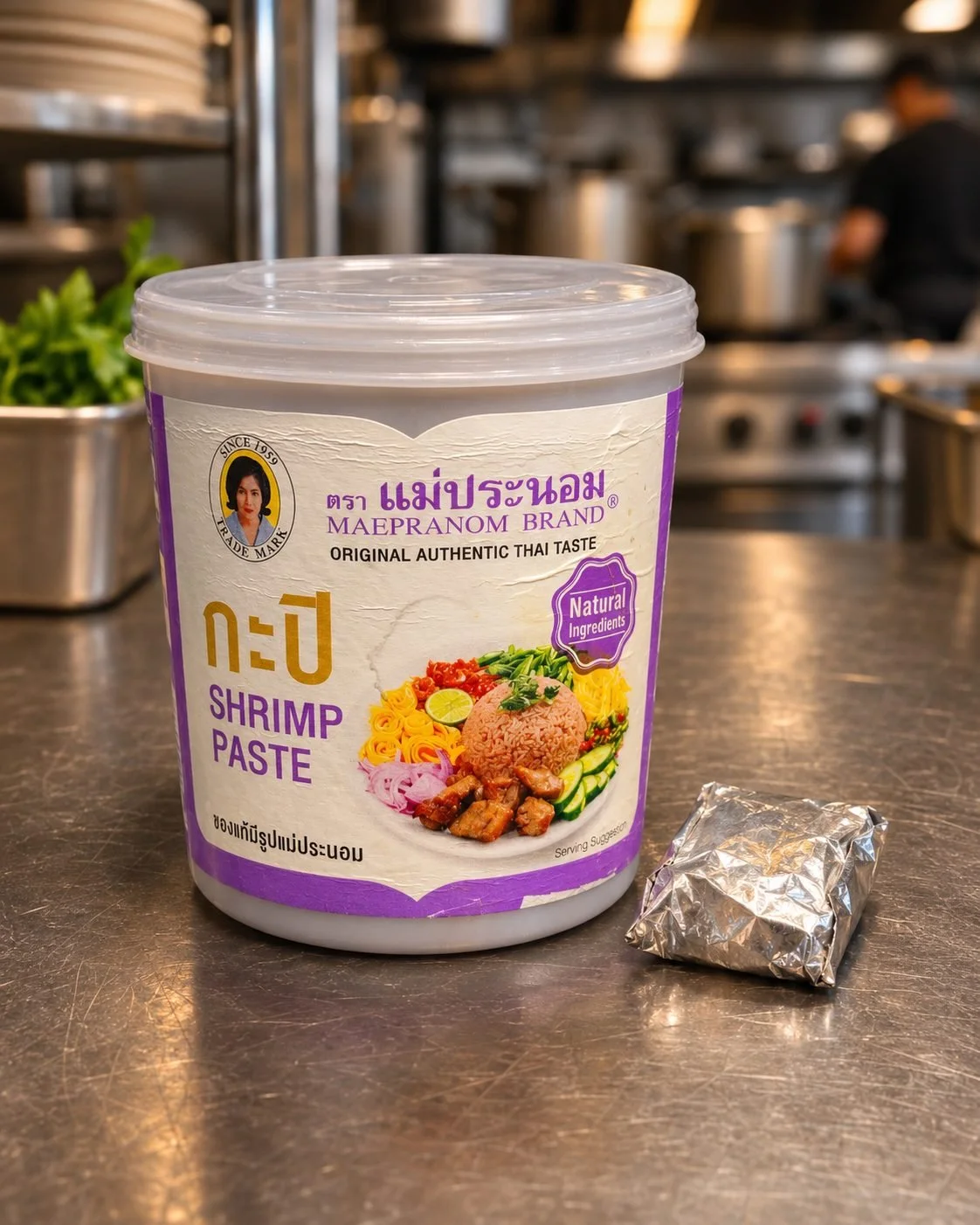
Open a tub of shrimp paste in a small kitchen and everyone will know about it. Then toast a teaspoon, pound it into a curry paste, and you’ll understand why every Thai cook keeps it.
- Tastes like
- Very salty, funky, deep and savoury
- Find it
- Asian grocers, in tubs and jars
- Swap
- Miso and a little extra salt
What it is
Gapi, also written kapi, is tiny shrimp or krill mixed with salt, dried in the sun, ground and left to ferment, then pressed into a dense, purple-grey paste. Researchers studying Thai kapi describe the traditional mix as one part salt to three to five parts shrimp, spread out to dry under the sun.
It goes into nearly every Thai curry paste and into nahm prik, the pounded chilli relishes. Straight from the jar it’s ferocious. Cooked, it melts into the background and gives the dish a savoury depth you’d miss straight away if it wasn’t there.
Gapi, belacan or shrimp sauce?
Shrimp paste is made all over South East Asia and southern China, and they’re cousins, not twins.
| Paste | From | What it’s like |
|---|---|---|
| Gapi (kapi) | Thailand | Soft, purple-grey, sold in tubs |
| Belacan | Malaysia | Dried into hard blocks, usually darker |
| Terasi | Indonesia | Hard blocks, can be reddish or dark |
| Shrimp sauce | Southern China | Wetter and pinker, more like a sauce |
Thai gapi is softer and paler than the dried blocks, but they’re close enough to swap in a curry paste. The wet Chinese-style shrimp sauce is a different thing and doesn’t pound the same way.
How to use it
Wrap a teaspoon in foil and dry-toast it in a pan for a minute or two each side, or hold the parcel over a gas flame. It goes from sharp and fishy to deep and roasted. Then it goes into the mortar last, after the shallots and garlic.
Use it in small amounts. A teaspoon flavours a paste for four. In nahm prik gapi, the classic relish, it’s the star, pounded with garlic, chilli, lime and palm sugar and eaten with raw and blanched vegetables. My curry paste and nahm prik skills cover both.
It even works beyond Thai food. Beaten into butter with a little turmeric, it makes a ridiculous butter for grilled greens, as on my charred hispi cabbage.
Where to buy it
Asian supermarkets, in small plastic tubs or glass jars, usually near the curry pastes. Good gapi smells strongly but not of ammonia, and shouldn’t taste bitter. Look for a Thai brand for Thai cooking.
Storing it
Tightly sealed, in the fridge if you want to be safe, though it’s so salty it lasts for ages in a cool cupboard. Put the tub inside a second sealed jar or bag. Trust me on that.
Vegan and allergies
Shrimp paste is why most shop-bought curry pastes aren’t vegan, so check the label. If you’re vegetarian, it’s better to make the paste yourself, leave the gapi out and season with seaweed sauce instead. A little white miso adds back some of the savoury depth.
Anyone with a shellfish allergy needs to avoid it, and any pastes or relishes that contain it. That includes a lot of chilli jams.
Quick answers
What is gapi?
Thai shrimp paste: tiny shrimp or krill fermented with salt and pressed into a dense, purple-grey paste.
Do you need to cook shrimp paste?
Yes. Toast it in foil first, or fry it into a curry paste. Raw, it’s harsh and fishy.
Is belacan the same as Thai shrimp paste?
Close. Belacan is the Malaysian version, usually drier and darker. It works in Thai curry pastes.
How do you store shrimp paste?
Tightly sealed, ideally double-wrapped, in the fridge or a cool cupboard. It keeps for ages.
What can I use instead of shrimp paste?
White miso with a little extra salt, or seaweed sauce for vegans.
Is shrimp paste in curry paste?
In nearly all Thai curry pastes, yes. Check the label if you’re vegetarian or allergic to shellfish.
Further reading: Study on how Thai kapi is made, Wikipedia on shrimp paste across Asia.
More from the Thai larder
Every ingredient I cook with, explained: what it is, where to find it and what to use instead.
All Thai ingredients, A to ZGet my free Thai Pantry guideSubscribe and new recipes, articles and guides land in your inbox as soon as they go up.
Head chef & founder of Farang London restaurant. Cookbook author of ‘Cook Thai’ & ‘Thai in 7’. Chief curry paste basher and co-founder of Payst London.