
Raw, Bitter, Sour and Spiced: The Laap Family
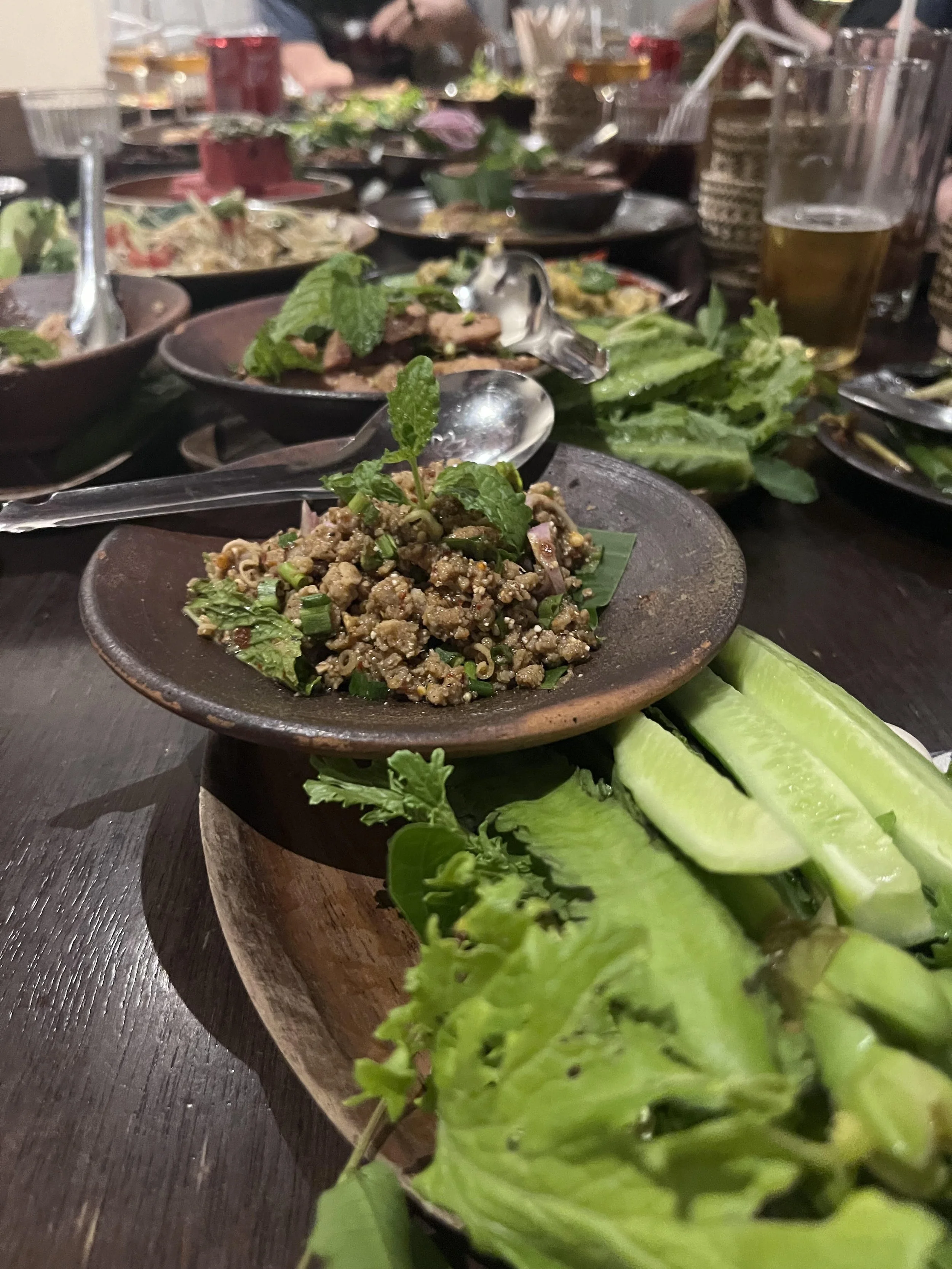
Somewhere in the northeast of Thailand right now, someone is chopping meat with two cleavers at once. Not mincing it. Chopping it, on a block worn into a shallow bowl by years of the same job, the blades going like a drummer who’s had one too many coffees. Next to them a dry pan of sticky rice is browning over charcoal, throwing out a smell somewhere between popcorn and the bottom of a bonfire. Ten minutes later the rice is powder, the meat is in a bowl with lime, fish sauce and a frankly irresponsible amount of chilli, and mint is being torn over the top with the urgency of someone who knows the sticky rice is going cold.
That’s laap. In this country it usually turns up on a menu as “spicy minced meat salad”, which is a bit like describing a Sunday roast as warm beef with accompaniments. Technically true. Morally wrong.
Laap is one of the best things you can eat anywhere and one of the most misunderstood dishes on British menus. It’s also less a recipe than a family, and some of the family are properly feral.
Start with the name, because nobody can agree how to spell it. Larb, laab, larp, laap, lahb, take your pick. I write laap. Most menus here write larb. Nobody is going to arrest you either way. What matters more is what it sounds like. According to the Lao national news agency, KPL, the word is a homophone for the Lao words for luck and wealth, which is why it turns up whenever people want a bit of both: Lao New Year, weddings, housewarmings. Serve someone laap and you’re wishing them prosperity. Serve them a minced meat salad and you’re wishing them a mediocre lunch.
So where does it come from? Most roads lead to Laos, which treats laap as its national dish and has put it forward for UNESCO heritage status, with a decision due towards the end of this year. But laap doesn’t care much for borders. The Michelin Guide’s piece on Isan larb traces versions across Isan, northern Thailand, Myanmar’s Shan State and Xishuangbanna in China’s Yunnan province, all starting in the same place, chopped meat and seasoning, before everyone goes their own way.
Laap was never everyday food. Meat was scarce, the Michelin Guide explains, and animals were slaughtered for festivals, merit-making ceremonies, weddings and funerals, which is when laap got made for the guests. Austin Bush, who has written the book on northern Thai food, told The Splendid Table that for plenty of older northerners meat came round about once a year, at a Buddhist ceremony. So the dish we knock out on a Tuesday night was, for most of its life, the good china.
Two things go wrong with laap in this country, and I’ve eaten both more times than I’d like. The first is the rice. Khao khua, sticky rice toasted dry until it’s the colour of a digestive biscuit and then ground, is the backbone of an Isan laap. It brings a nutty, smoky depth and it drinks up the dressing so everything clings. The bag in the supermarket has usually been sat there since the last general election and tastes of dust. Toast your own. It takes ten minutes and a frying pan. Same goes for the chilli. One cook interviewed by the Michelin Guide makes her own chilli powder because the shop-bought stuff gives you little more than colour and bulk. She’s right.
The second is treating it like a stir-fry. Laap is not browned mince. Chop the meat yourself if you can, then either leave it raw or cook it gently in a splash of stock or water until it’s only just done. No oil. No colour. Take it off the heat before the lime goes in, or the lime turns bitter and your herbs collapse into lawn clippings.
Subscribe to get new recipes and articles straight to your inbox as soon as they go up, plus my free Thai Pantry guide when you sign up. Get it here.
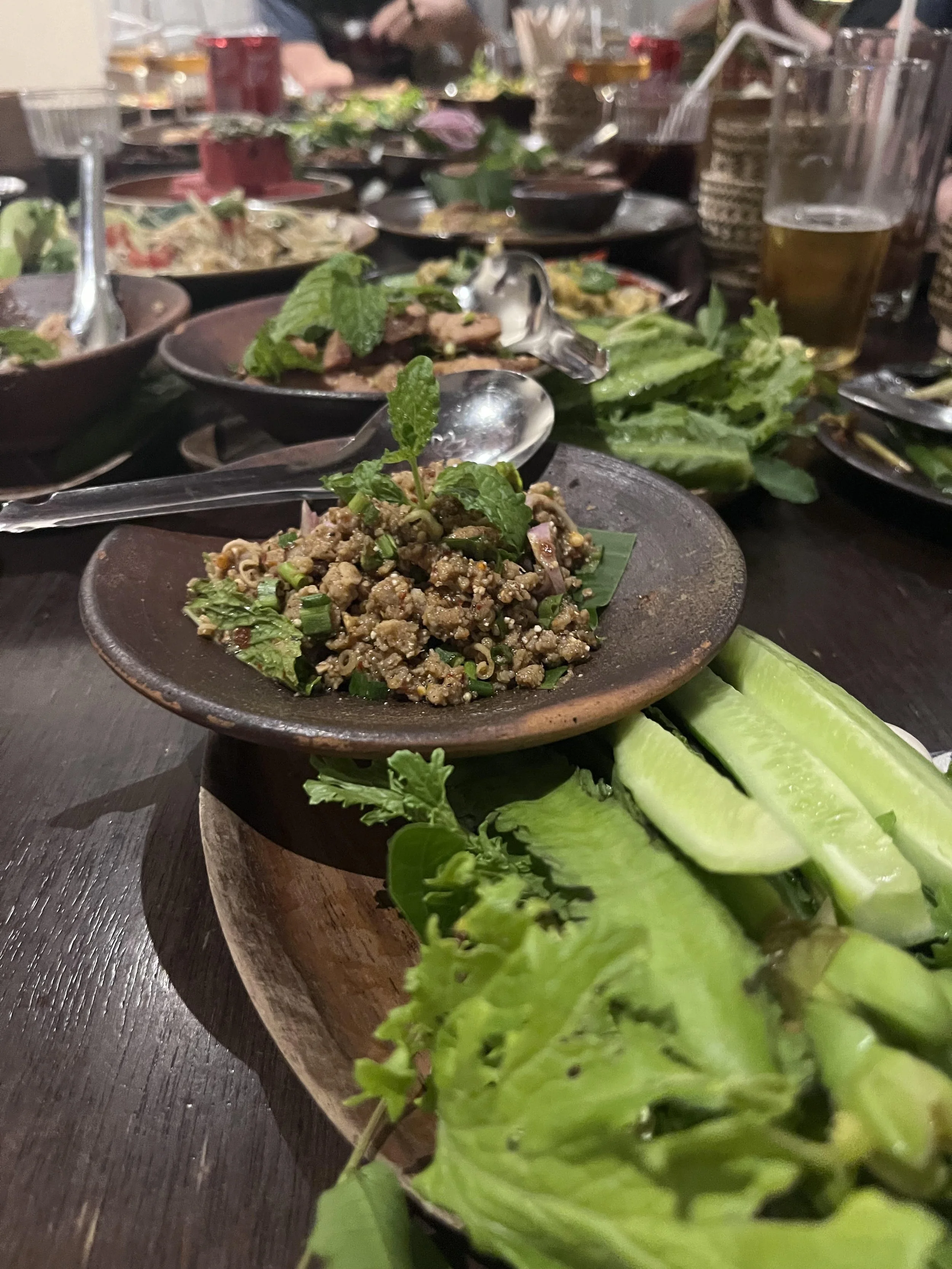
Now the family. The one you know, if you know one, is Isan laap. Meat, lime, fish sauce, roasted chilli powder, khao khua, shallots and spring onions, often with mint and coriander. In the northeast, the Michelin Guide says, it’s all about how fresh the meat and herbs are. Beef is the favourite, but it gets made with chicken, duck, buffalo, pork, fish and, in some places, venison. Every meat gets its own herbs too. Freshwater fish gets lemongrass, galangal and Vietnamese coriander to take the muddy edge off, which is as sensible a piece of cooking as you’ll find anywhere.
Cross the Mekong into Laos and the dressing gets funkier. Padaek, the cloudy fermented fish sauce that makes ordinary fish sauce smell like a spa day, often goes in alongside the lime, and KPL notes the meat can come cooked or raw.
Then there’s laap khom, bitter laap, which gets its bitterness from bile or digestive juices. You read that right. It’s an acquired taste in the way Fernet-Branca is an acquired taste, and the people who’ve acquired it will not shut up about it.
And then there’s the north, which is barely the same dish at all. Bush describes northern laap to CNN Travel as “not quite as herbal, it’s meaty, it’s not sour”. Instead of lime and toasted rice it’s built on a heap of dried spices, including makhwaen, a cousin of Sichuan pepper that numbs your lips in a way that’s oddly pleasant. There’s not much chilli, no sugar at all, and he says it’s often eaten raw, sometimes with blood, with bile stirred in for the bitterness northerners love. If raw buffalo and blood feels like a big ask on a school night, laap muu khua, the northern pork version cooked with those spices, is the friendlier way in.
So is laap regional? Very, but the line isn’t really Thai versus Lao. It’s north versus northeast. Isan and Laos share a river, a language and most of a menu, so their laap is close family: sour, herby, dusted with toasted rice and fierce with chilli. The north looks the other way, up towards the Shan hills and Yunnan, and its laap tastes like it. Dry spice, meat, blood, bitterness. One Isan chef put it neatly, telling the Michelin Guide the northern version is “more about seasonings”. And no map will tell you that every cook adjusts it to whoever’s eating.
And you don’t eat it on its own. Sticky rice is non-negotiable. Alongside comes a pile of raw, sharp, bitter leaves and veg, things like wild betel leaves, mint, aubergine and long beans, and very often a soup: beef laap with a beef offal soup, fish laap with a broth made from the head and bones. Roll a ball of rice, press it into the laap, chase it with a leaf, sip the soup. It’s a meal that knows exactly what it’s doing. If you want the full table, my chicken and prawn laap comes with the hearts, livers and kidneys in, which is about as close to laap khom as most people want to go.
Look at all of that hard enough and laap stops being a recipe and becomes a set of rules. Chop something with real flavour. Season it hard, with sourness and heat if you’re in Isan, or spice and bitterness if you’re up north. Add something toasted for depth. Bury it in herbs. Eat it with rice and something raw and crunchy. Follow those rules and you can make laap out of almost anything that grows, swims, walks or gets foraged within fifty miles of your kitchen.
Which is how I ended up with aged beef and wild mushroom laap. Aged British beef has that deep, slightly funky, almost blue cheese edge you only get from weeks of hanging, and in a laap it does the job the offal and bile do in the old versions. It gives all that lime and chilli something to push against. It’s the same reason I use aged beef in my kra pao. Wild mushrooms do what the blood does in the north. They’re earthy, dark and meaty, and they soak up the dressing like a sponge. Autumn in this country hands you more flavour for free than most markets could sell you.
Put the two together, hit them with fish sauce, lime, roasted chilli and a heavy hand of khao khua, then pile on mint and coriander, and you’ve got something no Lao grandmother would recognise. Most of them would finish it though. If you want to get your head round that Isan balance of smoke and sour first, my stir-fried wagyu with jaew is a good place to start.
Farang means foreigner, and we cook for flavour, not authenticity. That doesn’t mean ignoring the original. It means knowing why the bile is in there, then finding something in a British butcher’s shop that does the same job. You can eat our take at Farang on Highbury Park, and if you’re short on time, Payst will do a lot of the heavy lifting for the rest of your Thai cooking.
Next time it’s som tam, and why your granite mortar is the enemy.
If you want more of this, subscribe. New recipes and articles straight to your inbox, and my free Thai Pantry guide to get you started. Sign up here.
Head chef & founder of Farang London restaurant. Cookbook author of ‘Cook Thai’ & ‘Thai in 7’. Chief curry paste basher and co-founder of Payst London.