
Tamarind: What It Is and How to Use It in Thai Cooking
Thai Ingredients
In Thai: makham (มะขาม)
Thai cooking gets its sour from two places. Lime is sharp and bright. Tamarind is deeper, fruitier and rounder, like a date that’s turned sour, and it’s the backbone of pad thai, massaman and half the dipping sauces in the country.
- Tastes like
- Sour, fruity, a bit like dates
- Find it
- Asian supermarkets, as a block or in jars
- Swap
- Lime juice with a little palm sugar
What it is
Tamarind is the fruit of a big tropical tree: brown, knobbly pods full of sticky pulp wrapped around hard seeds. The pulp ranges from properly sour to sweet enough to eat like sweets, depending on the variety. The sour kind, makham piak, is the one for cooking. The sweet kind, makham wan, is eaten as a snack.
For cooking you never use the pod as it is. The pulp gets soaked in hot water, squeezed and strained into nahm makham, tamarind water, and that liquid is what recipes mean when they say tamarind.
Block vs concentrate vs paste
| What it is | How to use it | My take | |
|---|---|---|---|
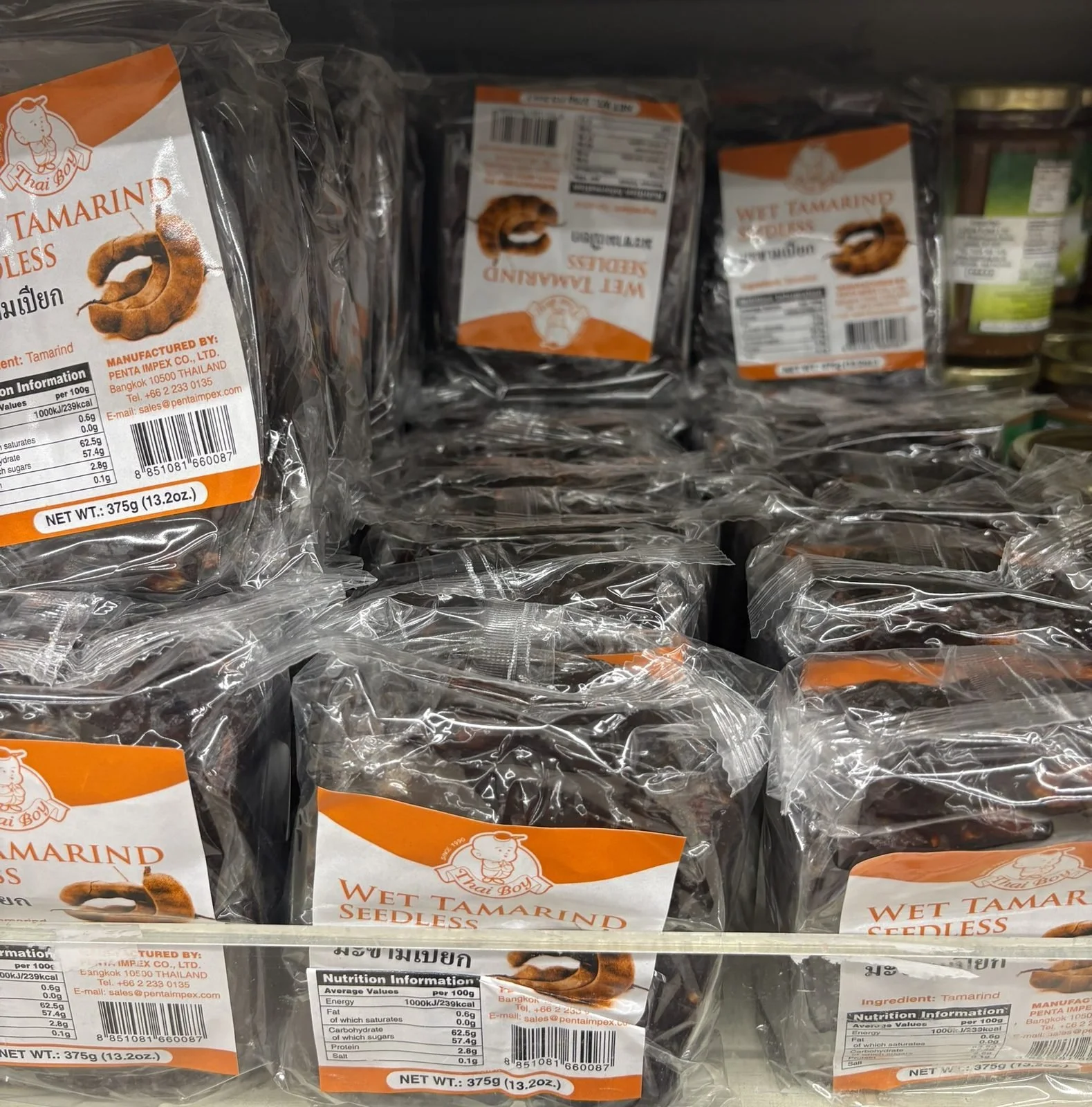
| Block (wet tamarind) | Sticky pulp pressed into a slab, sometimes seedless, often with the seeds still in. | Soak a piece in hot water, squeeze, strain. | The best flavour, and it keeps for months. |
| Thai concentrate | Ready-made tamarind water in a tub or jar. Light brown, quite runny. | Straight from the jar. | Handy and close to the real thing. Check it’s Thai. |
| Indian-style paste or concentrate | Thick, almost black, heavily reduced. | A fraction of the amount, thinned with water. | Much stronger and sharper. Not a straight swap. |
| Sweet tamarind pods | Whole fresh pods, often sold in boxes. | Peel and eat. | A snack, not a cooking ingredient. |
Most recipe disasters come from the bottom two rows. A spoonful of dark Indian concentrate where a recipe means Thai tamarind water will strip the skin off your pad thai. Jars vary hugely in strength, so add any of them gradually and taste as you go. Thai concentrate is milder, fruitier and lighter in colour, so start small, taste and build up.

How to make tamarind water
Break the block into small pieces in a heatproof bowl and cover with just-boiled water, roughly twice the weight of the tamarind. Leave it half an hour to soften. Once you can handle it, squeeze and squash it with your hands until it’s a thick brown slurry and the seeds come free, then push it through a coarse sieve, scraping the underside. Don’t bin what’s left yet: give it a second, smaller splash of hot water, squeeze again and push that through too. Aim for the thickness of double cream. It’s a sticky job. Wear an apron.
It keeps for a week in the fridge and freezes well in an ice cube tray. My step-by-step, alongside palm sugar, is in tamarind water and palm sugar.
How to use it
Tamarind brings sour with weight to it. It’s the sour in pad thai, balanced against palm sugar and fish sauce. It rounds out massaman, like in my roasted peach massaman, it’s the sour in gaeng som, the hot and sour southern curry, and it goes into nahm jim jaew, the dipping sauce for grilled meat. It’s in the base of nahm prik pao too.
Add it in stages and taste as you go. If a dish has gone too sour, palm sugar and fish sauce bring it back, not water. My guide to balancing Thai flavours covers how.
Makham thet isn’t tamarind
Walk through a Thai market and you’ll see these: pink and green pods curled into rings, split open to show white flesh and shiny black seeds. They’re called makham thet, which translates as foreign tamarind, and they’re sometimes sold in English as Manila tamarind. They’re not tamarind at all.
Makham thet comes from a completely different tree, Pithecellobium dulce, which originally came from Central America. The flesh is sweet and a little astringent, eaten raw as a snack. It’s never used to sour a curry.

Where to buy it
Asian supermarkets sell blocks of wet seedless tamarind, usually from Thailand, and tubs or jars of Thai concentrate. Big supermarkets tend to stock the Indian-style jars, which are worth having for Indian cooking but are much stronger. Read the label. If it’s thick, black and from India, use far less.
Storing it
A block keeps for months well wrapped in a cool cupboard, longer in the fridge. Opened concentrate goes in the fridge. Homemade tamarind water lasts about a week chilled, or months frozen in cubes.
What to use instead
Nothing does exactly what tamarind does. Lime juice with a little palm sugar or brown sugar is the closest in a pinch, though it’s sharper and thinner. Tamarind is naturally vegan and gluten-free. Check the label on concentrates, as some have added sugar or preservatives.
Quick answers
What does tamarind taste like?
Sour and fruity, a bit like a sour date or prune, with a rounder, deeper sourness than lime.
Is tamarind paste the same as tamarind concentrate?
Not always. Thai concentrate is ready-made tamarind water. Indian-style paste or concentrate is thick, dark and far stronger, so use much less.
How do you use a tamarind block?
Soak a piece in just-boiled water for 10 minutes, squeeze the pulp off the fibres and push it through a sieve. Use the liquid.
What can I use instead of tamarind?
Lime juice with a little palm sugar or brown sugar is the closest substitute, though it’s sharper and less fruity.
Does tamarind go off?
A block keeps for months in a cool cupboard. Tamarind water keeps about a week in the fridge, or months frozen.
Is sweet tamarind the same as cooking tamarind?
It’s the same tree but a sweeter variety, eaten as a snack. Cooking needs sour tamarind.
Is makham thet tamarind?
No. Makham thet, or Manila tamarind, is a different tree from Central America with sweet white flesh, eaten as a snack.
Further reading: making tamarind paste at home, sweet vs sour tamarind
More from the Thai larder
Every ingredient I cook with, explained: what it is, where to find it and what to use instead.
All Thai ingredients, A to ZGet my free Thai Pantry guideSubscribe and new recipes, articles and guides land in your inbox as soon as they go up, with my free Thai Pantry guide as a thank you.
Head chef & founder of Farang London restaurant. Cookbook author of ‘Cook Thai’ & ‘Thai in 7’. Chief curry paste basher and co-founder of Payst London.