
Pad Thai with Tiger Prawns and Crispy Tofu
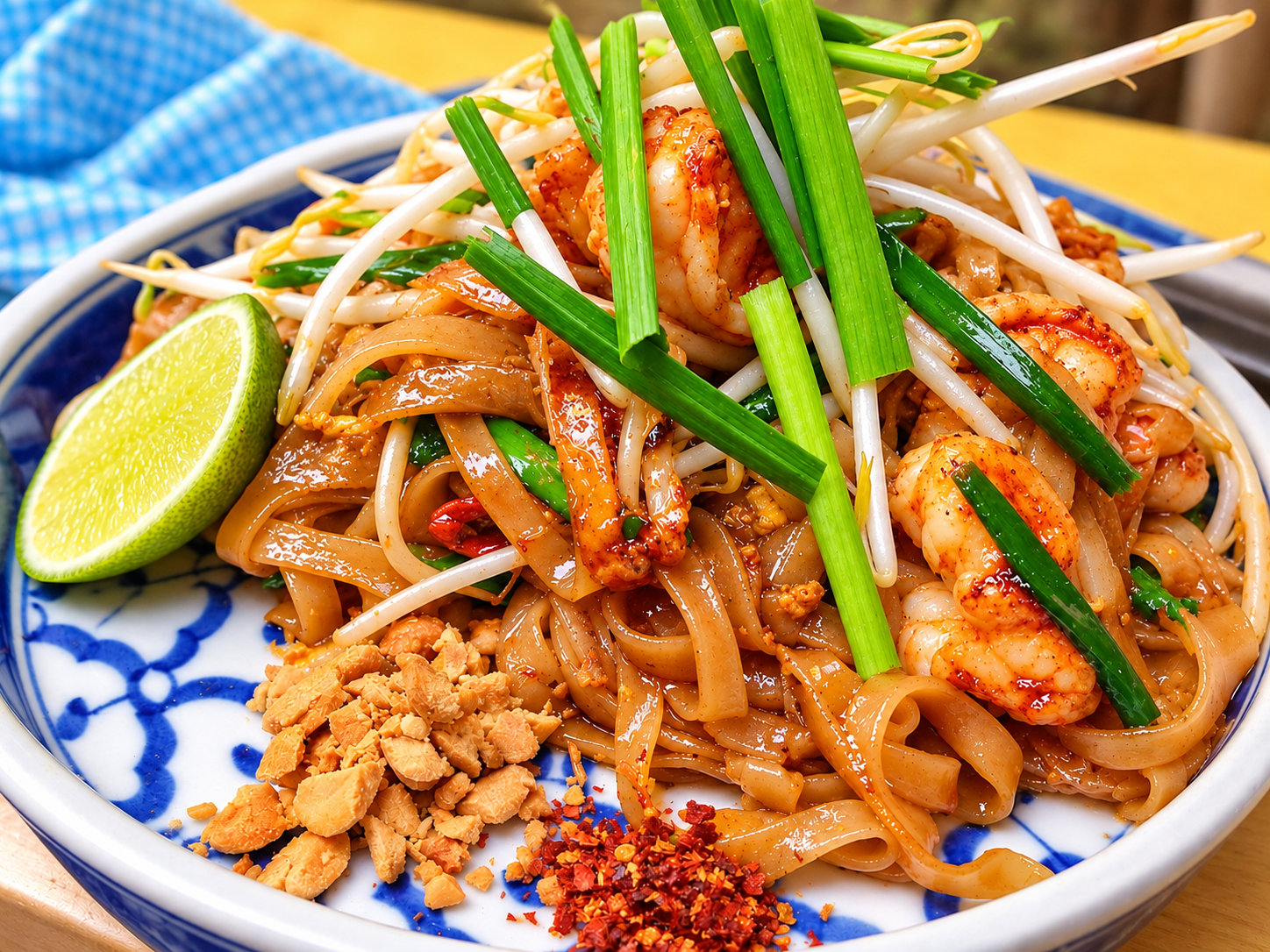
Pad thai is the dish everyone thinks they know, and the one that gets treated worst. Most of what goes out under that name in Britain is soft, sweet and pale, noodles boiled first and then left to sit in a sauce until they give up. Done properly it’s the opposite: smoky, sour before it’s sweet, every strand glossy and separate with a bit of chew left in it.
When I wrote Thai in 7 I got it down to seven ingredients, which was a fun challenge for a dish that normally carries about twenty. This is the other end of it, the full version, the way I actually cook it. Tiger prawns peeled but with their heads left on, tofu fried until the outside crackles, dried shrimp, a pile of Chinese chives, and blue tongue, my roasted chilli powder, over the top. The sauce is three things in equal measure, thick tamarind, palm sugar and fish sauce. Everything else is heat.
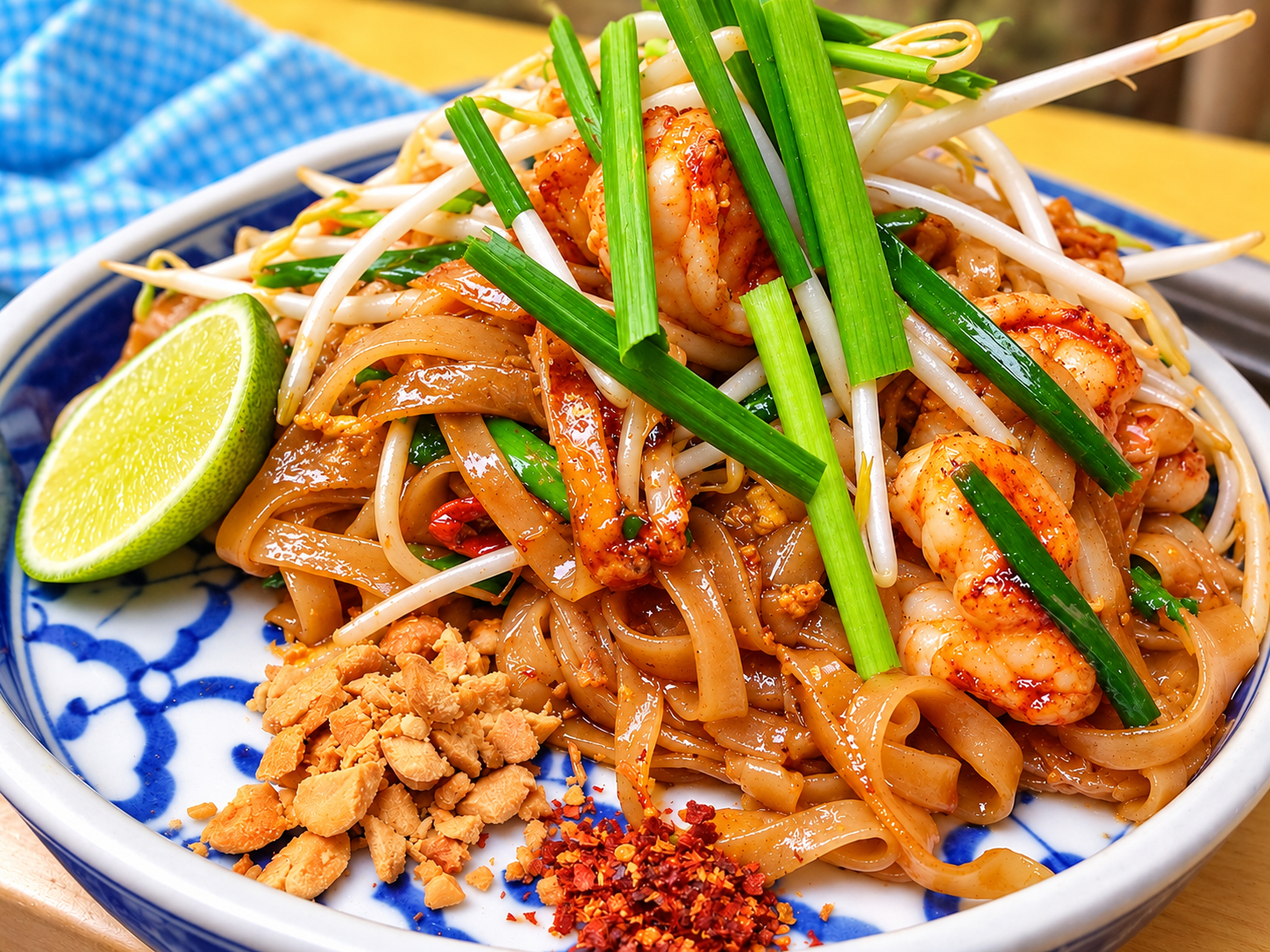
Pad Thai with Tiger Prawns and Crispy Tofu
Serves: 2 | Prep: 2 hours 30 mins | Cook: 20 mins
Ingredients
For the pad thai sauce:
100g palm sugar (roughly chopped)
100ml thick tamarind (from a jar of concentrate, or 50g block tamarind soaked in 100ml hot water and pushed through a sieve)
100ml fish sauce
Or skip the three above and use 8 tbsp Payst Pad Thai Stir-Fry Sauce
For the blue tongue:
15g dried long red chillies
5g dried long bird’s eye chillies
5g dried small bird’s eye chillies
For the prep:
200g dried flat rice noodles (about 5mm wide)
60g raw peanuts
150g fresh tofu (the soft-firm kind sold in brine, not the vacuum-packed blocks)
vegetable oil, for deep frying
8 large tiger prawns (head on)
For the wok (split everything in half, one portion at a time):
3 tbsp vegetable oil
2 banana shallots or 4 Thai shallots (thinly sliced)
2 tbsp dried shrimp
4 eggs
150g bean sprouts
a big handful of Chinese chives (cut into 4cm lengths)
To serve:
more bean sprouts and Chinese chives
1 lime (cut into cheeks)
pickled daikon (optional)
Method
Put the noodles in a big bowl of cold water and leave them for 2 hours. They’re ready when they bend round your finger without snapping but are still white and firm, nowhere near cooked. Drain them well. This is the step most people get wrong: boil them and they’ll turn to paste in the wok, soak them and they finish cooking in the pan, drinking up the sauce as they go.
Make the sauce. Warm the palm sugar and tamarind in a small pan over a low heat, stirring, until the sugar has melted with no lumps left. Take it off the heat and stir in the fish sauce. Taste it: on its own it should be sharp enough to make you pull a face, sour first, then sweet, then salty. That’s right. The noodles will soften it.
Make the blue tongue. Toast all the chillies in a dry wok over a low to medium heat, moving them constantly, until they’re dark red, smoky and brittle enough to snap. Open a window first. Don’t let them go black or the powder turns bitter. Tip them onto a tray and leave them to go completely cold, which crisps them up, then grind them to a fine powder in a spice grinder or pestle and mortar.
Roast the peanuts in a dry pan over a medium heat, or in the oven at 180°C, until they’re golden all the way through, 8 to 10 minutes. Let them cool, then pound them in a mortar until about half are crumbs and the rest are still in rough pieces. You want crunch in the finished dish, not peanut dust.
Drain the tofu, pat it dry and cut it into 2cm cubes. Heat the oil for deep frying to 180°C and fry the tofu for 3 to 4 minutes, until it’s golden and crisp on the outside but still soft and moist in the middle. Drain on kitchen paper.
Prep the prawns. Peel the shell off the body, leaving the head and the tail on. Run a small knife down the back and pull out the dark vein. The heads are where the flavour is: the fat inside them melts into the wok and seasons the noodles in a way peeled prawns never will.
Line everything up next to the stove, split into two piles. Cook one portion at a time. A home hob can’t keep a wok hot enough for two portions at once, and an overloaded wok stews noodles instead of frying them.
Heat the wok over the highest heat you have until it’s smoking, then add half the oil. Add half the shallots and half the dried shrimp and keep them moving for 20 to 30 seconds, until the shallots are soft and smell sweet. You’re sweating them, not colouring them, so pull the wok off the heat for a moment if they start to brown.
Crack in 2 eggs and leave them for about 10 seconds, until the edges set, then break them up with your spatula. You want pieces of omelette through the noodles, not scrambled egg.
Add half the prawns and half the tofu and toss for about a minute, until the prawns are just turning pink.
Add half the noodles, shaken as dry as you can get them. Spread them out across the wok and keep them moving so they don’t stick to the bottom. As they soften they go from white to translucent.
Pour about 4 tbsp of the sauce around the hot sides of the wok, not straight onto the noodles. It should hit the metal, sizzle and catch slightly as it runs down, which is where the smoky, caramelised edge comes from. Toss until the sauce has been absorbed and every strand is glossy, with no puddle left in the bottom. If the noodles are still firm, add a splash of water and keep tossing.
Taste a noodle. It should be sour, then sweet, then salty, with smoke from the wok underneath. If it’s too sweet, add a splash of fish sauce. If it tastes flat, add another spoonful of sauce. Then add half the bean sprouts, half the chives, a handful of the peanuts and a pinch of blue tongue, and toss for 20 seconds, just long enough to warm the sprouts without losing their crunch.
Pile it up in a big mound on a flat plate. Put raw bean sprouts, chives, more peanuts, a little pile of blue tongue, a lime cheek and some pickled daikon to the side, so everyone can season their own. Wipe out the wok and cook the second portion.
Chef’s notes
The sauce makes more than you need. It keeps in a jar in the fridge for a couple of weeks, so the next pad thai is half done. If you’re short of time, Payst Pad Thai Stir-Fry Sauce is the one we make, and there’s a vegan version too.
Blue tongue keeps for about a month in a sealed jar, and you’ll find a use for it on everything. Make it when you can leave the windows open.
For a vegetarian pad thai, swap the prawns and dried shrimp for mushrooms and the fish sauce for soy sauce. If you want to go further than the classic, my Crab and Smoked Chicken Pad Thai Noodle is where I take it next, and the Stir-Fried Vegetable Noodles use the same wok rules with thick rice noodles. The full story of where pad thai came from, and why most of what you’ve been served in Britain isn’t it, lands on Thursday.
Visit us at faranglondon.co.uk. Sauces and pastes for cooking Thai at home at payst.co.uk.
For more recipes, signed copies of my cookbooks are available at Payst: Cook Thai and Thai in 7.
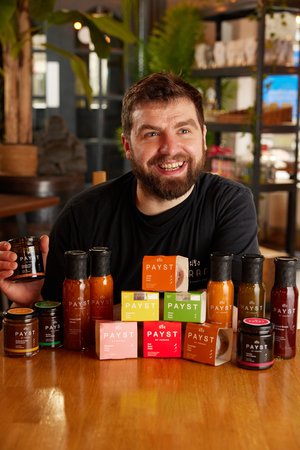
Head chef & founder of Farang London restaurant. Cookbook author of ‘Cook Thai’ & ‘Thai in 7’. Chief curry paste basher and co-founder of Payst London.
Eat it at Farang
Cook it at home, or let us cook it for you. Farang, Sebby's Michelin Bib Gourmand Thai restaurant in Highbury, N5.
Book a table