Pad Thai: The One Everyone Thinks They Know
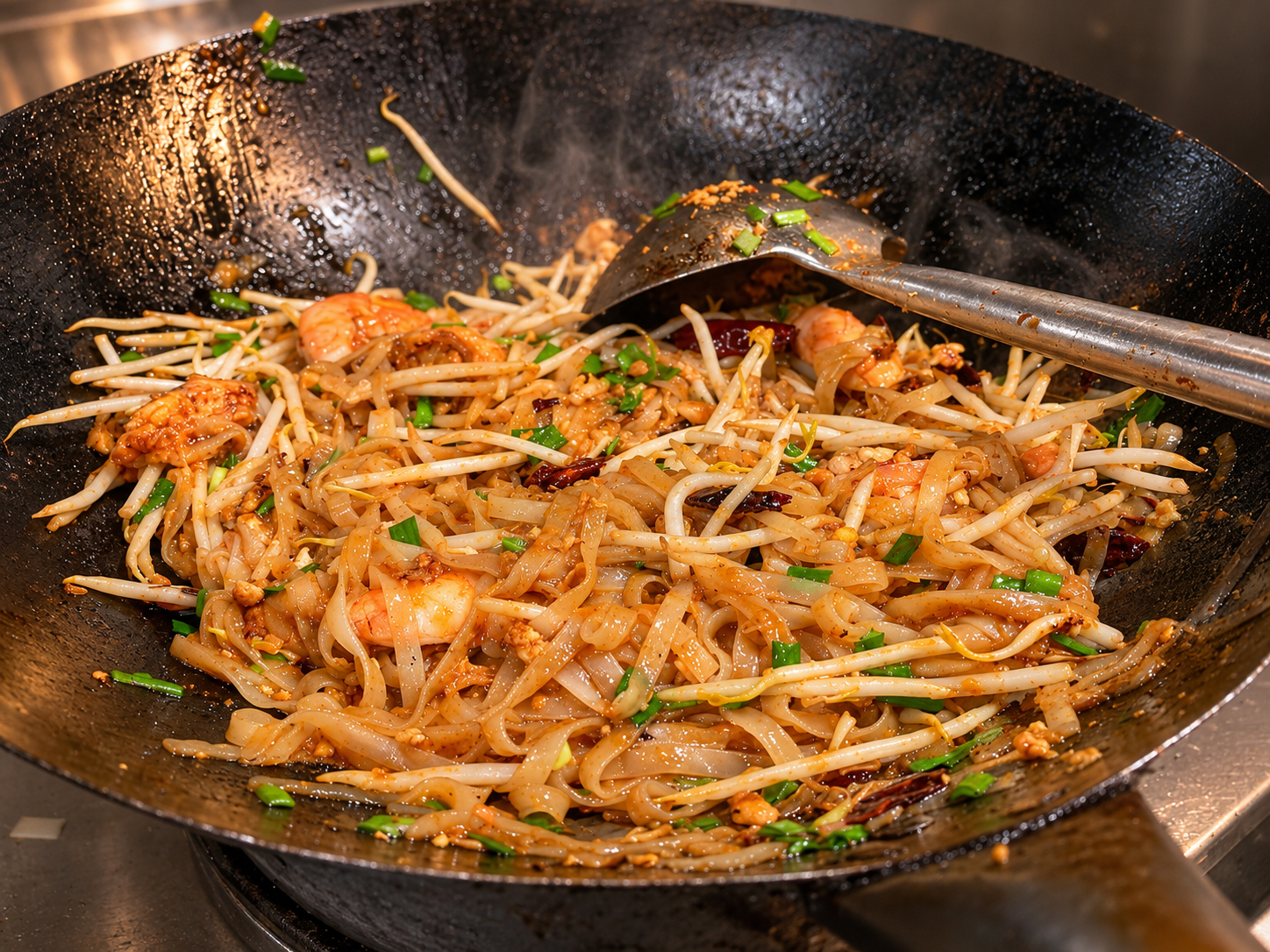
Every Thai restaurant in Britain has a pad thai on the menu, and most of them would quietly prefer not to. It’s the dish people order when they don’t fancy reading the rest of the menu, the safe choice, the one you get for the friend who says they don’t like spicy food. And because it’s the safe choice, it’s the one that gets the least love. What usually turns up is a sweet, soft heap of noodles that tastes mostly of sugar, with a lime wedge on the side that’s been in the fridge since lunchtime.
I’ve eaten a lot of pad thai, and most of the ones I’ve tried in this country are far too sweet. Palm sugar is part of the dish. It isn’t the dish. A proper pad thai is rich and savoury, salty, sour and sweet all at the same time, with a fishy, funky depth underneath and a fresh hit of lime at the end. Get that balance right and it’s one of the best things you can do with a wok. Get it wrong and you’ve made pudding with prawns in it.
The name gives the game away straight off. Phat means stir-fried, and the full name of the dish is kuay teow phat thai, with kuay teow being the Chinese word for flat rice noodles. So pad thai, Thailand’s most famous dish, translates as Thai-style stir-fried noodles, which is a strange thing to call a dish in its own country unless it started out somewhere else. And it did, sort of.
Stir-frying is a Chinese technique. Traditional Thai cooking leaned on boiling, grilling, steaming and marinating, and it was Chinese immigrants who brought the wok and the habit of frying noodles in it. Rice had been the staple for centuries before noodles took on a bigger role, once the Chinese presence grew during the Ayutthaya period in the 17th and 18th centuries. For a long time, fried rice noodles were just one stir-fry among many.
Then the politics arrived. In the late 1930s, Field Marshal Plaek Phibunsongkhram, Phibun to everyone, was prime minister, and he wanted a nation with one identity. He changed the country’s name from Siam to Thailand, told women what to wear, commissioned a new national anthem, and somewhere in the middle of all that made pad thai a national dish. The government standardised a recipe, handed it to vendors and gave out carts to sell it from. There was a practical side too. Rice was short, and a plate of rice noodles uses about half the grain of a bowl of rice. One anthropologist who has studied the dish calls it “an invented tradition”, and the version that got the national treatment was apparently the one Phibun’s housekeeper made for him at home. Lunch, decided by a dictator’s favourite plate.
That’s the story you’ll read most often, and like most food stories, not everyone buys it. Phibun’s own son has said his parents popularised the dish during the war and doubts it was ever a Chinese import at all. On the other side, the Bangkok historian Chatichai Muksong argues that while noodles did get a big push in the 1940s, the dish we call pad thai didn’t appear in print until 1962, in a housewives’ magazine that listed “pad thai noodles” for Monday lunch and plain stir-fried noodles separately for Thursday. In his version, pad thai as we know it took shape in the 1960s, when Thailand was building a tourist industry and needed some Thainess to sell. Everyone agrees on one thing. It’s young. Your nan is probably older than pad thai.
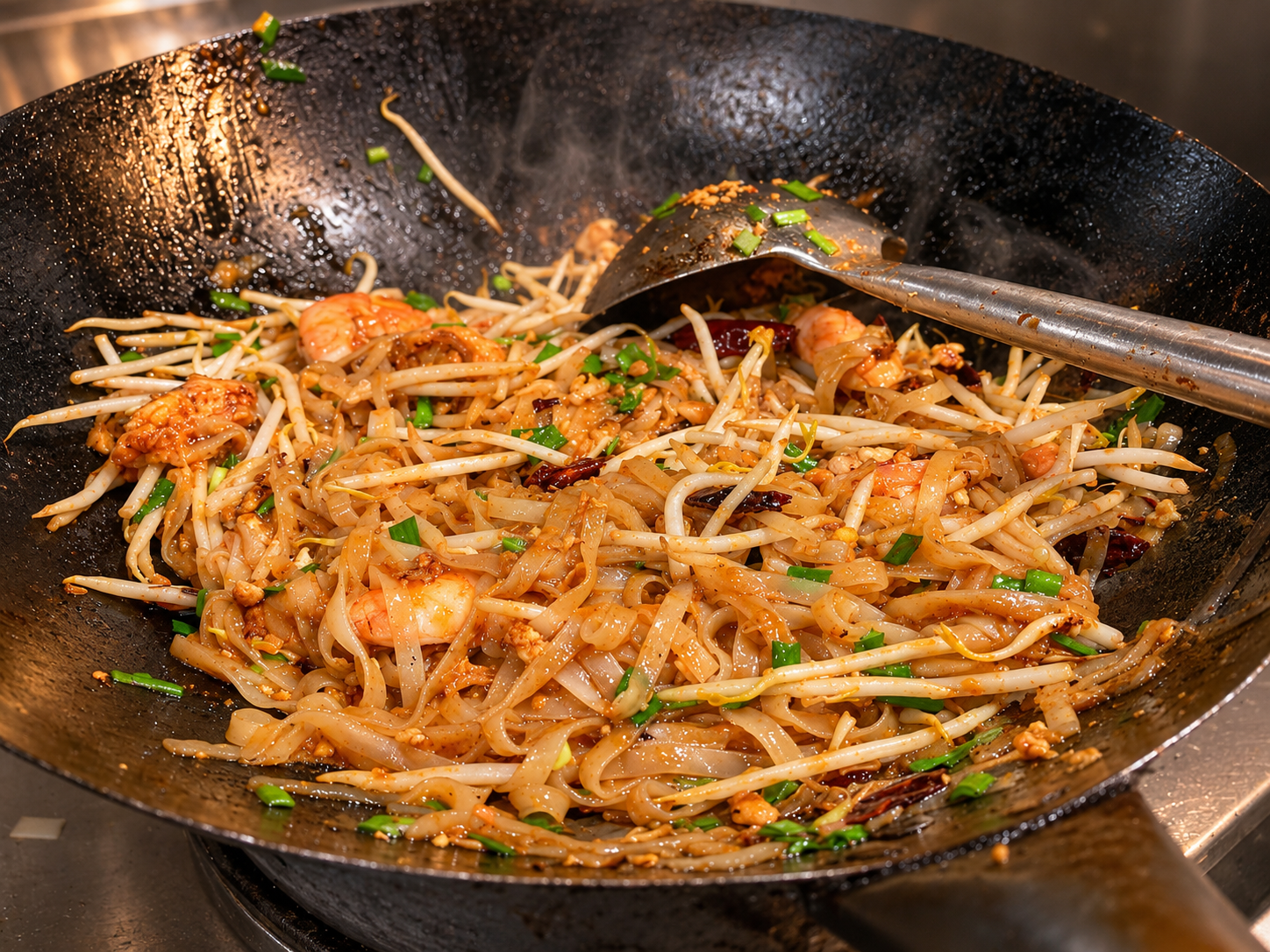
How it got to Britain is the other half of the story. In 2001 the Thai government set out to open thousands of Thai restaurants around the world, a policy that’s now called gastro-diplomacy, and the number of Thai restaurants outside Thailand went from about 5,500 to more than 15,000. Pad thai was the easy sell: no unfamiliar ingredients, no frightening heat, and a name anyone can say after a couple of beers. Which is how it ended up as the dish nobody looks after.
So where does it go wrong? The sweetness, first and loudest. The sauce should be tamarind, palm sugar and fish sauce in balance, and when I make it they go in equal measure. Too many kitchens lean on the sugar because it’s what people think they like, and the dish turns flat and cloying. Tamarind is what makes it pad thai. Fish sauce is what makes it taste of anything at all. Pad thai is about those fishy, savoury flavours, and the dried shrimp and fish sauce are doing more work than the sugar ever will. If you’ve seen the recipes online, it gets worse: people put in ketchup, oyster sauce, curry powder and spaghetti, and none of those belong anywhere near it.
The noodles come next. The dish was considered new in the first place partly because the noodles were stir-fried rather than boiled, and that’s still the rule. Soak dried rice noodles in cold water until they’re flexible but nowhere near cooked, then let the wok finish them, so they soak up the sauce rather than sitting in it. Boil them first and they turn to paste. Then there’s the heat. Some of the best pad thai cooks in Bangkok will tell you to go gentle on the heat so the noodles don’t catch before the sauce coats them, and they’ve got a point, because palm sugar and tamarind burn fast. I like it hot and smoky anyway. One portion at a time, a wok that’s properly hot, and a cook who doesn’t walk away from it.
And then the lime. Don’t cook it. Lime juice cooked in a wok goes dull and bitter and loses everything it was there for. Give the diner a cheek of lime and let them squeeze it over at the table, so the last thing that hits the noodles is fresh and sharp. The same goes for the rest of the seasoning. Peanuts, chilli powder, pickled daikon and bean sprouts go on the side of the plate, not into the wok, because a pad thai is finished by the person eating it.
That’s not me being fussy. It’s how it works in Thailand, where pad thai is a cheap street lunch, around 50 baht for office workers, and comes with chilli flakes, crushed peanuts, Chinese chives, lime and a piece of banana blossom so you can tune it yourself. Vendors in Bangkok often throw in something raw and sour as well, green mango or sour star fruit, to cut through the richness. A former Bangkok Post restaurant critic put it best when he said there are no fixed quantities in pad thai, which is why “you never get the same dish”. The cook gets it close. You finish it.
Is it regional? More than you’d think for a dish that was meant to unify a country. Pad thai made with Chanthaburi noodles, the sen chan that many cooks swear by, comes out drier, while the noodles from Korat are thinner, juicier and more sour, thanks to the local tamarind. Shrimp is the most common protein now, but crab, salmon and beef all turn up, and plenty of versions are vegetarian. Down south there’s pad thai Chaiya, from Chaiya in Surat Thani, which swaps the tamarind sauce for dried chilli, shallot and shrimp paste cooked down in coconut cream, cooked slowly so the noodles soak it up, and it’s a lot hotter than the Bangkok version. Then there are the Chinese-quarter versions heavy on pickled radish, and every cook’s own twist on the sauce.
The version I’ve just put up on the site, my Pad Thai with Tiger Prawns and Crispy Tofu, hasn’t been messed around with. Prawns and tofu, pad thai in its simplest form. I’ve kept it that way on purpose, because if you can make that one well, you can make all the others.
Strip it back and pad thai is a short list of rules. Dried flat rice noodles, soaked, never boiled. A sauce of tamarind, palm sugar and fish sauce, balanced so nothing shouts. Something from the sea for depth, dried shrimp at the very least. Egg in pieces, not scrambled. A hot wok, one portion at a time. Bean sprouts and chives at the end for crunch, and the lime, peanuts and chilli on the side for the person eating it.
Within those rules, you can do what you like. Chicken works, and so do mixed vegetables, if that’s how you eat. Swap the fish sauce for soy and the prawns for mushrooms and you’ve got a decent vegetarian pad thai. When I wanted to take it somewhere British, I went for crab and smoked chicken, and that one’s on the site too, my Crab and Smoked Chicken Pad Thai Noodle. What you can’t do is lose the fish sauce and the tamarind and still call it pad thai. Then it’s just stir-fried noodles again, which is where it started.
Farang means foreigner, we cook for flavour not authenticity, and pad thai might be the best case for that there is. It’s a Chinese technique and a Chinese noodle, renamed by a government that wanted it to be Thai, written down twenty years later, and sold to the world as the taste of a country. None of that makes it any less delicious when it’s cooked properly. You can taste where we take Thai food at Farang, and if you want the shortcut at home, the pad thai sauce we make is at Payst.
Not sure your pad thai’s balanced? Ask me how to fix it.
If you missed last week’s piece on nam prik, that’s the other side of the Thai table. Next time it’s tom yum, the hot and sour soup most people think they know, and why the clear one and the creamy one are two different arguments.
Further reading: Smithsonian, the South China Morning Post and Gastronomica.
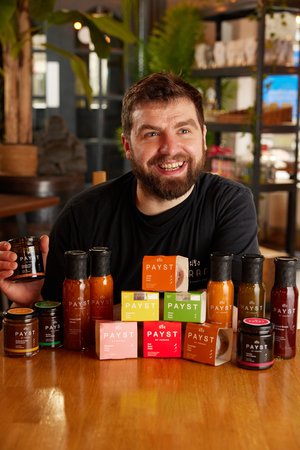
Head chef & founder of Farang London restaurant. Cookbook author of ‘Cook Thai’ & ‘Thai in 7’. Chief curry paste basher and co-founder of Payst London.