
Pounded, Dunked and Never Optional: The Nahm Prik Family
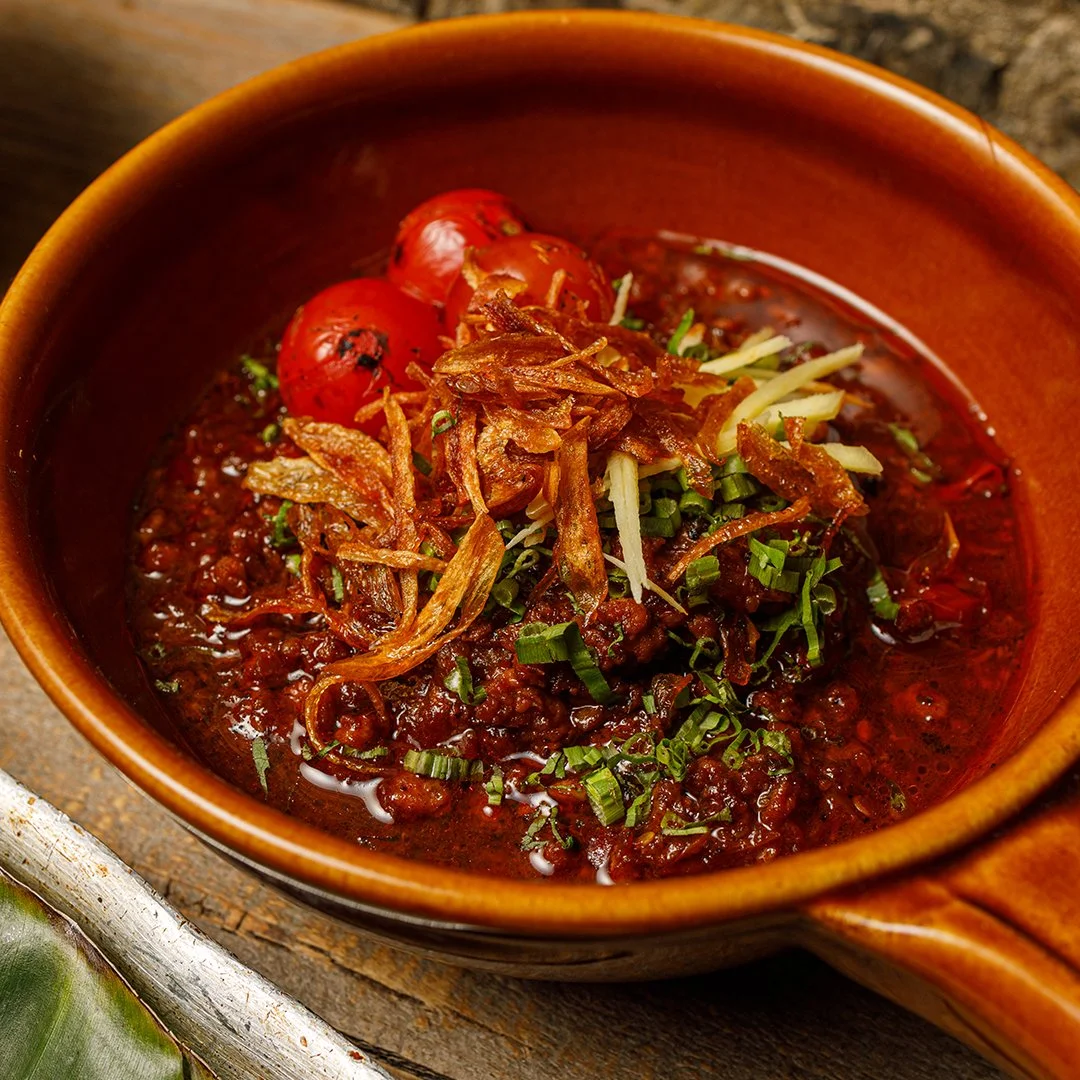
Last time I promised you the relishes that sit in the middle of every Thai table. Here they are, and I’ll start with a confession about British food. We don’t really have a dunking thing. We have chutney, which is brilliant on a cheeseboard and far too intense to scoop with a carrot, and after that we start borrowing. Hummus from the eastern Mediterranean, guacamole from Mexico, a pot of tzatziki next to the crisps. We go abroad for our dips, which, excuse the double dip, says a lot.
Thailand has never had that problem. Nam prik is a whole family of pounded chilli relishes, hundreds of them, eaten with rice, raw and boiled vegetables, fried fish, eggs and pork crackling, at pretty much every meal in the country. I’ve always loved making them, partly because nothing in my own cooking background works quite like them. A nam prik isn’t a sauce and it isn’t a curry. It sits right on the border between the two.
Start with the name. Nam means water and prik means chilli, so nam prik is, quite literally, chilli water. Which undersells it. Some are wet and loose, some are thick enough to stand a spoon in, and a few are practically dry.
There’s an argument about what to call them in English, too. Dip is the word most people reach for. Leela Punyaratabandhu, who knows more about Thai food than almost anyone writing in English, won’t have it. As far as she’s concerned, “a relish is a dish, not a seasoning sauce or a dipping sauce.” I’m with her on the principle. The useful line to draw is between nam prik and nam jim. A nam jim is a dipping sauce, the thing that comes with your grilled chicken, and it’s there to help. A nam prik is the main event, a dish in its own right, and the rest of the table is there to help it. Think of the difference between the mint sauce and the roast.
How old is it? Older than the chilli, which sounds impossible until you remember that chillies aren’t Thai. Pounded seasoning pastes of local herbs and peppercorns were among the oldest foods in Thai cooking, long before anyone in Asia had seen a chilli. Those came from the Americas, and the likeliest carriers were the Portuguese, the first Europeans to make contact with the Thai kingdom of Ayutthaya, in 1511. Nobody has a date for the first chilli in a Thai mortar. Whenever it landed, it took over.
As for why the relishes exist at all, one Thai chef’s theory is a practical one. A pounded paste of fish or shrimp, stretched with chillies and herbs, was portable protein for people working in the fields, and the hotter it was, the more rice you ate with it. That’s a theory, not a fact, but it rings true to anyone who’s ever stood over a mortar on a tight budget. Some nam priks went the other way entirely. Nam prik long ruea, a shrimp paste relish dressed up with sweet pork and fried fish floss, was made for a princess and came out of the royal kitchens.
Here’s where people go wrong, and it’s mostly to do with the mortar. Every Thai cook who makes nam prik properly will tell you not to use a food processor. A blade chops. A pestle crushes, and it’s the crushing that bursts the cells and gets the oils out of the garlic, the chilli and the shallot. The cooks who swear by pounding say a blender only hints at what a mortar does, and they’re right. If you’ve read my piece on som tam, you’ll know I feel the same about papaya.
The second mistake is pounding everything to the same smooth paste. How fine you go depends on where you are. The north and the northeast pound coarse and rustic. The central plains go finer, though the classic shrimp paste relish is only lightly bruised, so you can still see what went into it. The tools change too. The north and northeast traditionally used clay mortars, and the heavy Thai granite ones most of us use now only started being made about 70 or 80 years ago, by Chinese immigrants in Chonburi.
And the order matters. Hard and dry things go in first, garlic and chillies, then the sugar and lime, then the shrimp paste, with anything that should stay whole, like pea aubergines, cracked in right at the end. In the north they grill the chillies, garlic and shallots over charcoal before any of it goes near the mortar, which is where the smoke in a nam prik num comes from.
One more, because it comes up every time. Not every nam prik is meant to blow your head off. Nam prik pao, the roasted chilli jam you’ll find in my own recipe, isn’t meant to be fiercely hot at all. It’s sweet, smoky and savoury, and it goes on everything.
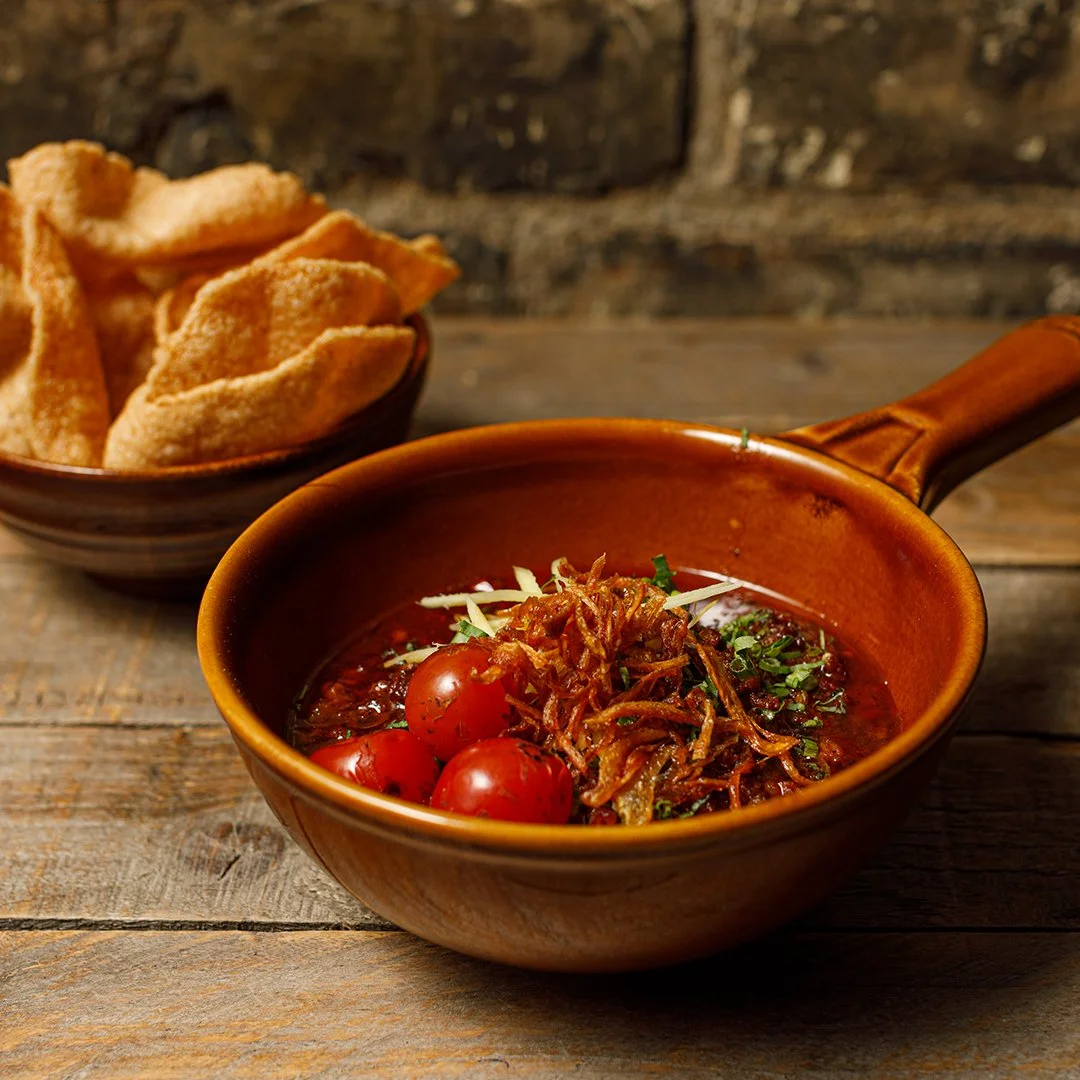
So how many are there? Nobody knows, and anybody who gives you an exact number is guessing. The best story on this is a Thai food writer who once said, as a joke, that there were 105,896 kinds of nam prik, and then watched another writer quote it as fact. Hundreds is the honest answer. Here are the ones worth knowing.
Nam prik kapi is the central Thai classic: fermented shrimp paste pounded with bird’s eye chillies, garlic, lime and palm sugar, and it’s the one I’ve struggled with. Some versions use the shrimp paste raw, and that raw funk is a lot. I keep trying it. One day it’ll click. Nam prik num is the northern one you’re most likely to meet, made with young, pale green chillies grilled with shallot and garlic and pounded to a soft, smoky mash. Nam prik ong, also from the north and with roots among the Shan, is more of a thick, meaty sauce than a dip: minced pork, tomatoes, chilli and shrimp paste cooked down until thick. Nam prik ta daeng, red-eye relish, is a fierce northern mix of dried chillies, garlic, fish sauce and lime.
Then there’s nam prik pla too, built on grilled mackerel and one of the gentler ones. Nam prik pao, the jam. Nam prik long ruea, the princess’s version of kapi. And a tail of smaller ones: a dry relish of garlic and galangal, a northern one of fermented greens, and countless family versions that never had a name to begin with.
Some cousins hang around the edges, too. Jaew, the roasted chilli dip that comes with grilled meat in the northeast (the one next to the laap), is strictly speaking a nam jim, but it eats like a nam prik. And then there’s lon, a relish simmered in coconut cream, served in exactly the same way, with vegetables and rice to scoop it up. That’s where the line between relish and curry gets properly blurry, and it’s the bit that’s always fascinated me. A lon could pass for a curry, and a nam prik ong could pass for a ragu. Nobody in Thailand loses any sleep over which is which.
Is it regional? It might be the most regional thing in Thai food. One way to read the map is by what each region ferments. The central plains build on shrimp paste. The south uses budu, a fermented fish sauce. The northeast has pla ra, fermented fish. And the north, which has no coastline, uses nam poo, a black paste made from rice-paddy crabs. Swap the fermented base and you swap the whole relish. One well-travelled food writer reckons you can tell which part of the country you’re in from the nam prik alone, and I believe him.
How is it eaten? Never on its own, and never as a garnish. In central Thailand, a bowl of nam prik kapi sits in the middle of the table with fried mackerel, an omelette and a pile of boiled and raw vegetables, and everyone reaches in. Where people eat steamed rice, you take a dab of relish and mix it through your rice with a spoon. Up north, it’s sticky rice and fingers, and a northern spread isn’t finished without khaep moo, crisp, puffed pork crackling, to scoop the nam prik num. It’s everyday food, not occasion food. Which is exactly why you’ll rarely see it on a Thai menu in Britain. It’s too ordinary to list, and too important to leave out.
There are a couple already on my site, the nahm prik pao and a minced chicken satay relish, and you’ll find one on the side of the khao soi. There’ll be a lot more. I want to cook my way through the regions in this article and put them all up, one at a time.
Strip nam prik back and it’s a set of rules. Chilli, fresh, dried or grilled. Aromatics, usually garlic and shallot, often charred. Something fermented and salty to give it depth. Something sour, and a little sweetness to round it off. All of it crushed, not chopped. And then something plain to eat it with, because the relish is the flavour and everything else on the table is there to carry it.
Read those rules back and there are British ideas everywhere. The north uses black crab paste because it has no sea, and we have brown crab meat, which is rich, a bit funky and begging to be pounded with grilled chilli and garlic. Smoked mackerel would do what pla too does, with more smoke than any Thai cook would bother with. Pounded anchovies are our own fermented-fish tradition, and they’d stand in for shrimp paste better than you’d think. For the sour, a sharp Bramley apple or a handful of gooseberries in summer. To eat it with, raw radishes, chicory, kohlrabi and runner beans. And for the khaep moo, the answer has been sitting behind the bar in every pub in the country for decades. Pork scratchings.
Farang means foreigner, we cook for flavour not authenticity, and nam prik is about as good an argument for that as you’ll find. It’s a family of dishes that adopted a foreign chilli five hundred years ago, changes its fermented base every time it crosses a regional border, and still doesn’t care whether you call it a dip, a relish or a ragu. You can taste where we take it at Farang, and the pastes and sauces we make for cooking at home are at Payst.
Never made a nam prik? Ask me which one to start with.
Next time we’re taking on the one everyone thinks they know: pad thai, and why most of what you’ve been served in Britain isn’t it.
Further reading: Parts Unknown, SheSimmers and the Bangkok Post.
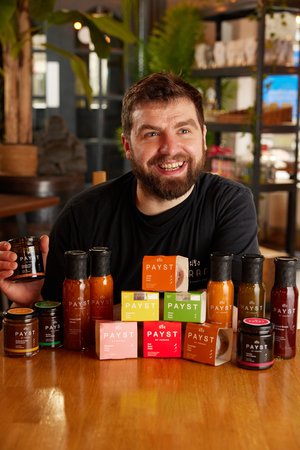
Head chef & founder of Farang London restaurant. Cookbook author of ‘Cook Thai’ & ‘Thai in 7’. Chief curry paste basher and co-founder of Payst London.