
Pounded, Sour and Slightly Dangerous: The Som Tam Family
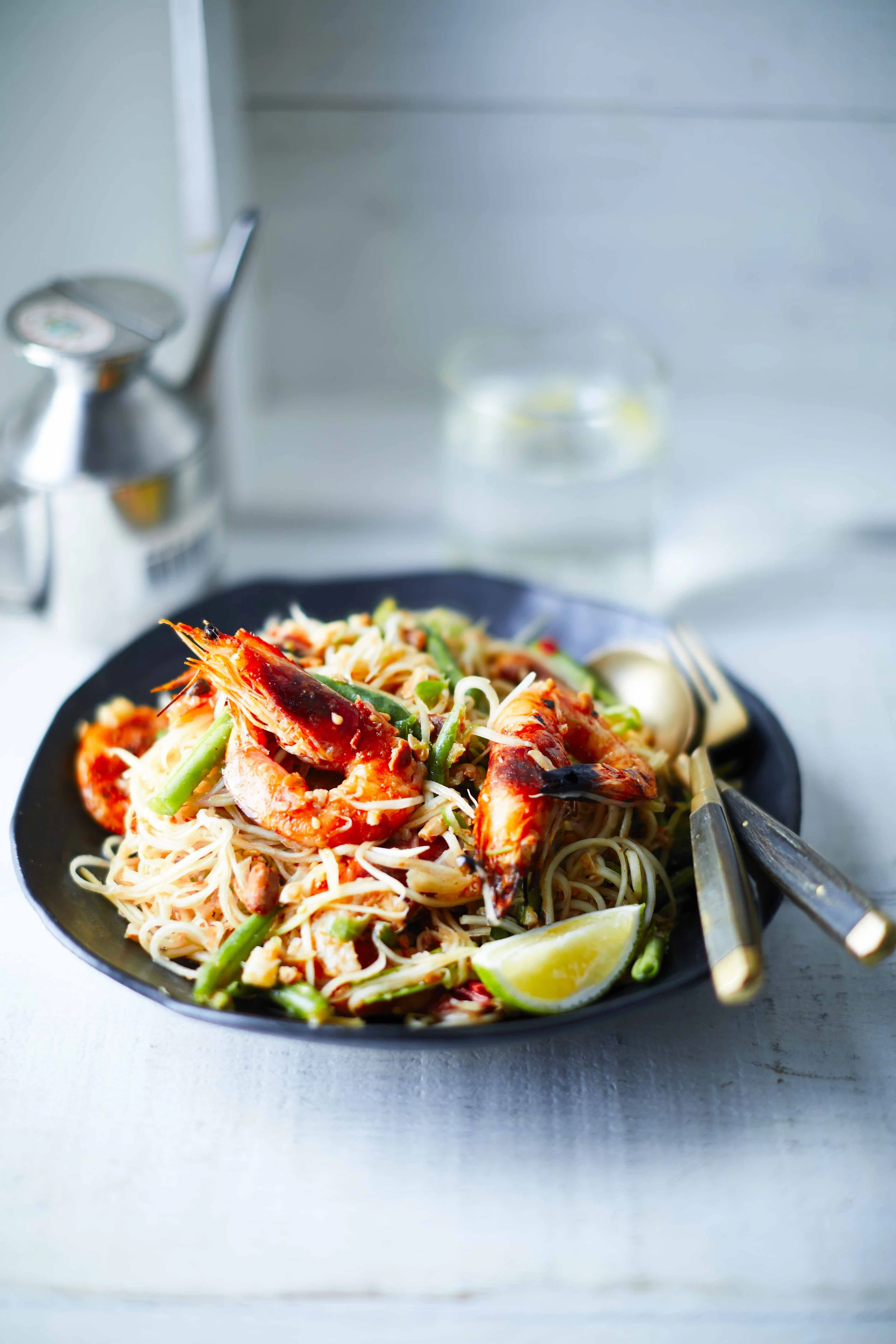
There’s a sound you hear on almost every street in Thailand. Pok, pok, pok. A wooden pestle hitting a clay mortar, somewhere between a woodpecker and a man trying to knock in a tent peg with a rolling pin. Follow it and you’ll find someone standing over a tray of shredded green papaya, a bag of tiny chillies and a jar of something brown that smells like the bottom of a fishing boat. They’ll ask how many chillies you want. You’ll say two, because you’re British and you don’t want to make a fuss. They’ll put in five, because they’ve seen your type before.
Ten minutes later you’re sweating, laughing, crying a bit and ordering another one.
In this country we call it green papaya salad, which is a bit like calling a full English assorted fried breakfast items. Technically accurate. Spiritually bankrupt. Som tam isn’t really a salad at all. It’s pounded, sour and fierce, and once you understand that, a whole family of dishes opens up behind it.
Start with the name, because it gives the game away. In Thai, som means sour and tam means to pound. In Isan and Laos the papaya version goes by tam mak hoong or tam bak hoong, which, as Culture Trip’s history of the dish explains, simply means pounded papaya. The Michelin Guide says calling it papaya salad is “not a sufficient translation”, and they’re right, because in the northeast tam som has long meant pounding up anything sour as the main event. Papaya was a latecomer. Before it turned up, you pounded whatever sour thing you had to hand.
A very late latecomer, as it happens. Neither of the two things that define som tam is from Southeast Asia. Papaya and chilli both came from the Americas, and both most likely arrived with Portuguese traders. National Geographic points out that the Thai word for papaya, malakor, comes from Malacca, the Portuguese trading post they sailed from. Nobody kept a receipt for the chilli, but the Bangkok Post reckons it landed in the early Ayutthaya period, when the city was a trading hub for ships from all over Asia. So the most famous dish of northeast Thailand is built on two imports, which should make anyone who bangs on about authenticity go a bit quiet.
Most food historians put the dish itself in Laos, Culture Trip notes, which goes a long way to explaining why it’s so loved in Isan. Isan, the big northeastern plateau of Thailand, shares a border, a language and most of its cooking with Laos, and as Isan people moved around the country for work, the pounded papaya went with them. There’s a rival theory too, which the Michelin Guide picks up, pointing to a recipe for khao man som tam, papaya som tam served with rice cooked in chicken stock, in a Thai cookbook first published in 1935. Everyone has a theory. Nobody has a receipt.
What we do know is where it’s ended up. According to the Tourism Authority of Thailand, CNN Travel’s list of the world’s 50 best foods has had som tam on it for years, at number 46 in its 2021 update. Not bad for farm food from the poorest corner of the country.
Now the mortar, because this is where most people go wrong. Som tam is made in a tall clay or wooden mortar with a wooden pestle, not the big granite one you bought to make guacamole. Stone smashes. Clay and wood bruise. Leela Punyaratabandhu of SheSimmers, the Thai cookbook writer, reckons that if you make som tam in a granite mortar in front of a Thai person they’ll struggle not to laugh. Do it anyway and you end up with coleslaw that’s been in a fight.
Garlic and chilli go in first and get properly bashed. Then lime, fish sauce or fermented fish, and palm sugar. Then tomatoes and snake beans, then the papaya, and from there you pound lightly with one hand and turn everything over with a spoon in the other, so the papaya bruises and soaks up the dressing without going to mush. Andy Ricker makes the same point in his som tam recipe for Food Network and adds a tip worth stealing: don’t pound the peanuts, or they release their oil and the whole thing goes greasy. You’re not making a salad and dressing it. You’re building both at once, in the same pot. That’s what gives a good som tam its juicy, slightly limp, deeply seasoned texture, and it’s why the ones made in big batches in the back of a restaurant never taste right.
Subscribe to get new recipes and articles straight to your inbox as soon as they go up, plus my free Thai Pantry guide when you sign up. Get it here.
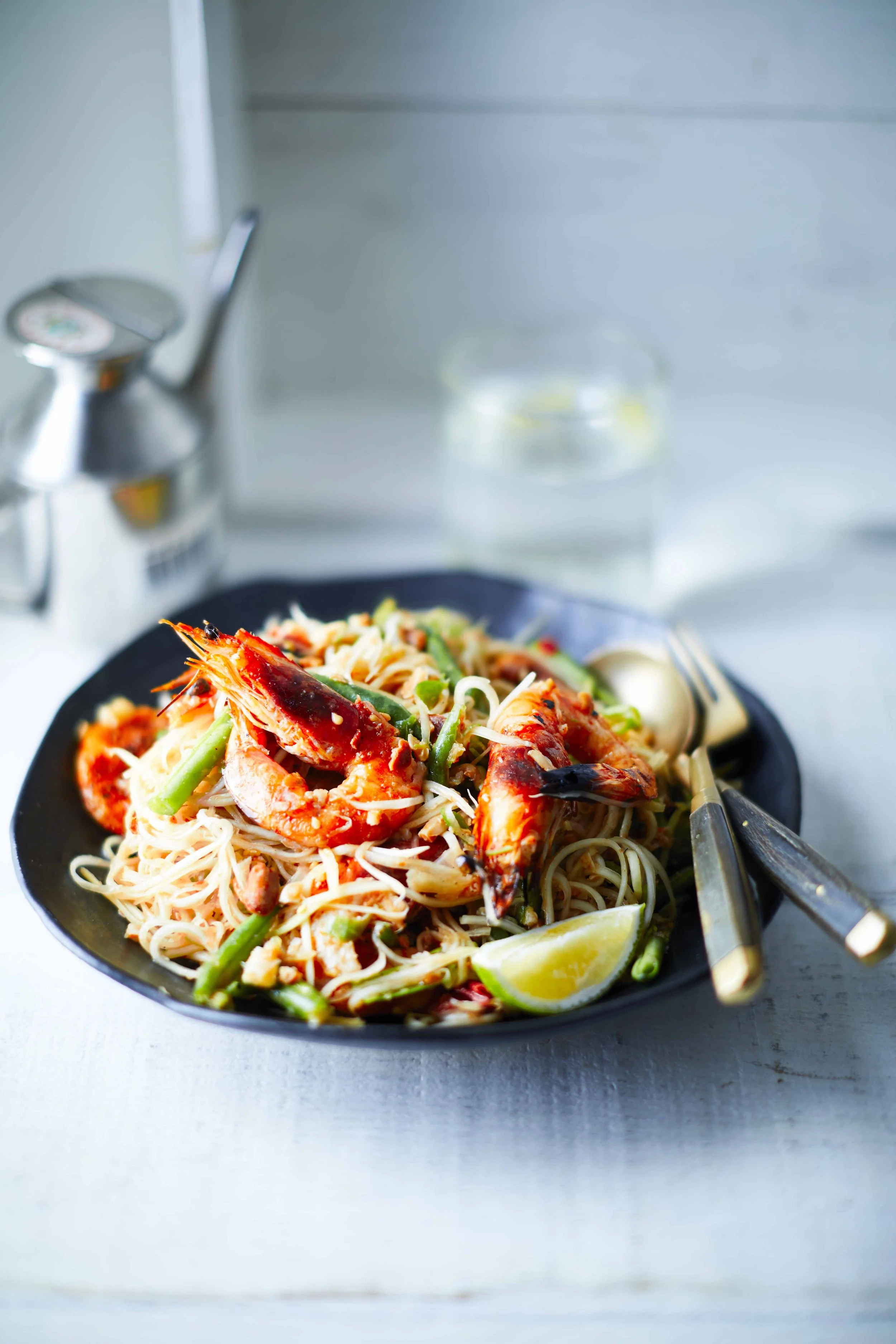
Walk up to a decent som tam cart in Isan and the choice can be bewildering. Som tam Thai is the one you know: central Thai, Bangkok style, with roasted peanuts, dried shrimp, tomatoes, snake beans and a fair whack of palm sugar. It’s the sweeter, milder one, it’s on nine out of ten menus in Britain, and there’s nothing wrong with it. It’s the gateway drug.
Som tam Lao, also called tam pla ra, is where it gets interesting. Out goes most of the sugar and the peanuts. In comes pla ra, or padaek in Laos, a thick, cloudy fermented fish sauce that makes ordinary fish sauce smell like Chanel No. 5. Lao versions are less sweet and often have raw Thai aubergine in them, and Culture Trip warns that the fermented fish is strong enough that plenty of visitors find it a bit much at first. Stick with it. That funk is what makes the original so addictive.
Som tam pu adds salted black paddy crabs, pounded shell and all. You don’t eat the crab so much as suck the salty, briny life out of it and spit out the bits. Put the crab and the pla ra together and you’ve got som tam pu pla ra, which MasterClass’s guide to papaya salad rightly calls the closest thing to the original Lao dish. Possibly not one for a first date.
Behind those four there’s a whole supporting cast. Tam Khorat, named after Nakhon Ratchasima in southern Isan, is Thai style with fermented fish sauce, a halfway house between the two. Tam sua gets tossed through with rice vermicelli. Tam khai khem is som tam Thai with salted duck egg, rich and very good. Tam phonlamai swaps the papaya for whatever fruit is in season. Tam mak kuai uses unripe green banana with tomato for extra sharpness, and tam ba is a grab bag of shredded Thai aubergine, bamboo shoots and freshwater snails that isn’t for the faint hearted. Cross the borders and it keeps going: bok l’hong in Cambodia, gỏi đu đủ in Vietnam, and in Laos more versions of tam mak hoong than anyone has ever counted.
So is it regional? Yes, but not in the way you’d expect. The broad split is easy. Laos and the northeast lean towards fermented fish, crab, more heat and less sugar. Bangkok leans towards peanuts, dried shrimp and a sweeter, cleaner dressing. The real difference is in the dressing, not the papaya, which is exactly the point a chef interviewed by the Michelin Guide makes. Same papaya, same mortar, completely different dish depending on whether you reach for the fish sauce or the pla ra, the sugar or the crab.
Then there’s the most regional thing of all, which is you. Every som tam is made to order, and ordering is a negotiation. More sour, less sweet, extra chilli, no crab, pla ra on the side. The best vendors cook for the person in front of them, not to a recipe, which is about as good a definition of cooking as I’ve heard.
On its own, som tam is a side dish pretending to be a main. In Isan it comes with sticky rice, grilled chicken, gai yang, and a plate of raw white cabbage, snake beans and herbs to put the fire out. Even CNN’s write-up tells you to grab a side of sticky rice. The Michelin Guide suggests pairing it with laap or nam tok, and they’re right. Sweet, sour papaya against salty, smoky, toasted-rice laap is one of the great double acts. I’ve taken laap apart in the same depth if you want the other half, and my chicken and prawn laap sits next to som tam perfectly. Roll a ball of sticky rice, drag it through the juices at the bottom of the plate, grab a strand of papaya, a bite of chicken, a cold leaf of cabbage. Repeat until you can’t feel your lips.
Strip som tam back and it’s a set of rules. Take something crunchy and fairly sour or neutral. Bruise it rather than chop it to death. Build a dressing that hits hard on salt, sour and heat. Add something funky for depth and something crunchy on top. Follow those and you can make som tam out of almost anything, which is exactly what Isan cooks have been doing with mango, cucumber, corn and banana for generations.
Which is where a British veg box in autumn gets interesting. Kohlrabi is about as close to green papaya as you’ll find grown in this country. Peel it, shred it into long strands, and it takes a pounding beautifully. Crisp apples like Granny Smith or Pink Lady bring sharpness and crunch in one go, the same reason I put Pink Lady with green mango in my grilled lobster with nahm yum. Every allotment in the country has a glut of green tomatoes in October that never got round to ripening, and shredded and pounded they give you exactly the sour hit the original tam som was about. Runner beans stand in for snake beans without anyone noticing. Come spring, forced rhubarb is about as pure a sour as you’ll get.
For a British som tam pu, swap the salted paddy crabs for a brown crab from Cornwall or Devon. Pound some of the brown meat into the dressing for that rich, briny depth, then pile the white meat on top. If you can’t find pla ra, and any decent Thai supermarket in London will have it, a couple of good salted anchovies pounded in with the garlic do a surprising impression. Swap the peanuts for roasted Kentish cobnuts, which are in season right now. For the dressing, my red nahm yum is a good place to start, and my crispy salmon and sour fruits salad shows how far you can push sour fruit in a Thai salad.
Purists will grumble. Let them. If a Lao farmer could turn a fruit from the Americas and a Portuguese chilli into one of the most loved dishes in Asia, I don’t see why we can’t do something worthwhile with a Kentish apple and a Cornish crab. Farang means foreigner, and we cook for flavour, not authenticity. You can eat our take on Thai food at Farang on Highbury Park, and if you want a head start on the rest of your Thai cooking, Payst will do a lot of the heavy lifting.
Next time it’s massaman. Somebody has to explain to this country that it isn’t a korma.
If you want more of this, subscribe. New recipes and articles straight to your inbox, and my free Thai Pantry guide to get you started. Sign up here.
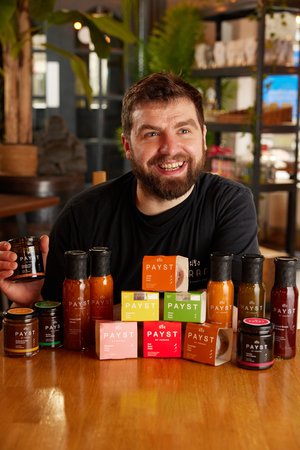
Head chef & founder of Farang London restaurant. Cookbook author of ‘Cook Thai’ & ‘Thai in 7’. Chief curry paste basher and co-founder of Payst London.