
Thai Sticky Rice: What It Is and How to Cook It
Thai Ingredients
In Thai: khao niao (ข้าวเหนียว)
Sticky rice isn’t jasmine rice that’s gone wrong. It’s a different grain, cooked a different way, and across the north and north-east of Thailand it isn’t a side. It’s the meal you eat everything else with.
- Tastes like
- Sweet, chewy, a little nutty
- Find it
- Asian supermarkets, as glutinous or sweet rice
- Swap
- Nothing really. Japanese short-grain at a push
What it is
Khao niao is glutinous rice: short, fat grains that look chalky white and opaque raw, where jasmine rice is long and see-through. Glutinous means glue-like. It has nothing to do with gluten, and sticky rice contains none at all, so it’s safe for coeliacs.
The stickiness is down to starch. Rice has two kinds, amylose and amylopectin. Ordinary rice has a good share of amylose, which keeps the grains separate. Sticky rice has almost no amylose at all, so once it’s steamed the grains cling to each other and to your fingers.
In Isaan, the north and over the border in Laos it’s the everyday rice. It comes to the table in a little woven basket with a lid, and you eat it with your hand: pull off a lump, squeeze it into a ball, press a dent in it with your thumb and drag it through laap, som tam and grilled meat with jaew.
Sticky rice vs jasmine rice
| Sticky rice | Jasmine rice | |
|---|---|---|
| Raw grain | Short, opaque, chalky white | Long, translucent |
| Starch | Almost all amylopectin | More amylose, so grains stay separate |
| How it’s cooked | Soaked, then steamed | Boiled or absorbed in a pan or rice cooker |
| How it’s eaten | By hand, rolled into balls | Spoon and fork |
| Where | North and north-east Thailand, Laos | Central and southern Thailand, everyday rice everywhere |
| Goes with | Laap, som tam, grilled meat, jaew, mango | Curries, stir-fries, soups |
The short version: if a dish is from Isaan or the north, serve sticky rice. If it’s a curry or a stir-fry, serve jasmine rice. Swapping one for the other never works as a like-for-like.
How to cook it
Never boil it. Sticky rice is soaked, then steamed. Soak it in plenty of cold water for at least four hours, overnight is better, then drain it and spread it over a damp tea towel or muslin in a bamboo basket or steamer, set over simmering water that doesn’t touch the rice. Push a few holes down through it with your fingers so the steam gets into the middle. It takes 20 to 25 minutes, and you flip the whole lot over in its cloth halfway through. It’s done when every grain is soft and translucent, with no hard white centre. Taste a few to check.
My full method, with the kit you need and what to do if you haven’t got a basket, is in how to make Thai sticky rice.
Sweet sticky rice
Sticky rice is the base of half of Thailand’s desserts. The famous one is khao niao mamuang, mango sticky rice: rice steamed, then soaked in warm sweetened coconut cream with a pinch of salt, served with ripe mango. Try my mango sticky rice with coconut mango cream or the condensed milk and sesame version.
Black sticky rice, khao niao dam, is the same idea with the bran left on. It cooks up a deep purple, with a nuttier, earthier flavour, and goes into puddings with coconut cream.
Toast raw sticky rice in a dry pan and grind it and you get khao khua, toasted rice powder, the nutty crunch in laap. Here’s how to make toasted rice powder.
Where to buy it
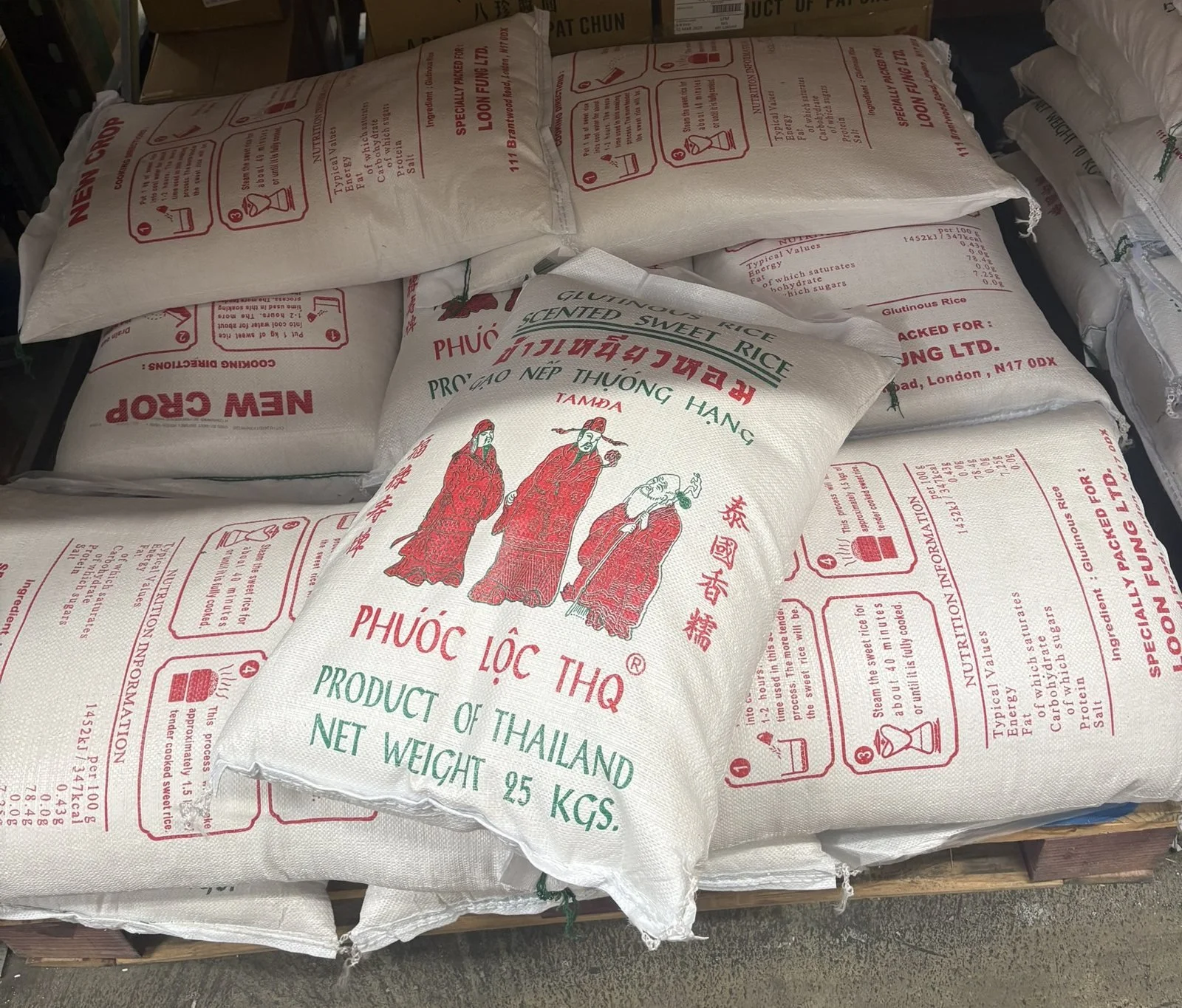
Asian supermarkets, in bags labelled glutinous rice, sweet rice or sticky rice, usually from Thailand. Look for “new crop” on the bag: fresher rice is softer and more fragrant. Big supermarkets rarely stock it, so buy a decent bag when you find it.
Storing it
Raw, it keeps like any rice: sealed, somewhere cool and dry. Cooked, it wants eating within the hour, kept covered with its cloth or in a lidded basket, because the surface dries out fast. It turns hard in the fridge, so I make it fresh every time. If you do have leftovers, a few minutes back in the steamer softens them up.
What to use instead
There’s no real swap. Japanese short-grain rice is the closest, and it’s still nowhere near as sticky. Don’t try it with basmati or jasmine. Sticky rice is naturally gluten-free and vegan, so there’s rarely a reason to swap it out.
Quick answers
Is sticky rice gluten free?
Yes. Glutinous means glue-like, not gluten. Sticky rice contains no gluten and is safe for coeliacs.
Do you have to soak sticky rice?
Yes. Soak it for at least four hours, ideally overnight, then steam it. Without soaking it cooks unevenly and stays hard in the middle.
Can you boil sticky rice?
It’s not recommended. Boiling turns it to mush on the outside. Thai cooks steam it after soaking.
What is the difference between sticky rice and jasmine rice?
Sticky rice is a short, opaque glutinous grain that’s soaked and steamed and eaten by hand. Jasmine rice is a long, fragrant grain that’s boiled or absorbed and stays separate.
Is sticky rice the same as sushi rice?
No. Sushi rice is a sticky short-grain rice, but sticky rice is far stickier and is steamed, not boiled.
How do you keep sticky rice soft?
Keep it covered with a cloth or in a lidded basket and eat it within an hour. It goes hard in the fridge, so steam leftovers for a few minutes to soften them.
What is black sticky rice?
Glutinous rice with the bran left on. It cooks purple and nutty and is mostly used in desserts with coconut cream.
Further reading: the science of why sticky rice sticks
More from the Thai larder
Every ingredient I cook with, explained: what it is, where to find it and what to use instead.
All Thai ingredients, A to ZGet my free Thai Pantry guideSubscribe and new recipes, articles and guides land in your inbox as soon as they go up, with my free Thai Pantry guide as a thank you.

Head chef & founder of Farang London restaurant. Cookbook author of ‘Cook Thai’ & ‘Thai in 7’. Chief curry paste basher and co-founder of Payst London.