
Limes in Thai Cooking: How to Buy and Use Them
Thai Ingredients
In Thai: manao
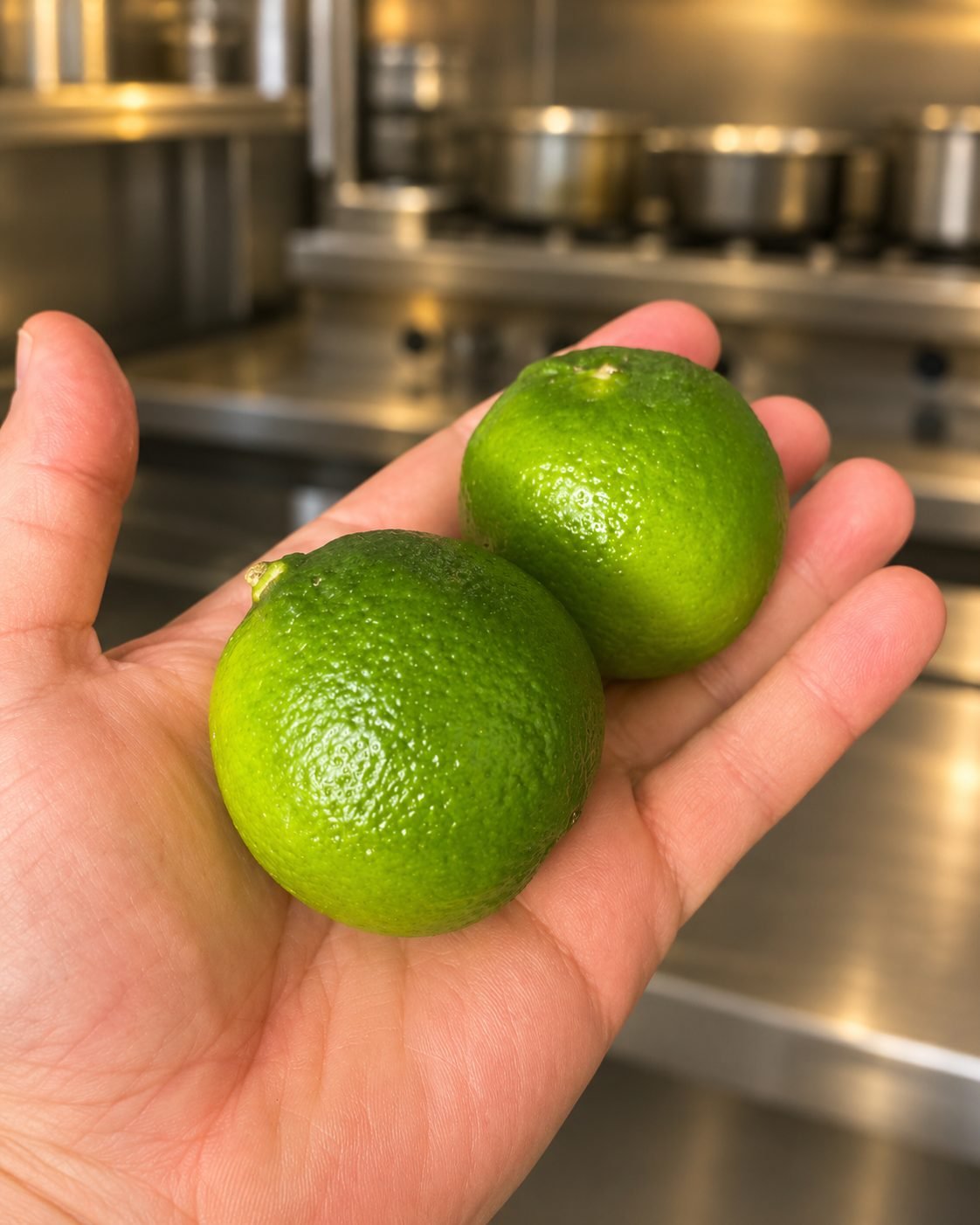
Lime is the sour corner of Thai food. It wakes up dressings, finishes soups and balances salt, sugar and heat. It’s also the easiest thing to get wrong, by adding it too early.
- Tastes like
- Sharp, sour, fragrant
- Find it
- Every supermarket
- Swap
- Lemon, or a little rice vinegar
Why lime matters
Thai cooking balances four things: sweet, salty, sour and spicy. Lime is the main source of sour, alongside tamarind. It’s in nahm jim, nahm yum, som tam, laap, tom yum and almost every dressing on the table.
Thai limes, manao, are small, thin-skinned and very juicy. The ones in UK shops are bigger and a little less fragrant, but they do the same job. My balancing flavour skill covers how lime plays off the other three.
Lime, makrut lime and calamansi
| Citrus | What it is | How to use it |
|---|---|---|
| Lime | The everyday sour | Juice in dressings, soups, salads, dips |
| Makrut lime | Knobbly, almost juiceless | Zest in curry paste. The leaves are the main event |
| Calamansi | Small, round, sour and floral | Squeeze over grilled food and desserts |
They’re not interchangeable. Makrut lime leaves bring perfume, not sourness, and calamansi are softer and more floral than lime.
How to use them
Juice limes just before you need them. The juice loses its edge within hours. Roll a lime firmly on the board before cutting and you’ll get more out of it.
Add lime at the end, off the heat. Cooked lime turns bitter, which is why even sweet chilli sauce gets its lime stirred in once it’s cold. Dressings go flat as they sit too, so taste again just before serving and add a fresh squeeze.
If a recipe wants zest and lime cheeks for the plate, use separate limes. A zested lime turns dry and sorry-looking.
Buying and storing them
Look for heavy, glossy limes that give a little when you squeeze them. Hard, light ones are dry inside. Keep them in the fridge, where they last a couple of weeks, and bring them to room temperature before juicing for more juice.
What to use instead
Lemon at a push, though it’s softer and less sharp. In dressings, a splash of rice vinegar adds sourness when you’re short. For deeper, fruitier sourness in cooked dishes, use tamarind instead. My tamarind water skill shows how.
Quick answers
When should you add lime to Thai food?
At the end, off the heat. Boiled lime turns bitter and loses its freshness.
Why does lime juice taste bitter?
It’s been cooked or left too long. Juice it just before using and add it last.
Are Thai limes different from UK limes?
Thai limes are smaller, thinner-skinned and more fragrant, but UK limes do the same job.
Can I use lemon instead of lime in Thai food?
At a push. It’s softer and less sharp, so you may need a little more.
Is makrut lime the same as lime?
No. Makrut limes have almost no juice. Their leaves and zest are used for perfume, not sourness.
More from the Thai larder
Every ingredient I cook with, explained: what it is, where to find it and what to use instead.
All Thai ingredients, A to ZGet my free Thai Pantry guideSubscribe and new recipes, articles and guides land in your inbox as soon as they go up.

Head chef & founder of Farang London restaurant. Cookbook author of ‘Cook Thai’ & ‘Thai in 7’. Chief curry paste basher and co-founder of Payst London.