
Peanuts in Thai Cooking: Roasting, Crushing and Using Them
Thai Ingredients
In Thai: tua lisong
Crunch, fat and a little sweetness. Peanuts go on pad thai, into som tam, through massaman and satay, and they’re one of the reasons Thai food feels so generous.
- Tastes like
- Toasty, rich, slightly sweet
- Find it
- Asian grocers (raw), supermarkets
- Swap
- Cashews, or toasted seeds if nut-free
What they are
Not actually a nut. Peanuts are a legume that grows underground, and they came from South America, reaching Asia with European traders a few hundred years ago. Thai cooks took to them the same way they took to chillies.
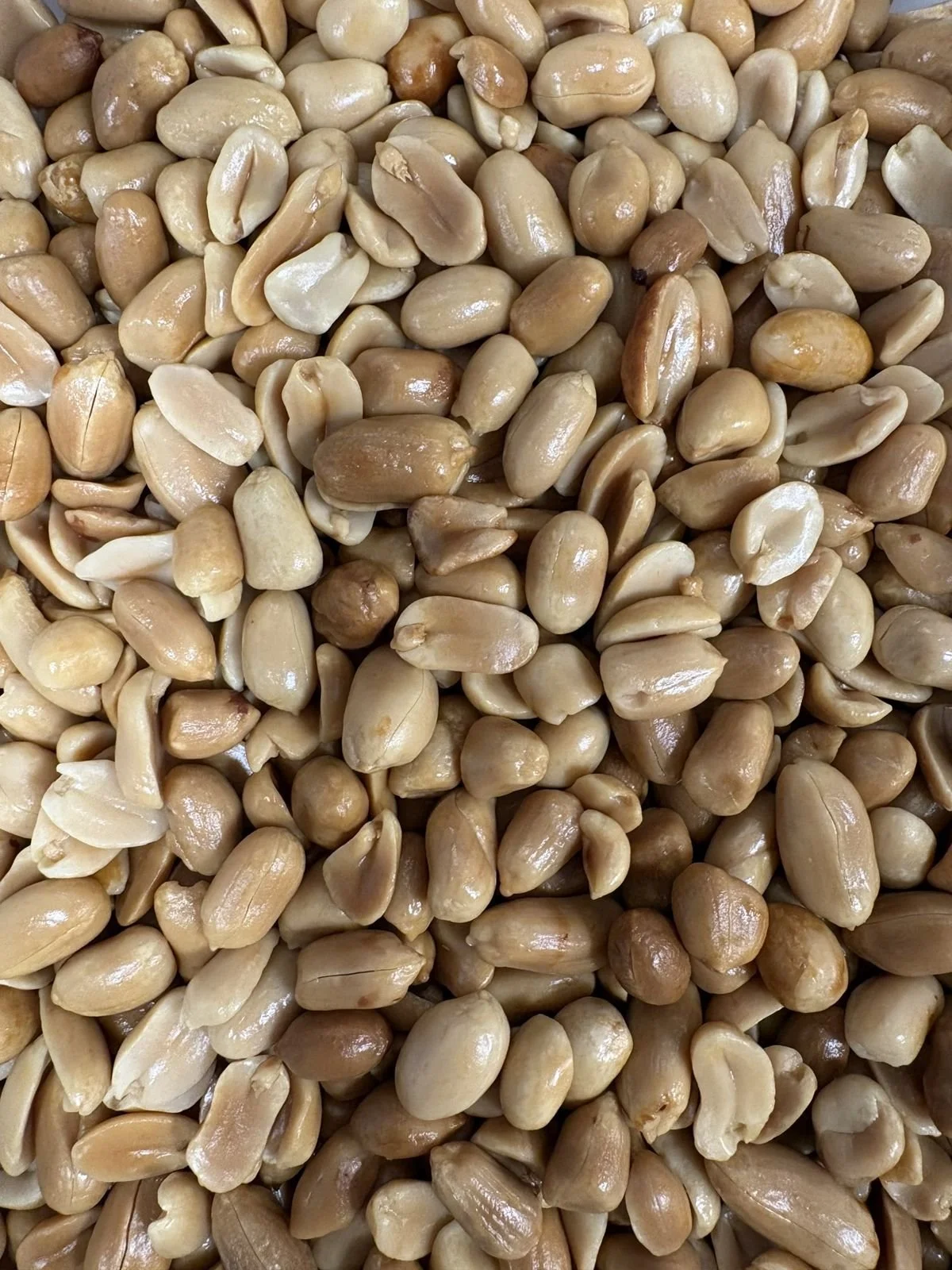
For Thai food you want plain peanuts, not salted bar snacks. Buy them raw, with or without their red skins, and roast them yourself. It takes ten minutes and tastes a lot better than the ready-roasted ones.

How to roast and crush them
Put raw peanuts in a dry frying pan or wok over a medium heat and keep them moving until they’re golden and smell toasty, around five to seven minutes. Tip them onto a tray to cool, then rub off the skins if you want a cleaner look.
To crush, pound them lightly in a pestle and mortar. You want rubble, not powder and definitely not paste. A rolling pin over a bag works too.
Roast a big batch and keep them in a jar. They go on more than you’d think.
How to use them
Scattered on top. Pad thai, som tam, yum salads, rice noodle stir-fries. I always serve pad thai with peanuts on the side, along with lime and chilli, so everyone adds their own.
Pounded into the dish. Som tam gets a few peanuts pounded in with the dressing. See pounding som tam.
Cooked in. Massaman curry often has whole peanuts simmered in the sauce, and satay sauce is built on ground peanuts. Panang curry paste has roasted peanuts pounded straight into it, which thickens it so it clings to whatever it’s cooked with. Read the massaman story for where that comes from.
Where to buy them
Asian supermarkets sell raw peanuts in big bags, skin on or skinless, for very little. Supermarkets sell them in the baking or world food aisle. Avoid salted, honey-roasted or flavoured peanuts for cooking.
Storing them
Nuts go rancid. Keep raw and roasted peanuts in an airtight jar somewhere cool and dark, and use them within a few months. For longer, freeze them. If they smell like old paint, bin them.
What to use instead
Cashews are the easiest swap and very Thai in their own right. They’re tree nuts, though, so they don’t help with a nut allergy. For a nut-free crunch, use toasted sunflower or pumpkin seeds, or crispy fried shallots. My crispy shallots and garlic are a good finish on noodles and salads.
Quick answers
Should I use raw or roasted peanuts for Thai food?
Buy raw and dry-roast them yourself. They taste fresher and you control the colour and salt.
How do you roast peanuts for pad thai?
Toss raw peanuts in a dry pan over a medium heat for five to seven minutes until golden, cool them, then crush them coarsely.
Are peanuts used in authentic pad thai?
Yes, crushed roasted peanuts are a standard pad thai garnish, usually served on the side.
What can I use instead of peanuts in Thai food?
Cashews, or for a nut-free version, toasted sunflower or pumpkin seeds or crispy fried shallots.
Do Thai curries have peanuts?
Massaman often does, and panang paste is often made with peanuts. Most red and green curries don’t.
How long do roasted peanuts keep?
A few months in an airtight jar somewhere cool and dark, longer in the freezer.
Further reading: Simply Suwanee on dry-roasting peanuts.
More from the Thai larder
Every ingredient I cook with, explained: what it is, where to find it and what to use instead.
All Thai ingredients, A to ZGet my free Thai Pantry guideSubscribe and new recipes, articles and guides land in your inbox as soon as they go up.
Head chef & founder of Farang London restaurant. Cookbook author of ‘Cook Thai’ & ‘Thai in 7’. Chief curry paste basher and co-founder of Payst London.