
Massaman Curry: The Best Dish in the World, According to a Laminated Sign
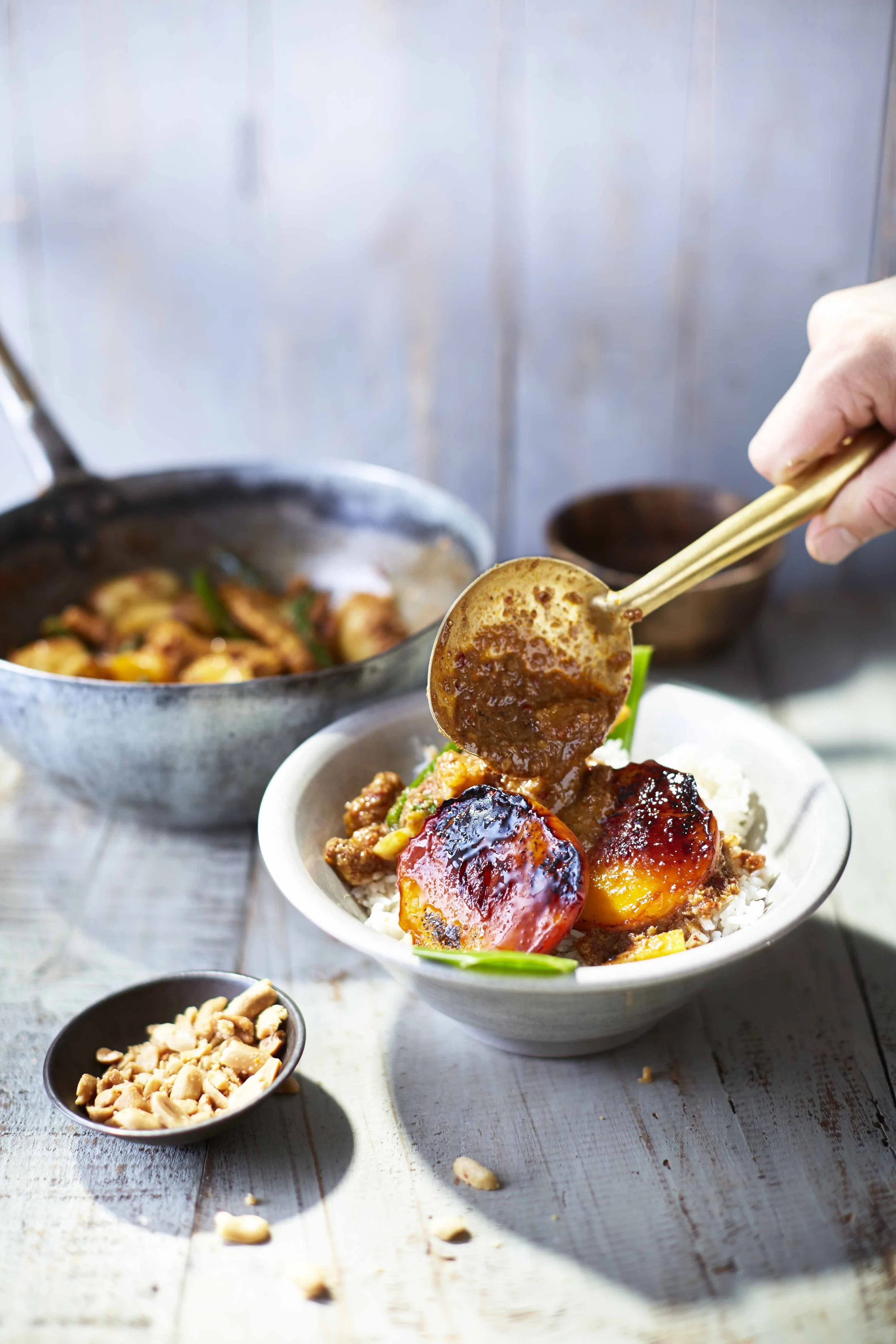
Walk down any tourist strip in Thailand for long enough and a laminated sign will tell you that massaman is the number one dish in the world. Not the best on the street. Not the best in Phuket. The world. It sounds like patter from a bloke selling knock-off Ray-Bans on the beach, except this one comes with paperwork. CNN Travel put massaman at the top of its World’s Best Foods list in 2011 and it was still sitting there when the list was updated in 2020. Even the Michelin Guide admits it’s easy to sneer at those signs, then spends a whole article conceding the curry might have a point.
Back home, massaman has a different reputation. It’s the curry for people who tell you they don’t really do spicy. The one that gets ordered for the table so nobody’s nan has a bad night. It lives in a jar on the supermarket shelf, two along from the korma, and most people in this country have never eaten a proper one.
Both reputations are true, and the gap between them is where it gets interesting. The dish has Persian traders in its past and a royal love poem to its name. Over here it mostly gets cooked in twenty minutes. That’s the problem.
The name is the first clue. According to the Michelin Guide, massaman almost certainly comes from musulman, an old word for Muslim, so whether the curry was invented inside the Muslim communities who loved it or simply brought to them, it ended up named after them. In Thailand you’ll see it written gaeng massaman. Gaeng means curry. You’re ordering, more or less, the Muslim curry.
It doesn’t behave like the Thai curries most people know. A green curry is fresh chilli and fresh herbs, made fast and eaten straight away. Massaman is slow, mellow and dark, and its paste leans on dried spice you’d expect in an Indian kitchen or a Middle Eastern market: mace, nutmeg, cloves, cassia, bay. What makes it Thai is what those spices get pounded with. Lemongrass, galangal, makrut lime peel, shrimp paste. The result tastes like a Christmas cake fell into a curry pot and nobody wanted to fish it out. The Michelin Guide’s Andrew Fowler puts it better than I can: massaman may be Thai, but “its passport is well stamped”.
Nobody knows exactly where massaman was born, and anyone who tells you otherwise is probably selling a jar of something. Siam sat on trade routes between east and west for thousands of years, and archaeologists have dug up Mediterranean and Chinese goods there to prove it. Spices travelled with the trinkets. The arguments are over the details, and National Geographic’s account of them, which most of what follows draws on, is worth reading in full. There are a few camps worth knowing.
The first puts it at court. David Thompson, who has spent decades studying Thai food, writes in his book Thai Food that this style of curry is believed to have arrived with the first Persian envoy to the court of Ayutthaya, Sheikh Ahmad. Between 1656 and 1688 Persian Shia Muslims were allowed to live inside Ayutthaya’s walls and swap ideas with the city’s elite, and Sheikh Ahmad’s descendants, the Bunnag family, became one of Thailand’s great noble dynasties. Their funeral books, little memorial booklets that often carry a favourite recipe, are treated as a vital record of Thai cooking. Thompson owns more than 500 of them. That’s either scholarship or a problem, possibly both.
The second camp heads south. Saiphin Moore argues that traders from India and Persia stopped at southern Thai ports on their way to China through the Malacca Straits, and that because the curry landed among a big Muslim community, it has always been made with beef or chicken. Bee Satongun points to how tightly southern Thailand and northern Malaysia were bound together back then, with influence flowing both ways over the border. Plenty of scholars, the Michelin Guide notes, favour the Thai-Malay borderlands of the Andaman coast as the birthplace.
The third says Bangkok. Migrants from Persia, India and what’s now Pakistan also settled on the plains around the future capital, including Leela Punyaratabandhu’s Hindu Brahmin ancestors, and her view is that massaman is more Bangkokian than southern or Muslim.
What isn’t in dispute is the poem. By the turn of the 19th century massaman was well known in the royal household, and a stanza of Kap He Chom Khrueang Khao Wan, written at the court of King Rama II, is devoted to it. It praises the fragrance and flavour of the massaman cooked by Princess Bunrot, who later became his queen. Every food writer quotes it and I’m no better. Forget flowers. If you want to win someone over, write a poem about their curry.
The first written Thai recipe turns up in 1889, from Lady Plean Passakornrawong, and it’s a chicken massaman soured with bitter oranges rather than tamarind or pineapple. Lime, garlic, galangal and fish sauce, all standard in modern versions, rarely appear in those early recipes, according to the Michelin Guide. Even the chilli is an immigrant. It came from the Americas with Portuguese traders, who first reached Siam in 1511. The most Thai-sounding thing in the pot needed a visa.
This is where it goes wrong. People treat massaman like a midweek curry. Diced lean beef, a dollop of paste, a tin of coconut milk, twenty minutes on the hob. What comes out is brown, sweet and forgettable, and then everyone wonders why CNN keeps calling it the best dish on earth.
Massaman needs time and it needs the right meat. Leela Punyaratabandhu calls it “a curry you make when you have time to babysit it” and is clear it isn’t a 30-minute job. She wants tough, collagen-rich cuts of beef, or chicken thighs and legs, because the sinew and fatty skin melting into the sauce is where the richness comes from. Stop buying lean braising steak for it. Fillet in a massaman is a racehorse entered in a ploughing match.
The paste matters as much as the meat. The dry spices and aromatics are toasted before they’re ground, then the paste is fried in cracked coconut cream, which means thick cream cooked hard in a hot pan until it splits, the water’s gone and you’re frying in coconut fat. The meat is seared on its own and braised low and slow in coconut milk, and only then do the two come together. Palm sugar and tamarind go in at the end, with a dash of fish sauce if you like. Frying the paste in that split fat is what wakes the cassia and clove up. Skip it and the spices sit in the sauce like strangers at a wedding.
Two more things. National Geographic flags a common mistake outside Thailand: reaching for lime juice or even vinegar instead of tamarind. Tamarind is soft and fruity and sits under the richness. Lime picks a fight with it. And make it the day before, because massaman is at its best the day after it’s cooked. My gaeng gatti beef cheek curry is built on the same kind of patience with a different paste.
For a dish that’s travelled this far, massaman is surprisingly set in its ways. Punyaratabandhu points out that cooks rarely depart from the standard version and diners don’t expect them to. The versions that do exist mostly come down to two questions. Which meat? And what makes it sour?
Beef is the one most of us picture and, alongside chicken, the Michelin Guide counts it the standard. The cut does the work: shin, short rib, cheek, anything with enough connective tissue to survive a long braise. John Chantarasak’s recipe for National Geographic uses short rib on the bone with Jersey Royals, and at one Michelin-recommended Bangkok kitchen you can order it with beef tongue, not that strange when you consider how much tongue gets eaten in Thai Muslim cooking.
Chicken has the oldest paper trail. Lady Plean’s 1889 recipe is a chicken massaman, and the same Bangkok kitchen calls chicken the classic. Thighs and legs on the bone. Never breast.
Goat is probably the ancestor. Tanaporn Markawat, a Bangkok chef interviewed by the Michelin Guide, says massaman used to be made with goat and now isn’t. Hold that thought, because it matters when we get to British lamb.
Duck turns up as an alternative too. Its fat and its tolerance for a long braise make it a natural fit, which is why it’s the version I’ve put on this site. More on that below.
Then there’s the sour. Bee Satongun’s mum never put potatoes in hers and used pineapple instead, and some cooks finish the curry with tart pineapple juice in place of tamarind. Go back far enough and it’s bitter orange. Lady Plean used it in 1889, and Markawat still keeps bitter orange peel in his massaman alongside cinnamon, bay and mace to hold on to what he calls the original flavour.
Round the edges there are a few more. Fish massaman exists, if rarely. Sweet potato is turning up in place of potato more and more, according to Chantarasak, who has also eaten a version in Thailand made with daikon. Vegetarian and vegan versions are out there, though the dish has always been about meat. Pork is rare, for obvious reasons, and one Bangkok kitchen stuffs the curry into dumplings. And a chef in Copenhagen once deconstructed it entirely, braising beef cheek in the seasoned stock, blending the liquor into something close to a French sauce and serving it with potatoes confited in duck fat. It was controversial. Diners loved it.
Is it regional? Not in the way laap or khao soi are. The real split with massaman isn’t north and south. It’s community and court.
In the south it sits within Thai Muslim and southern Thai cooking, along the Andaman coast that many scholars think gave birth to it, and that’s where you’re likeliest to see it eaten with roti rather than rice. One Phuket roti shop has been serving Thai Muslim breakfasts for more than 35 years and picked up a Bib Gourmand in the 2026 Michelin Guide Thailand for crisp roti and tangy beef massaman. Curry for breakfast. Someone tell Greggs.
Bangkok is the aristocratic version. This is the massaman of royal poems and recipes written down by courtiers’ wives. Here’s the twist though. For all the fame, the Michelin Guide reports that massaman is far from the most common curry at Bangkok’s rice and curry shops and often seems more loved by foreigners than by Thais, because the chilli heat is so gentle. Plenty of the best-known versions get served in what the guide calls regrettable tourist restaurants. The number one dish in the world, mostly eaten by people with sunburn.
Why the differences? Follow the people. Where the dish grew up in Muslim communities, the meat is beef, chicken or goat and pork barely features. Where Thai and Malay cultures overlap in the south, roti is on the table. At court it got written down, in poems and recipe books, which is how something close to today’s massaman had become the norm by the late 19th century.
In Thailand it’s home cooking at heart, made slowly and eaten the next day. Most of the time it goes with rice, hot from the basket if you’re lucky, sometimes with a plate of stir-fried cabbage alongside. In the south, roti does the mopping. If you’ve never made roti, my banana roti is the sweet cousin and a decent place to practise.
What it always wants is something sharp. Some cooks serve it with achat, a sweet and sour relish of pickled vegetables. That isn’t decoration. A curry this rich needs something cold and acidic to cut it, the same way a pork pie needs piccalilli. My braised beef cheek curry with ginger and cucumber pickle works on the same logic.
Strip massaman back and it’s a set of rules more than a recipe. Get the rules right and you can swap almost everything else. Start with a cut that needs time, something with bone, collagen and sinew that goes from tough to yielding over a few hours in liquid. Toast warm dried spice and pound it with Thai aromatics. Fry that paste in fat, either cracked coconut cream or the fat rendered from the meat itself, which is how Chantarasak does it. Finish with sugar, salt and a rounded, fruity sourness. Give it something starchy to drink up the sauce, put something crunchy in it and something sharp next to it.
Read that back and tell me it isn’t a description of British winter cooking. We are a nation of braisers. So here’s how I’d apply each rule to what grows and grazes here. These are ideas, not tested recipes.
Meat first. Ox cheek and beef shin are the obvious swaps for chuck. If massaman was once made with goat, then mutton or hogget shoulder isn’t a twist, it’s a homecoming. Venison neck in autumn would carry the warm spice beautifully.
The sour is where it gets interesting. Lady Plean soured her massaman with bitter oranges in 1889, and every January we get a few short weeks of Seville oranges, a bitter orange most people only ever meet in marmalade. A Seville orange massaman would be about as close to the oldest written recipe as you could get with a British shopping basket. In summer, gooseberries or rhubarb could stand in for tamarind, used carefully so they season the sauce rather than take it over.
For the starch, waxy potatoes like Charlotte or Anya do in winter what Jersey Royals do in spring. Daikon has a precedent in Thailand, so swede, turnip and celeriac have a fair claim to the pot here. Swap the peanuts for Kent cobnuts in late summer or toasted hazelnuts once the weather turns. And for the pickle, quick-pickled cucumber and shallot is the obvious move, but sharp pickled red cabbage would cut through a January massaman just as well.
My own version is already on this site. Duck legs sit overnight in dark soy, get fried hard, then braise in massaman until the meat lets go of the bone. Roasted pineapple takes the job Bee Satongun’s mum gave it, sultanas push the sweetness, and salt roasted potatoes do the starch with a crust a boiled spud never gets.
What I love about massaman is how badly it fits the authenticity argument. People get very precious about proper Thai food, and the dish crowned the best in the world is a Persian idea with Indian spice and Malay neighbours, heated with chillies from South America and pulled together by Siamese cooks. John Chantarasak told National Geographic that food evolves and doesn’t stand still, and that a dish moves forward once cooks start using local ingredients somewhere new. Thailand worked that out four hundred years ago.
Farang means foreigner, we cook for flavour not authenticity. If you want to taste what that looks like with British produce, come and see us at Farang on Highbury Park. If you’d rather cook at home, our pastes and sauces are at Payst.
Want the next one straight to your inbox? Sign up here for new recipes and articles as they land, and you’ll get my free Thai Pantry guide as a bonus.
Next time we head north for gaeng hung lay. After a whole article about a curry that avoids pork, that one is barely anything else.
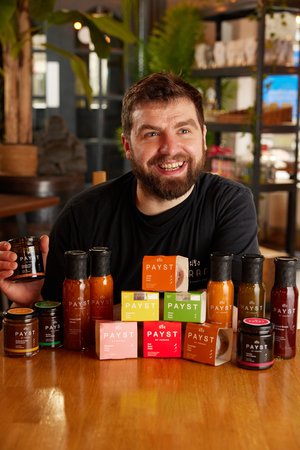
Head chef & founder of Farang London restaurant. Cookbook author of ‘Cook Thai’ & ‘Thai in 7’. Chief curry paste basher and co-founder of Payst London.