
Banana Roti with Condensed Milk & Cassia Bark Sugar
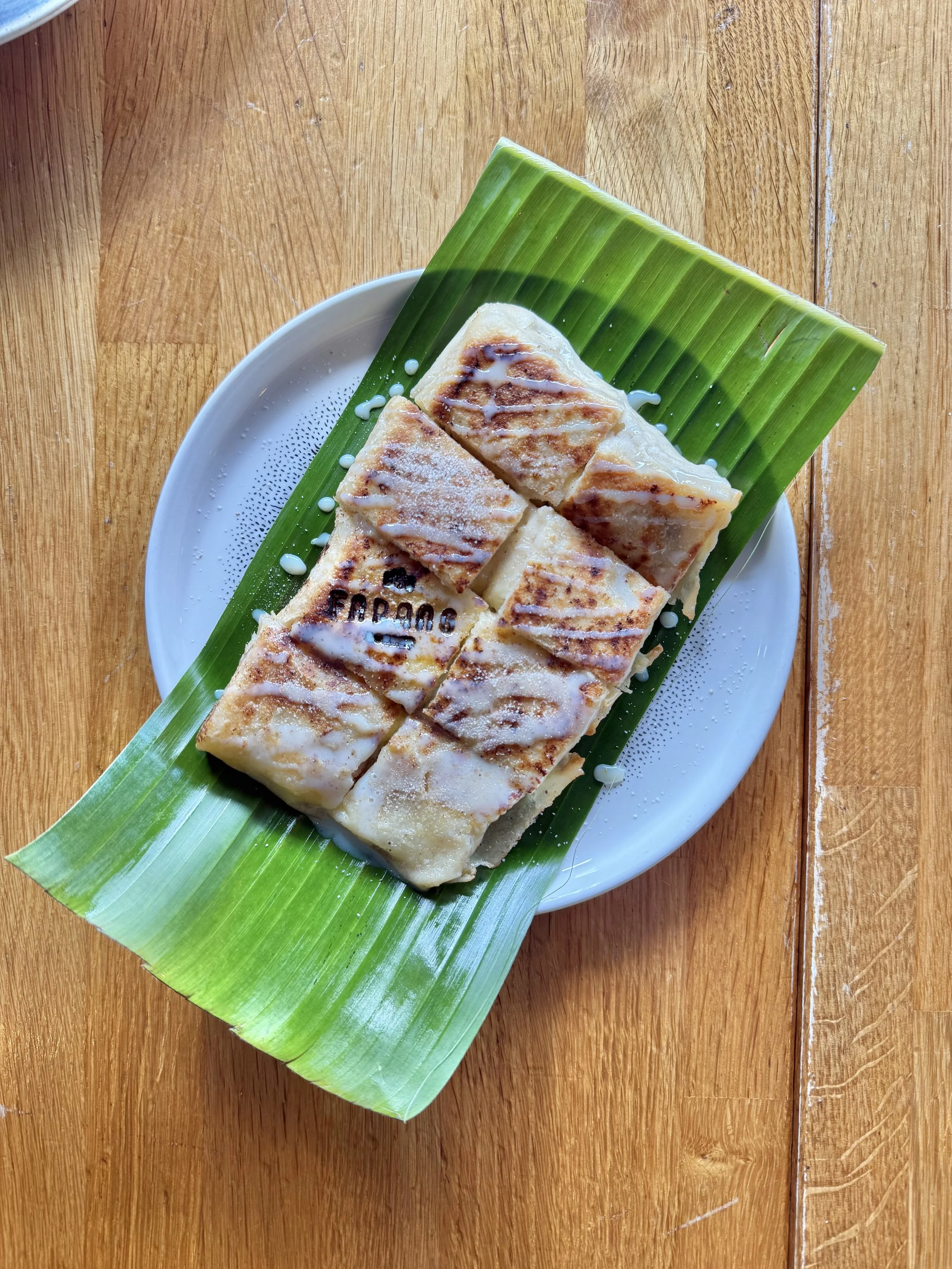
You don't decide to eat a banana roti in Thailand. You just smell one and it's over. That hit of caramelised sugar and banana gets into your nostrils like blood to a hound. You're already walking towards it before your brain has caught up. It happens every time we're in Bangkok. Someone smells it, nobody says anything, and suddenly we're all standing around a street cart with sticky fingers.
I first learned to make this properly at The Begging Bowl in Peckham, where I started out as a Thai chef. It's a proper ball ache to make during service. The countertop ends up covered in oil, it's messy, it moves fast, but the payoff is worth every bit of it. On the street stalls in Thailand you'll see them made with all kinds of fillings. Nutella, ham and cheese, just plain with sugar. At Farang we do a smoked bacon and burnt chilli sauce version for staff food on the regular, which is genuinely one of the best things we eat all week.
The cassia bark sugar is my own addition. You could use ready-ground cinnamon and it would be fine, but if you toast whole cassia bark and grind it yourself in a spice grinder or pestle and mortar, the difference is significant. Toasting your own whole spices before grinding is always the right move for maximum flavour. It takes two minutes and it's worth it every time.
This one's on the Farang set lunch menu too. If you're in the area on a weekday, come in.
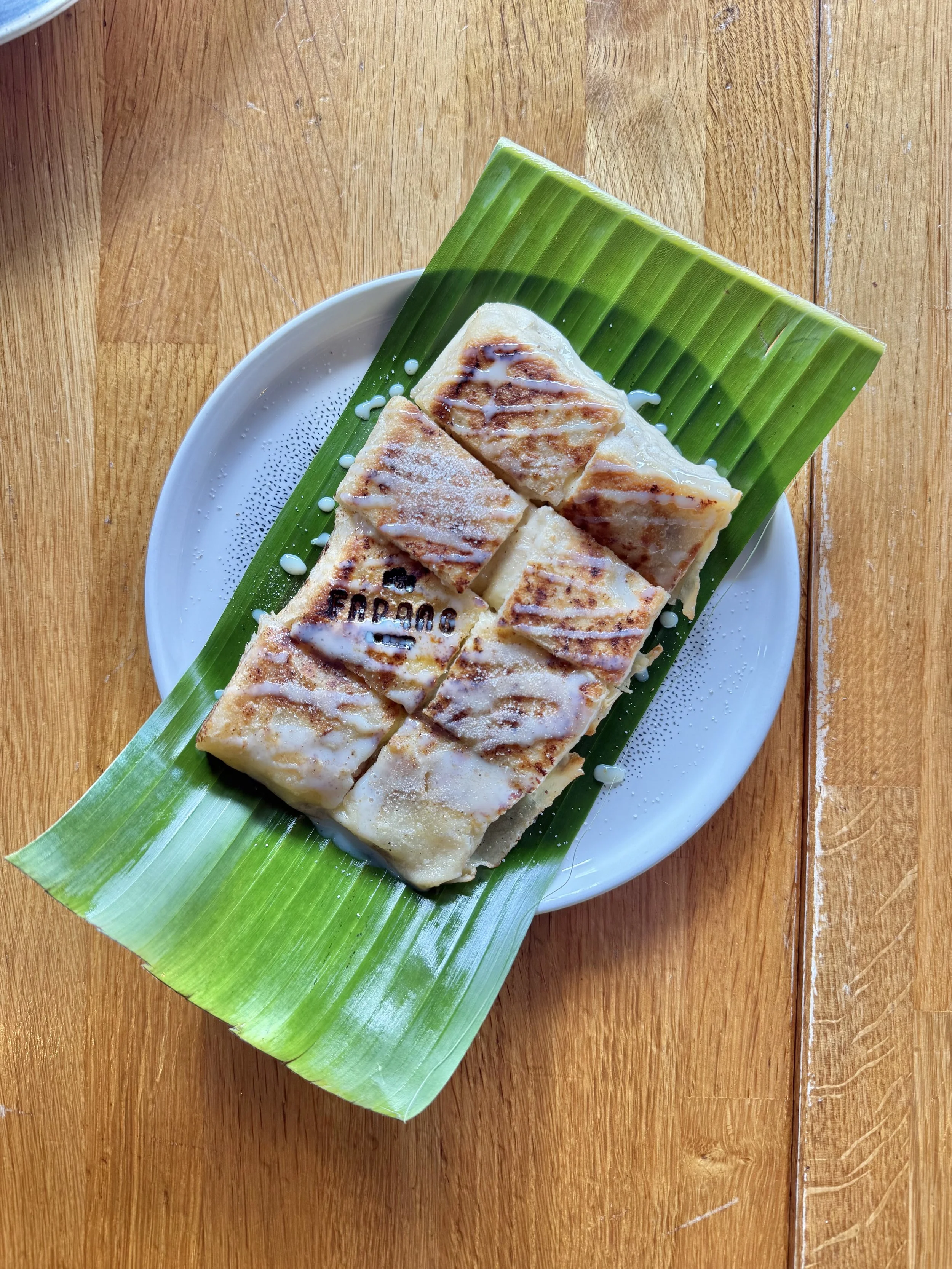
Banana Roti with Condensed Milk and Cassia Bark Sugar
Serves: 4 | Prep: 20 mins, plus 1 hour resting | Cook: 10 mins | Total: 1 hr 30 mins
Ingredients
For the roti dough
300g plain flour, plus extra for dusting
1 tsp caster sugar
1/2 tsp fine salt
180ml warm water
2 tbsp vegetable oil, plus extra for resting
1 egg, beaten
For cooking and filling
80g clarified butter (unsalted butter works too)
2 ripe bananas, sliced into rounds
4 tbsp condensed milk
For the cassia bark sugar
3 tbsp caster sugar
1 tsp cassia bark, toasted and ground (sold as cinnamon in most supermarkets; look for the darker, thicker quill if buying whole)
Method
Combine the flour, sugar and salt in a large bowl. Add the beaten egg, warm water and oil and bring together into a rough dough. Knead on a lightly floured surface for 8-10 minutes until smooth and elastic. Divide into 4 balls, rub each with a little oil, cover and rest for at least 1 hour at room temperature. This rest matters. It relaxes the gluten so the dough stretches without fighting you.
Toast the cassia bark in a dry pan for a minute or two until fragrant, then grind to a powder in a spice grinder or pestle and mortar. Mix with the caster sugar and set aside.
On a lightly oiled surface, press a dough ball flat with your palm then stretch it outward with your fingertips, working in a circular motion, until it's almost translucent, around 25-30cm across. If it tears a little just press it back together.
Heat a large heavy pan or flat griddle over medium-high heat. Add a good tablespoon of clarified butter and let it settle. Lay the roti in and cook for around 90 seconds until golden and blistering on the underside, then flip.
Immediately lay the banana slices across one half and fold the other half over to encase them. Press down gently. Cook for another 30-45 seconds, then flip once more for 20 seconds. You want the outside deeply golden with caramelised edges.
Transfer to a board and cut into squares. We do a 3×3 grid at Farang. Drizzle condensed milk generously over the top and dust straight away with the cassia bark sugar. Serve on a banana leaf if you can get hold of one. Eat immediately.
Chef's notes
Clarified butter gives you a cleaner caramelisation and a higher smoke point than regular butter. Worth making if you have time: melt butter slowly, skim the foam, pour off the clear fat. But unsalted butter straight from the packet works fine too.
The banana should be ripe but still holding its shape. Over-ripe turns to mush in the pan. Still delicious, just harder to plate.
The dough balls will keep in the fridge for up to 24 hours. Bring back to room temperature before stretching. Cook and eat the roti fresh. It does not wait.
Visit us at faranglondon.co.uk. Sauces and pastes for cooking Thai at home at payst.co.uk.
For more recipes, signed copies of my cookbooks are available at Payst: Cook Thai and Thai in 7.
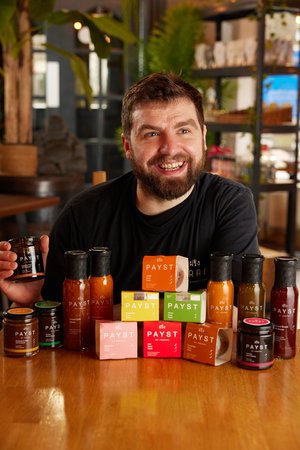
Head chef & founder of Farang London restaurant. Cookbook author of ‘Cook Thai’ & ‘Thai in 7’. Chief curry paste basher and co-founder of Payst London.