
Thai Dark Soy Sauce: What It Is and How It Differs From Light and Sweet Soy
Thai Ingredients
In Thai: see ew dam
Dark soy is for colour, not salt. A splash turns noodles glossy brown and gives braises their mahogany look. Use it like light soy and you’ll know about it.
- Tastes like
- Rich, malty, slightly sweet
- Find it
- Asian grocers
- Swap
- Chinese dark soy, a little less
What it is
A thick, nearly black soy sauce, darkened and sweetened with molasses or caramel. Thai dark soy, see ew dam, is slightly sweet and not very salty. Its job is colour and a rich, malty depth. Saltiness comes from light soy and fish sauce.
In the UK, the dark soy you’ll find most easily is Chinese. It does the same job but it’s saltier, so use a little less and ease off the other salty seasonings.

Light, dark, sweet: which is which
| Soy | Thai name | What it does |
|---|---|---|
| Light soy | see ew khao | Main salty seasoning |
| Thai dark soy | see ew dam | Colour, slight sweetness |
| Chinese dark soy | Colour, saltier | |
| Sweet soy | see ew wan | Sweet, syrupy glaze |
| Kecap manis | Indonesian sweet soy, thick and sugary |
Thai labels can be confusing, and brands use different colours for different sauces. Read the English on the label, not the colour of the cap.

How to use it
Noodles. Pad see ew gets its colour from dark soy, added to the wok with the noodles so it can catch and caramelise. A teaspoon or two per portion is plenty.
Braises. Slow-cooked pork, like Thai five-spice pork belly or pork leg, uses dark soy for that deep brown colour. My muu parlow pork shank is a good example.
Stir-fries and dipping sauces. A few drops for colour. Add it near the end, as it can catch and burn in a very hot wok.
Where to buy it
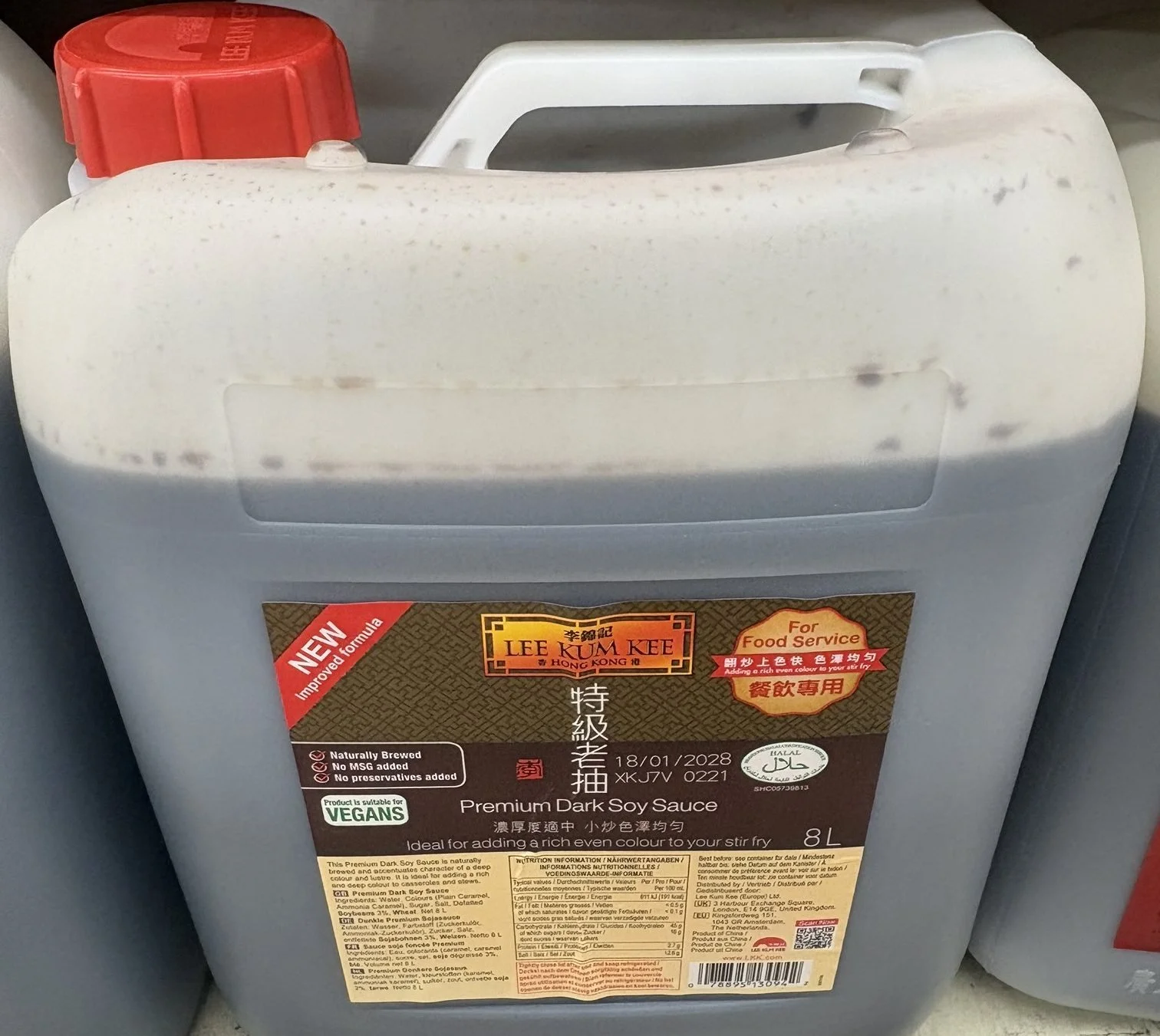
Asian supermarkets sell Chinese dark soy everywhere, from small bottles to catering sizes. Thai dark soy is harder to find. Look for Thai brands labelled ‘black soy sauce’ or ‘dark soy sauce’ in the Thai section, and read the label carefully.

Storing it
In the cupboard, cap on. It keeps for a long time thanks to the salt and sugar. Keep it in the fridge once opened if you use it slowly and it’ll stay fresher.
What to use instead
Chinese dark soy, using a little less. In a pinch, light soy with a pinch of sugar or a little molasses gets you close on flavour, though not on colour. Don’t use sweet soy or kecap manis unless you want it sweet. Most soy sauces are brewed with wheat, so if you’re gluten-free, check the label and use tamari or a gluten-free soy instead.
Quick answers
What is the difference between light and dark soy sauce?
Light soy is thin and salty, used for seasoning. Dark soy is thick and dark, used mostly for colour and a little sweetness.
Is Thai dark soy the same as Chinese dark soy?
They do the same job, but Thai dark soy is sweeter and less salty. Use a little less Chinese dark soy.
Is dark soy sauce the same as sweet soy sauce?
No. Sweet soy and kecap manis are much sweeter and thicker. They’re glazes, not colourings.
What is dark soy sauce used for in Thai food?
Colour and depth in noodles like pad see ew, braised pork, stir-fries and some dipping sauces.
What can I use instead of dark soy sauce?
Chinese dark soy. At a push, light soy with a little sugar or molasses.
Is dark soy sauce gluten-free?
Usually not, as most soy sauces are brewed with wheat. Check the label.
Further reading: Hot Thai Kitchen’s soy sauce guide, The Woks of Life on Thai soy sauces.
More from the Thai larder
Every ingredient I cook with, explained: what it is, where to find it and what to use instead.
All Thai ingredients, A to ZGet my free Thai Pantry guideSubscribe and new recipes, articles and guides land in your inbox as soon as they go up.

Head chef & founder of Farang London restaurant. Cookbook author of ‘Cook Thai’ & ‘Thai in 7’. Chief curry paste basher and co-founder of Payst London.