
Southern Style Marinated Whole Chicken Satay
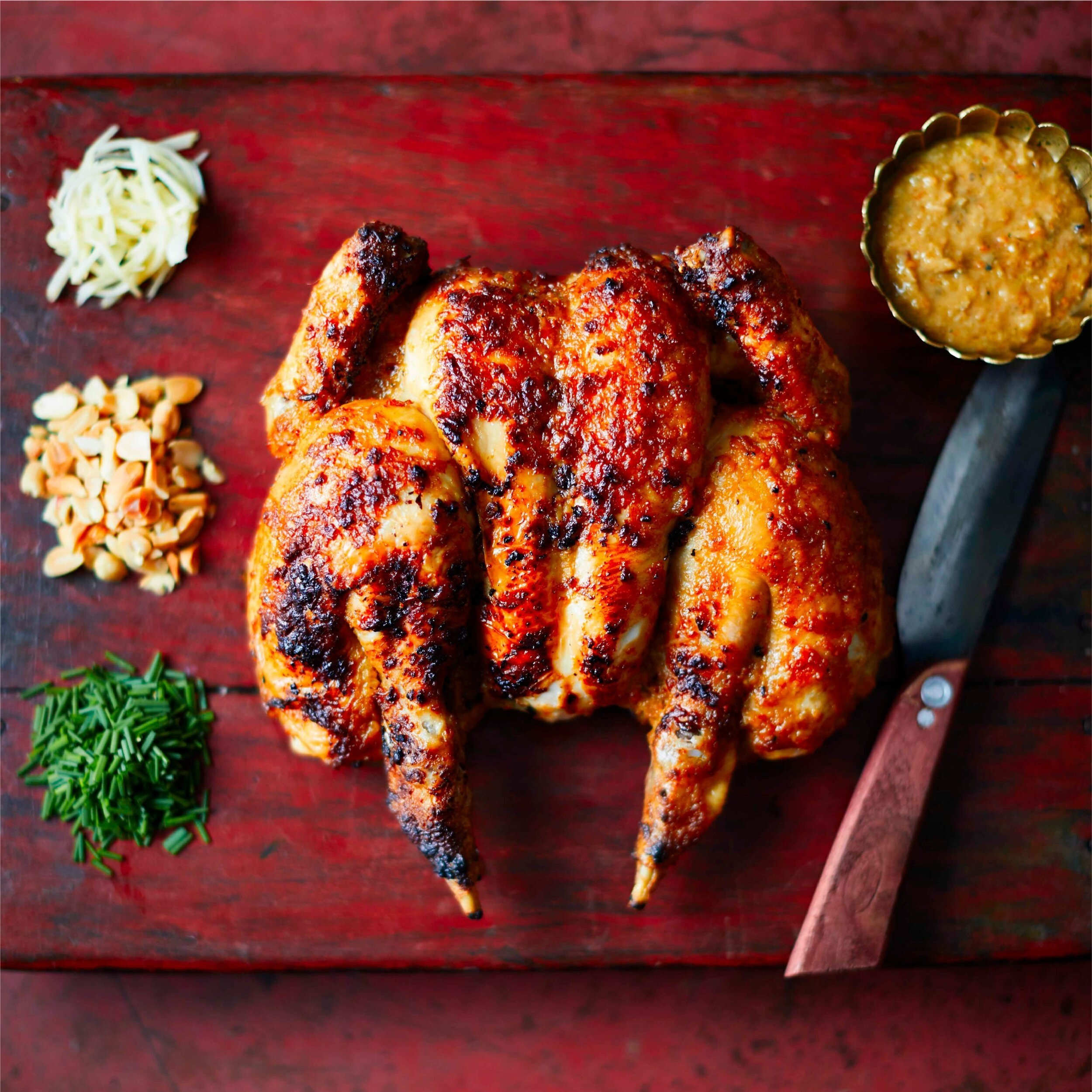
When most people hear satay they picture those little chicken skewers at the front of a Thai menu, served with a sweet peanut dipping sauce. That's a version of it, but it's the version that got simplified somewhere along the way. A proper satay paste is a curry paste. Its purpose is to be cooked in oil, seasoned, mixed into coconut cream and then used to marinate meat before it goes over a flame. It has a completely different job to a sauce.
Southern Thai satay is built on dried red chilli and ginger rather than turmeric, which gives it more depth and less of the mild, golden colour most people associate with the dish. It's also one of the milder things I cook. Half a lifetime behind the woks has given me a real taste for heat, but this is the one I reach for when I'm cooking for my wife or anyone who doesn't share that tolerance. That's not a compromise. The complexity is all there, the fire just isn't the main event.
The smoke is. This paste on a whole bird over good coals is one of the best things I do at home. The marinade charring on the skin, the peanut and coconut caramelising as the fat renders, the paste taking on that smokiness it was always meant to have. You can roast this in the oven and it's genuinely great. But if the BBQ is an option, use it.
The paste makes more than you need for one bird. Use what's left as you would a red curry paste, frying it out in oil with stock and coconut cream. It makes a brilliant satay curry. Or freeze it and start again next time in a fraction of the work.
Southern Style Marinated Whole Chicken Satay
Serves: 4 | Prep: 30 mins (plus overnight marinating) | Cook: 50 mins
Ingredients
For the satay paste
8 large dried red chillies, halved, soaked in warm water until soft, drained and de-seeded
6 banana shallots, peeled
5 garlic cloves, peeled
40g fresh ginger, peeled
80g desiccated coconut
80g roasted peanuts
Large pinch of coarse salt
6 tablespoons vegetable oil
2 tablespoons palm sugar
2 tablespoons fish sauce
500ml coconut cream
For the chicken
1 whole large chicken, around 1.5kg, corn-fed and free-range
Subscribe to get new recipes and articles straight to your inbox as soon as they go up - plus my free Thai Pantry guide when you sign up. Get it here.
Method
Make the paste. In a large pestle and mortar, pound each ingredient individually until it breaks down before adding the next. Work through the soaked chillies, ginger, garlic and shallots first, then add the peanuts and pound until they're well broken down, then the desiccated coconut. Use the coarse salt as an abrasive to help everything along. Combine everything into one unified paste. This takes time and effort. It's worth it.
Heat the vegetable oil in a large, heavy pan over a high heat. Add the paste and fry it hard, scraping constantly with a metal spoon to stop it catching. Keep frying for 15 to 20 minutes until the paste darkens significantly and the smell deepens and sweetens. Add the palm sugar, reduce the heat and stir until the sugar caramelises and the paste darkens further. Add the fish sauce and stir to deglaze. Remove from the heat and stir in the coconut cream. Leave to cool completely.
Cover the chicken thoroughly in the cooled paste, getting it under the skin and into the cavity as well as all over the outside. Marinate for at least 2 hours in the fridge, overnight if possible. The longer it sits, the better.
To roast: preheat the oven to 200°C. Place the chicken skin-side up in a roasting tray and cover with foil. Roast on the middle shelf for 40 to 45 minutes, then remove the foil for the last 10 minutes to char and caramelise the skin. Check it's cooked by cutting into the thigh at the bone. No pink, no blood. A temperature probe should read 75°C at the thickest point. Rest for 5 minutes before carving.
To BBQ: get the coals to a medium heat with white ash forming. Grill the chicken over indirect heat with the lid closed, turning occasionally, until cooked through and the skin is deeply charred and caramelised. The same temperature check applies. Rest before carving.
Serve with steamed jasmine rice and carve at the table.
Chef's notes
If you're BBQ-ing and you happen to make your own coconut cream at home, keep the husks. Wet them and throw a small amount onto the hot coals while the chicken is cooking. The burning husk gives off a coconut smoke that works particularly well with this paste. It's a small thing but it's a good one.
On the BBQ, if you're nervous about a whole bird cooking evenly, spatchcock it first. Remove the backbone with scissors, press the bird flat and grill. It reduces the cooking time significantly and gives you more surface area for the paste to char.
Any leftover paste will keep in the fridge for up to a week or can be frozen. Use it exactly as you'd use a red curry paste, frying it out in oil before adding stock and coconut cream for a satay curry. It's a brilliant base.
This recipe also appeared in The Independent and The Evening Standard.
If you want more of this, subscribe. New recipes and articles straight to your inbox, and my free Thai Pantry guide to get you started. Sign up here.
Visit us at faranglondon.co.uk. Sauces and pastes for cooking Thai at home at payst.co.uk.
For more recipes, signed copies of my cookbooks are available at Payst: Cook Thai and Thai in 7.
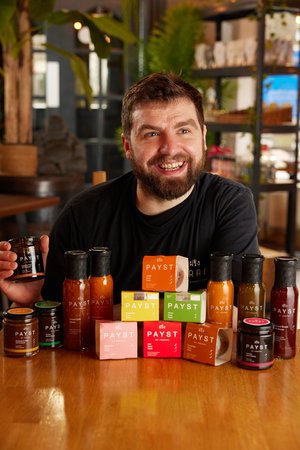
Head chef & founder of Farang London restaurant. Cookbook author of ‘Cook Thai’ & ‘Thai in 7’. Chief curry paste basher and co-founder of Payst London.