
Curried Pork & Prawn Toast
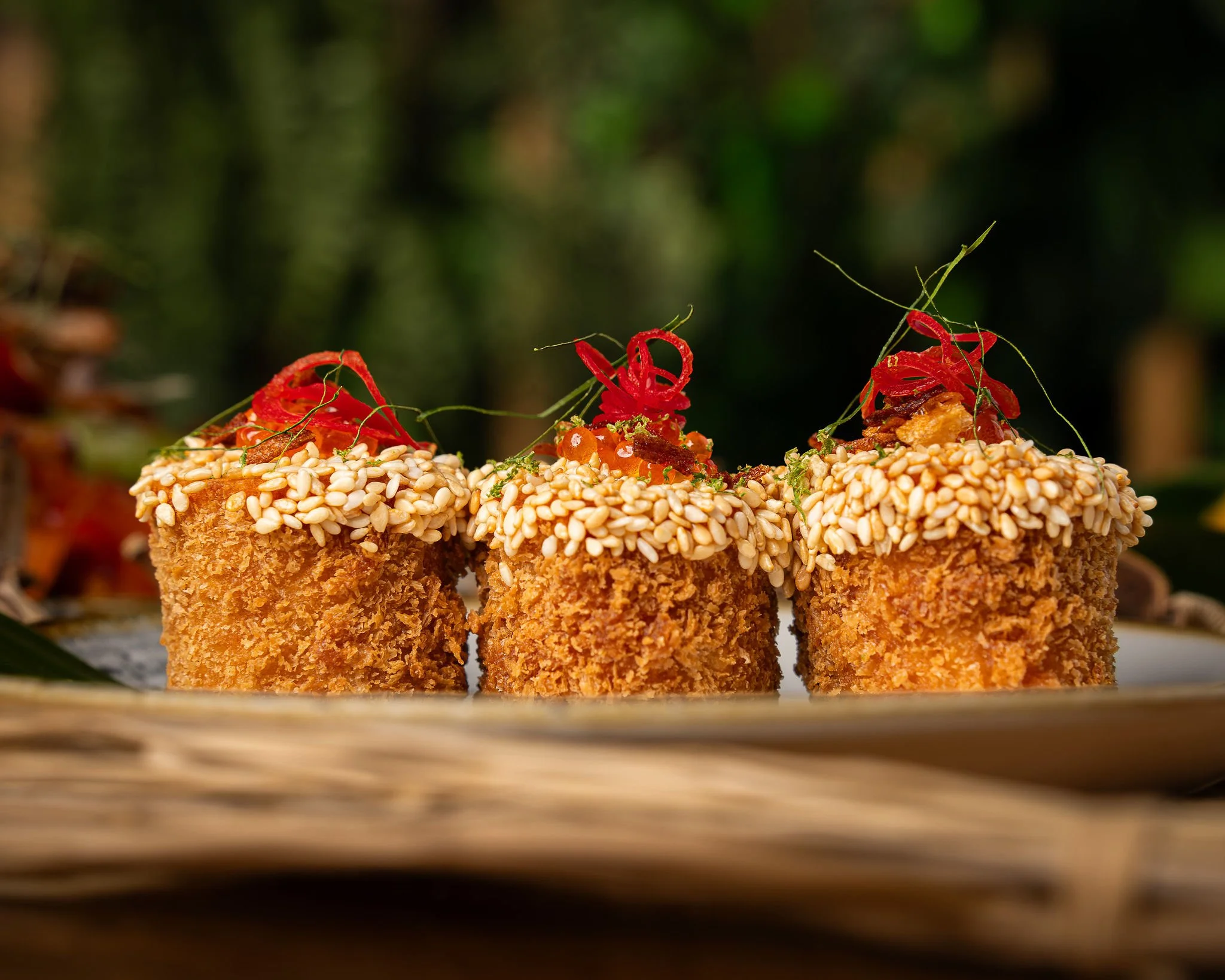
I was eating prawn toast out of a greasy takeaway bag years before I’d set foot in a professional kitchen, and like most people in Britain I filed it firmly under Chinese. Then I came across khanom pang na kung, Thailand’s own version, and realised Thai cooks had been frying minced prawn onto bread all along, usually with a sharp little cucumber relish on the side to cut through the oil.
At Farang we cook for flavour, not authenticity, and this is what happens when you let a chef loose on a takeaway classic. Fatty pork belly goes in with the prawns for sweetness and richness, and red curry paste goes straight into the filling. That way the warmth of dried chilli, lemongrass and galangal runs right through every bite instead of sitting on top. I use the paste we make at Payst, and if you want to know why a good paste changes everything, I’ve written about mastering Thai curry pastes.
Instead of spreading it on triangles, I roll the filling up in flattened bread like a tiny sausage roll. Then I slice it into rounds and crust the lot in sesame and panko. It’s a bit of a faff to build. It is no faff at all to eat.
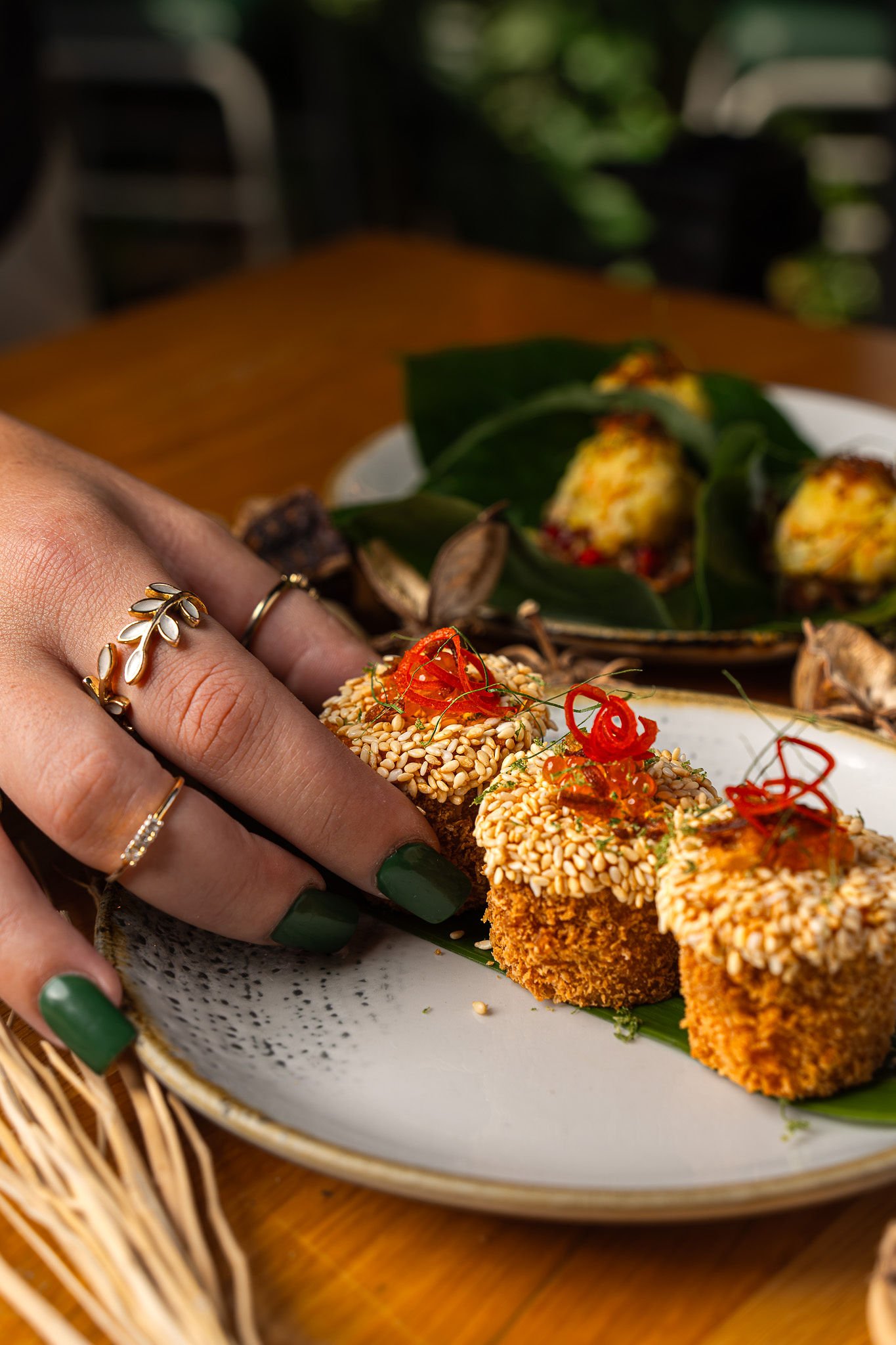
Curried Pork & Prawn Toast
Serves: 4-6 | Prep: 90 mins | Cook: 20 mins
Ingredients
For the filling:
250g minced pork belly (ask your butcher to mince it with all the fat on; lean mince gives you a dry, crumbly filling)
250g raw peeled king or tiger prawns (deveined and patted very dry)
60g red curry paste (Payst Red Curry Paste)
4 makrut lime leaves (central vein removed, shredded as finely as your knife allows)
2 coriander roots, or a small bunch of coriander stalks (scraped and very finely chopped)
2 spring onions (finely chopped)
1 egg white
1 tbsp fish sauce (plus more to taste)
1 tsp palm sugar or caster sugar
½ tsp ground white pepper
To roll and coat:
8 slices of cheap, soft white sliced bread (crusts removed; posh sourdough won’t roll)
2 eggs (beaten)
60g panko breadcrumbs
40g sesame seeds (a mix of white and black)
About 1.5 litres vegetable or sunflower oil (for deep frying)
To serve:
1 long red chilli (deseeded and cut into very fine threads)
Small bunch of chives (finely chopped)
Method
Drop the chilli threads into a bowl of iced water and leave them while you work; they’ll curl into little red ribbons for the garnish. Blitz half the prawns in a food processor to a smooth, sticky paste. Chop the other half by hand into pieces about the size of a pea. The paste is the glue, and the chunks give you something to bite into. A filling that’s all paste eats like a fishcake.
Put both lots of prawn into a large bowl with the pork, curry paste, makrut lime, coriander root, spring onion, egg white, fish sauce, sugar and white pepper. Work it with one hand, always stirring in the same direction, for a good three minutes. It will start loose and wet, then turn tacky and stringy and begin to come away from the bowl in one mass. That’s the salt in the fish sauce pulling the proteins out of the meat and prawn. Stop early and the filling crumbles in the fryer.
Fry a teaspoon of the mix in a little oil and taste it. You want proper salt from the fish sauce, curry heat building slowly behind it, and the natural sweetness of the prawn and pork underneath. The lime leaf should be in the background, not perfuming the whole thing like a candle. Add more fish sauce if it tastes flat, and a pinch more sugar if the curry paste feels harsh. Spoon the mix into a sandwich bag, snip off a corner about 2cm wide, and chill for 30 minutes.
Lay a slice of bread between two sheets of baking paper and roll it hard with a rolling pin until it’s dense and about a third of its original thickness. Repeat with all eight. Overlap two slices by 1cm along their short edges and press the seam down firmly with your fingers to make a long sheet. You’ll have four sheets.
Brush a strip of beaten egg along the far edge of the first sheet. Pipe a line of filling about 2cm thick along the edge nearest you, then roll it away from you, keeping it tight, until it seals on the egg. Wrap each roll tightly in cling film, twist the ends like a cracker, and chill for at least 30 minutes (or 15 in the freezer). This bit is not optional. Unset rolls open in the oil and you end up with fried prawn mince and a lot of loose bread.
Mix the panko and sesame seeds on a plate. Unwrap the rolls, trim off the ragged ends (cook’s perks), and cut each one into rounds about 2.5cm thick. Dip each round in beaten egg, then roll it through the sesame crumb, pressing so it sticks to the cut faces as well as the sides. Lay them on a tray in the fridge while the oil heats.
Heat the oil in a wok or deep pan to 175°C, filling the pan no more than a third full. Fry five or six rounds at a time for about 3 minutes, turning them, until they’re deep golden all over and the kitchen smells of toasted sesame. Pull them at deep golden, not brown, because sesame turns bitter fast. Probe one from the first batch: the centre should read 75°C. Let the oil come back up to temperature between batches. Crowd the pan and the temperature drops, and the crumb soaks up oil instead of crisping.
Drain them on a wire rack rather than kitchen paper, where the steam softens the bottoms. Drain the chilli threads and pat them dry. Put a small dot of burnt chilli sauce on top of each round, followed by a curl of chilli and a pinch of chives. Eat them while they’re still hot enough to make you regret it.
Chef’s notes
You can roll, slice and crumb these up to a day ahead, then keep them covered in the fridge and fry them to order. They also freeze well once crumbed. Freeze them in a single layer on a tray, then bag them up, and always defrost overnight in the fridge before frying. Frying them from frozen gives you a burnt outside and a raw middle, and no amount of resting will fix that.
The pork can go. All prawn gives you a bouncier, lighter filling, and minced chicken thigh works too, but never anything lean, because the fat is what keeps the middle juicy. If you want a different curry, swap the red paste for the same weight of Panang, which is richer and slightly nutty, and leave everything else alone.
Thai vendors serve their prawn toast with a quick cucumber relish, and it’s well worth five minutes. Dissolve sugar in warm rice vinegar with a pinch of salt, then pour it over diced cucumber, sliced shallot and a little chilli. The acid cuts through the fried bread better than any dip. If you like a fried snack with your drink, the Tiger Prawn, Sweet Potato, Daikon & Thai Basil Fritters and the Duck Confit, Chive and Plum Spring Rolls belong on the same table.
Visit us at faranglondon.co.uk.
Sauces and pastes for cooking Thai at home at payst.co.uk. For more recipes, signed copies of my cookbooks are available at Payst: Cook Thai and Thai in 7.

Head chef & founder of Farang London restaurant. Cookbook author of ‘Cook Thai’ & ‘Thai in 7’. Chief curry paste basher and co-founder of Payst London.
Eat it at Farang
Cook it at home, or let us cook it for you. Farang, Sebby's Michelin Bib Gourmand Thai restaurant in Highbury, N5.
Book a table