
Spicy Chilli, Ginger & White Pepper Sticky Pork Ribs

These ribs started as staff food. At the Begging Bowl first, then at Farang, and always for the same reason: when pork belly is on the menu, you end up with excess ribs, and you need something that feeds a kitchen team with minimum fuss. Marinade the night before, oven does the work, everyone eats well. That's still the version I make now.
The ketjap manis is the backbone. It's Indonesian sweet soy, thick and very dark, and it's used widely across Thai and Southeast Asian cooking because it does something no other ingredient quite manages: an intense, almost lacquered sweetness that carries heat and aromatics with it without thinning out. The white pepper and ginger sit underneath, adding warmth and depth rather than straight heat. The chillies build slowly. Together it makes a marinade that darkens and clings to the meat as it cooks.
The thing most people get wrong with sticky ribs is the cook. Too short and the meat grips the bone and fights back. Too high and the sugar burns before the collagen has had time to break down. The answer is foil, and patience. Wrap the rack tightly before it goes in and keep it wrapped for the first two and a half hours. The foil traps steam, protects the sugar from direct heat, and creates the low environment where collagen quietly becomes gelatine. Only unwrap at the end to let the outside caramelise. You want dark and sticky, a surface that pulls and shines. Not black.
The prik nahm pla served alongside is not a garnish. Fish sauce, lime juice and finely sliced bird's eye chillies in a small bowl: sharp, salty and properly hot. The ribs are rich and sweet from the marinade. The prik nahm pla cuts through all of it. A spoonful over each portion changes the whole dish.
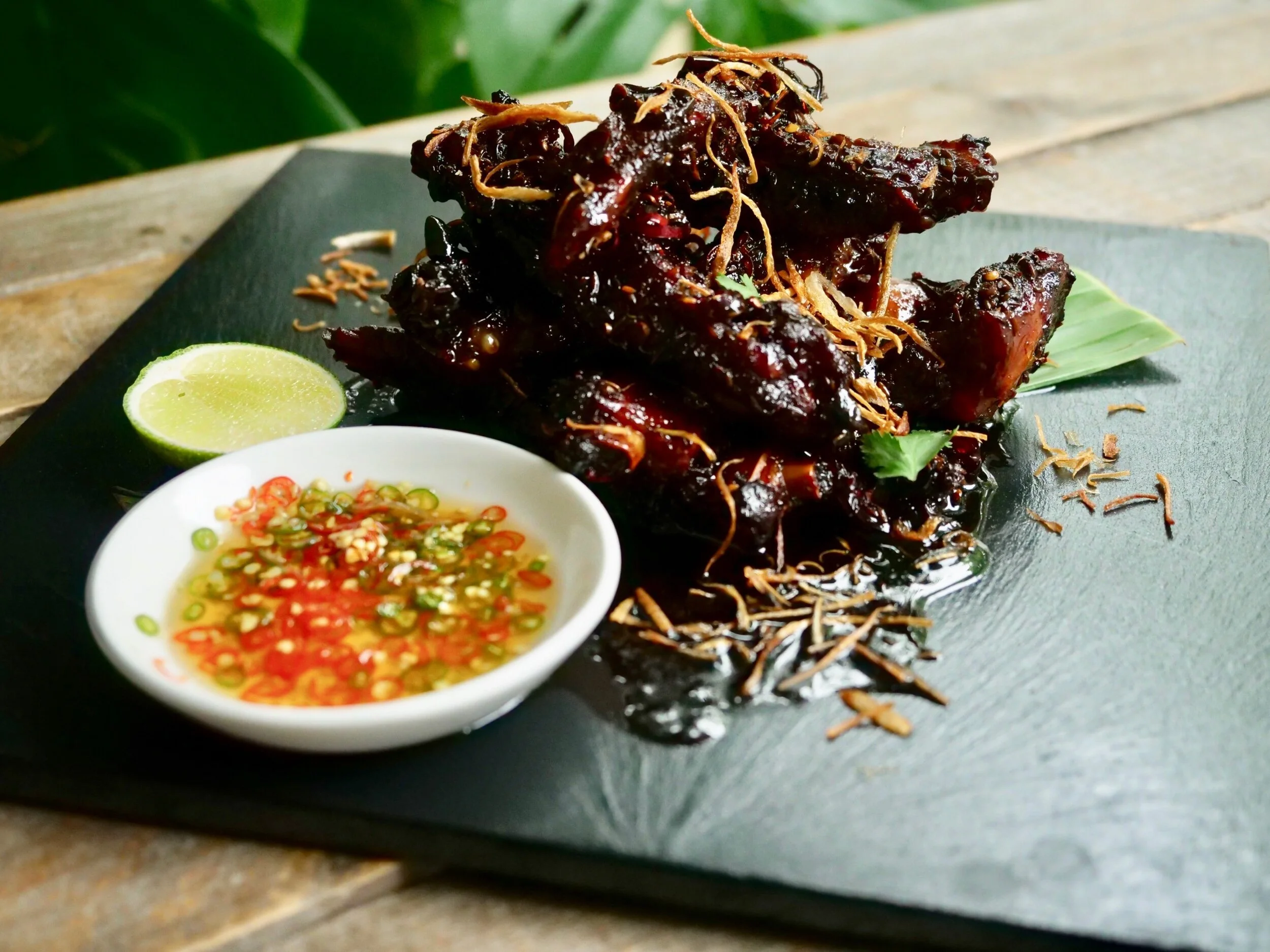
Spicy Chilli, Ginger & White Pepper Sticky Pork Ribs
Serves: 2 to 4 as a sharing plate | Prep: 20 mins (plus overnight marinating) | Cook: 2 hrs 45 mins
Ingredients
For the ribs and marinade
1 rack pork ribs (1 to 1.5kg), trimmed of excess fat
200ml ketjap manis (Indonesian sweet soy, available in most supermarkets in the world food aisle)
100g caster sugar
20g fresh ginger, peeled and roughly chopped
4 cloves garlic, peeled and roughly chopped
1 stick lemongrass, outer layers removed, roughly chopped
2 fresh long red chillies, roughly chopped
2 fresh long green chillies, roughly chopped
1 bird's eye chilli, roughly chopped
2 kaffir lime leaves, stems removed, roughly torn
2 tablespoons white peppercorns, ground to a fine powder
2 tablespoons cumin seeds, lightly toasted in a dry pan
3 tablespoons fish sauce
To serve
1 lime, cut into cheeks
30g coriander, washed and picked
2 tablespoons crispy shallots
For the prik nahm pla
3 tablespoons fish sauce
Juice of 1 lime
2 bird's eye chillies (red and green), finely sliced
Method
Make the marinade. Put the ketjap manis, caster sugar, ginger, garlic, lemongrass, both long chillies, bird's eye chilli, kaffir lime leaves, ground white pepper and toasted cumin into a food processor and blitz to a coarse, fragrant paste. If you're doing it by hand, use a pestle and mortar and work down the harder aromatics before adding the liquids. Stir in the fish sauce. Taste now: the marinade should be intensely sweet from the ketjap manis, properly salty from the fish sauce, and the white pepper should be sitting underneath everything as a slow, dry warmth. If it tastes flat, add more fish sauce. If the sweetness is dominating everything else, a squeeze of lime helps at this stage.
Coat the ribs thoroughly in the marinade, working it into the meat between the bones. Place in a deep baking tray, cover and leave in the fridge overnight. If you're short on time, a minimum of 4 hours at room temperature will do, but overnight is noticeably better.
When ready to cook, preheat the oven to 160°C / 140°C fan. Wrap the ribs tightly in two layers of foil, folding and sealing all the edges so no steam can escape. This step is not optional. The foil is what protects the sugar from direct heat for the first part of the cook and keeps the environment humid enough to break the collagen down properly. Place on a baking tray and cook for 2 hours 30 minutes without opening the foil.
After 2 hours 30 minutes, remove from the oven and carefully peel back the foil. The meat should be pulling away from the bones already. Test one: if a bone slides out cleanly with no resistance, they're ready to finish. If there's still any grip, rewrap and return to the oven for another 20 minutes before testing again. When they're ready, turn the oven up to 200°C / 180°C fan. Baste the ribs with any marinade left in the foil and return to the oven unwrapped for 10 to 15 minutes until the surface is dark, sticky and caramelised. Watch them closely at this temperature. The line between caramelised and burnt moves fast.
While the ribs finish, make the prik nahm pla. Combine the fish sauce, lime juice and finely sliced bird's eye chillies in a small bowl and stir. It should taste sharp, salty and properly hot. Adjust the lime to fish sauce ratio to your preference.
Rest the ribs for 5 minutes, then cut between the bones. Arrange on a sharing plate. Scatter crispy shallots over the top, add lime cheeks and a handful of coriander alongside, and put the prik nahm pla in a small bowl at the table for people to spoon over.
Chef's notes
For the BBQ or smoker: these work brilliantly low and slow over indirect heat. Set up a two-zone fire, hold the temperature around 120 to 130°C, and cook the ribs bone-side down on the cool side. Keep them wrapped in foil for the first two hours, then unwrap and baste in the final hour. Finish over direct heat briefly to char and caramelise the surface. The same principle as the oven method: patience and foil first, heat second.
Ketjap manis is widely available now. Most large supermarkets stock it in the world food aisle under the ABC or Conimex brand. It's a thick, dark Indonesian sweet soy and worth keeping in the cupboard. It goes into stir-fries, noodle dishes and marinades for anything going on the BBQ.
Crispy shallots are available pre-fried from Asian supermarkets and are worth keeping in the cupboard year-round. At Farang we make our own by slicing shallots wafer-thin and frying slowly in oil until golden and crisp, but the shop-bought version works well and keeps for weeks in an airtight jar. They go through soups, salads, curries and anything that needs texture and a hit of sweet, fried allium.
These are best made the day before. The flavour improves overnight once the marinade has had time to work deeper into the meat. Reheat covered in foil at 160°C for 20 minutes, then unwrap and blast at 200°C for 10 minutes to bring the caramel back.
A rack of ribs that falls off the bone, sticky from ketjap manis and white pepper, with the prik nahm pla cutting through the sweetness at the table: this is exactly what staff food should be.
Visit us at faranglondon.co.uk. Sauces and pastes for cooking Thai at home at payst.co.uk.
For more recipes, signed copies of my cookbooks are available at Payst: Cook Thai and Thai in 7.
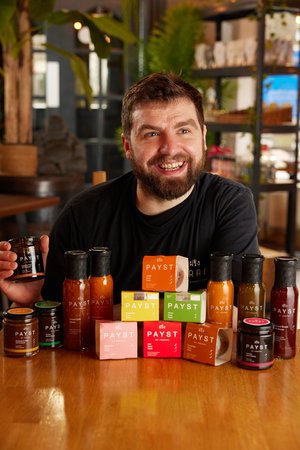
Head chef & founder of Farang London restaurant. Cookbook author of ‘Cook Thai’ & ‘Thai in 7’. Chief curry paste basher and co-founder of Payst London.